
Clean beauty has become much more than a passing trend. In 2026, understanding clean beauty formulations is a real asset for taking care of your skin while respecting your health and the environment. But behind this term lies a complex reality: how to distinguish a truly "clean" product from a mere marketing strategy? Which ingredients should be prioritized, and which should be absolutely avoided? This guide will accompany you in your discovery of clean beauty formulations, giving you the keys to become an informed consumer and make choices that truly suit you.
What exactly is clean beauty formulation?
Clean beauty formulation is based on a fundamental principle: formulating cosmetic products with safe, transparent, and health-respecting ingredients. Unlike conventional cosmetics, this approach deliberately excludes controversial or potentially harmful substances.
The pillars of a clean formulation
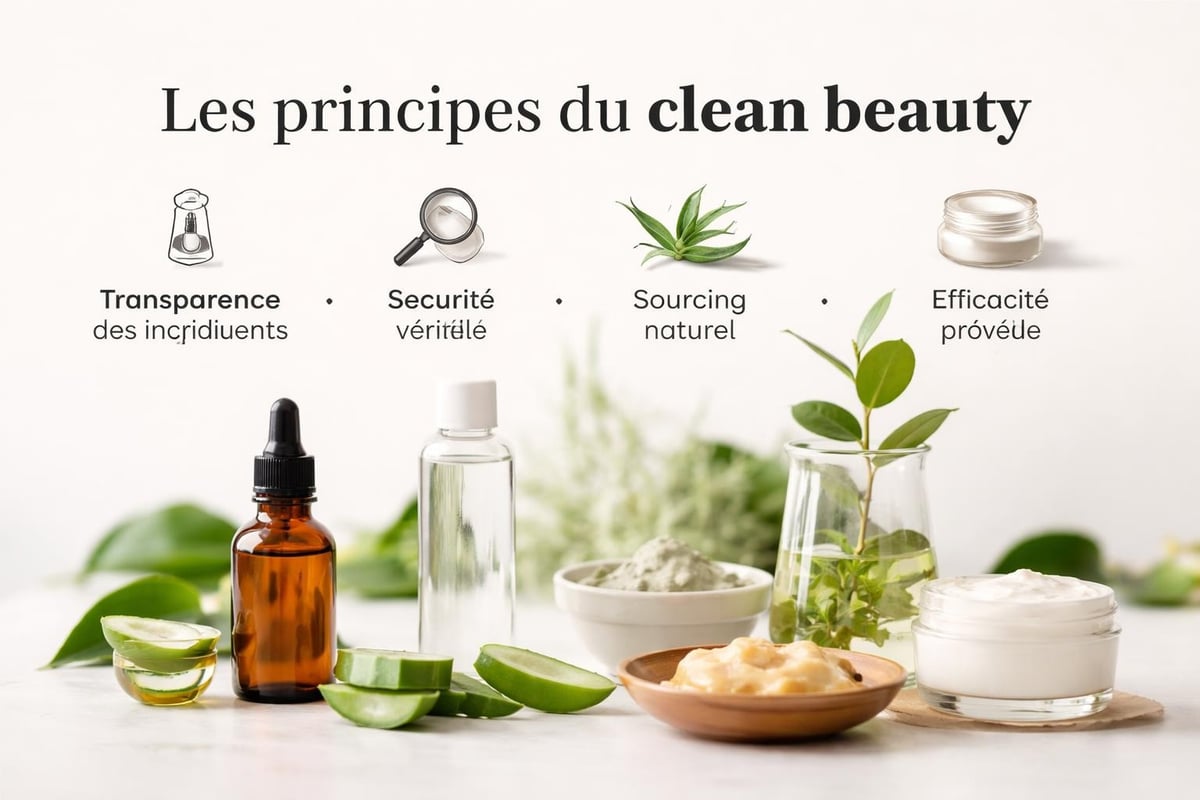
According to the Clean Beauty Coalition, several criteria define an authentic clean beauty formulation:
- Total transparency on the INCI list (International Nomenclature of Cosmetic Ingredients)
- Exclusion of ingredients suspected of being toxic or endocrine disruptors
- Preference for natural and organic ingredients whenever possible
- Environmental respect in the choice of raw materials
- Proven efficacy through dermatological tests
Clean beauty formulation does not mean sacrificing performance. On the contrary, it encourages innovation to create minimalist but powerful formulas, with each ingredient present for a specific reason.
What clean beauty is not
There is a lot of confusion surrounding this concept. Clean beauty formulation is not limited to:
- Using only 100% natural ingredients (some synthetics are safe and necessary)
- Eliminating all preservatives (they are essential for product safety)
- Following a standardized banned list (each brand defines its own standards)
Serious brands like basic. adopt a balanced approach: prioritizing natural and organic ingredients when relevant, while keeping efficacy and safety at the heart of their formulations.
Deciphering INCI lists to understand the composition
The INCI list is your best tool for evaluating the clean beauty formulation of a product. Learning to read it completely transforms your shopping experience.
How to read an ingredient list
Ingredients are listed in descending order of concentration. The first components therefore represent the majority of the formula. Here's how to analyze effectively:
- Identify the first 5 ingredients (they usually make up 70-80% of the product)
- Spot the active ingredients that provide the promised benefits
- Check for the presence of preservatives and their nature
- Look for potential fragrances and allergens
- Use analysis tools like INCI Beauty to decipher complex names
Mobile applications like those mentioned in this detailed article on cosmetic analysis greatly facilitate this process. You simply scan the product and get an instant evaluation of its composition.
The star ingredients of clean beauty formulation
| Category | Examples of ingredients | Benefits |
|---|---|---|
| Vegetable oils | Jojoba, argan, coconut | Hydration, nourishment, protection |
| Natural butters | Shea, cocoa, mango | Repair, suppleness |
| Botanical actives | Aloe vera, calendula, chamomile | Soothing, regeneration |
| Antioxidants | Vitamin E, green tea extract | Anti-aging protection |
| Natural moisturizers | Hyaluronic acid, vegetable glycerin | Water retention, comfort |
These ingredients form the basis of an effective clean beauty formulation. Their natural origin and excellent safety profile make them preferred choices by conscious brands.
Ingredients to avoid in your beauty routine
Understanding clean beauty formulation also means knowing which controversial substances to avoid. Certain ingredients commonly used in conventional cosmetics raise legitimate concerns.
The blacklist of problematic ingredients
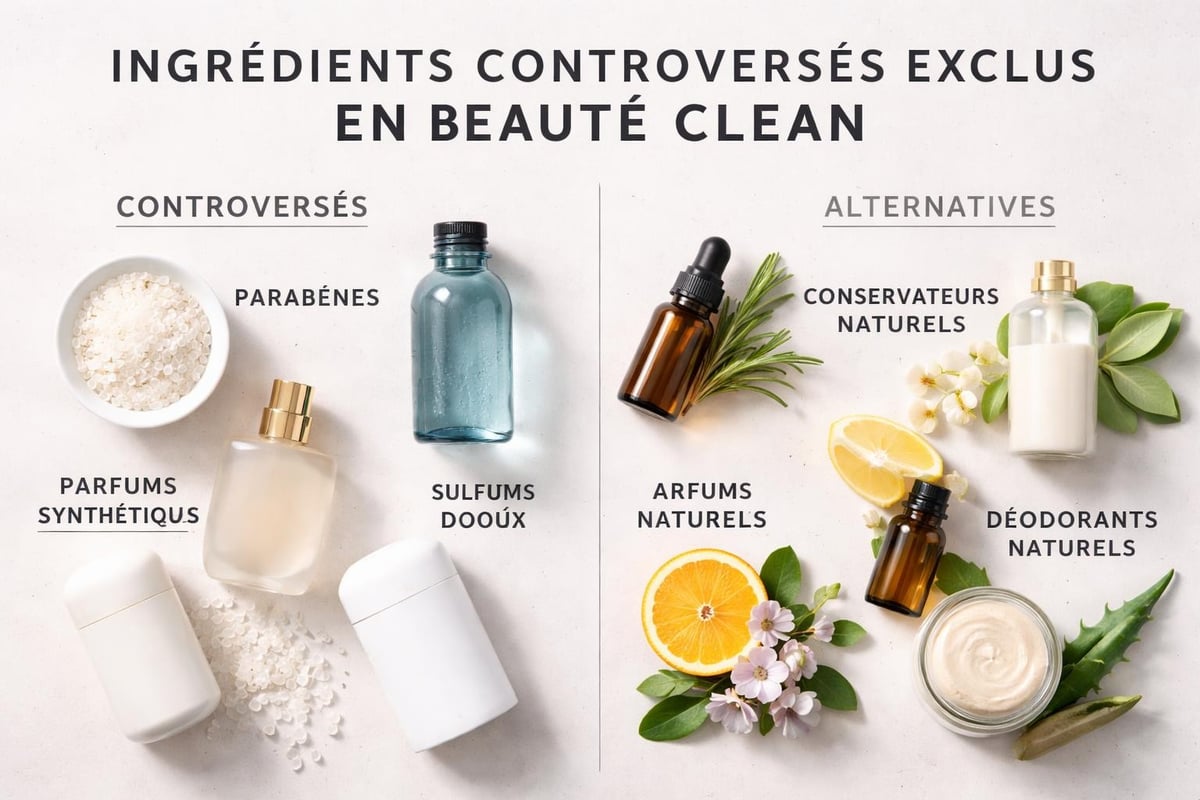
Parabens: These synthetic preservatives are suspected of being endocrine disruptors. Even if the doses used in cosmetics are generally low, many clean beauty brands prefer to avoid them as a precaution.
Harsh sulfates: Sodium lauryl sulfate (SLS) and sodium laureth sulfate (SLES) are powerful surfactants that can irritate sensitive skin and unbalance the skin barrier.
Silicones: Although not toxic to the skin, silicones like dimethicones pose environmental problems because they are not biodegradable.
- Phthalates (often hidden under the term "fragrance")
- Formaldehyde and formaldehyde releasers
- Triclosan and triclocarban (controversial antibacterials)
- Certain chemical UV filters (oxybenzone, octinoxate)
- Aluminum salts in deodorants
Why these ingredients are problematic
Ongoing research continues to examine the long-term effects of many chemicals. The precautionary principle guides clean beauty formulation: if in doubt about the safety of an ingredient, it's better to choose a safer alternative.
Cliganic, for example, has banned over 2,500 ingredients from its formulations, demonstrating that it is possible to create effective products without resorting to controversial substances.
This approach applies perfectly to natural beauty products that favor short, refined formulas, where each ingredient has proven its worth in terms of safety and efficacy.
Clean beauty formulation and minimalism: the winning formula
The minimalist approach is revolutionizing clean beauty formulation in 2026. Rather than accumulating dozens of ingredients, innovative brands are focusing on concentrated formulas with few elements but in the right dose.
Fewer ingredients, more results
This philosophy offers numerous advantages:
- Reduced irritation risk (fewer ingredients = fewer potential allergens)
- Maximized efficacy by concentrating essential active ingredients
- Facilitated transparency for consumers
- Minimized environmental impact during production
- Controlled cost thanks to targeted formulation
Minimalist deodorants perfectly illustrate this trend. By focusing on a few key ingredients, they offer effective protection without compromising health or the environment.
How to choose effective minimalist products
When evaluating the clean beauty formulation of a minimalist product, ask yourself these questions:
- Does each ingredient have a clear function?
- Are the active ingredients present in sufficient concentration?
- Does the formula genuinely meet your specific needs?
- Is the product stable without harsh preservatives?
To take care of your lips daily with this approach, my refillable lip balm - starter kit embodies this minimalist philosophy: a clean and concentrated formula in a practical and sustainable format that nourishes and protects without excess.
Labels and certifications: your allies for identifying clean beauty
In the face of a proliferation of marketing claims, labels and certifications provide independent validation of clean beauty formulation. They establish clear and verifiable standards.
The main natural and organic cosmetic labels
| Label | Origin | Key requirements |
|---|---|---|
| Cosmebio | France | Min. 95% natural ingredients, 95% organic on plant ingredients |
| Ecocert | France | Strict standards on natural and organic origin |
| Natrue | Europe | 3 levels: natural, natural with organic portion, organic |
| BDIH | Germany | Favors plant-based raw materials from organic farming |
| Vegan Society | UK | No animal-derived ingredients, no animal testing |
These certifications guarantee not only clean beauty formulation but also responsible production practices. They verify ingredient traceability and the absence of animal testing.
Beyond official labels
Some brands develop their own clean beauty standards, sometimes even stricter than existing certifications. Ethique and The Beauty Garden have created their own demanding charters.
The important thing is to understand the criteria behind each label or claim. A brand can be clean beauty without an official logo if it adheres to rigorous and transparent standards in its formulation.
Adapting clean beauty formulation to your skin type
Clean beauty formulation is not universal. Your skin type, specific concerns, and individual sensitivity should guide your choices.
For sensitive and reactive skin
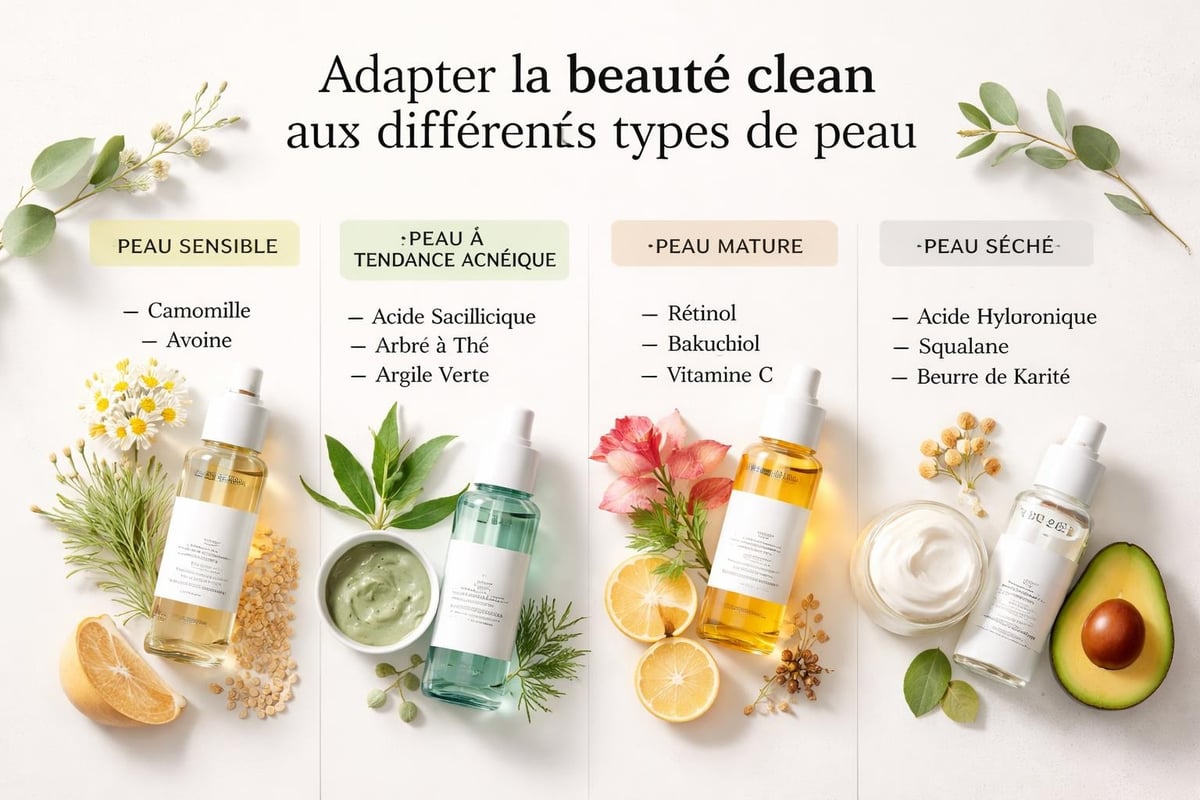
Sensitive skin particularly benefits from a minimalist clean beauty formulation. Prioritize:
- Short formulas with a maximum of 5-10 ingredients
- Soothing actives like colloidal oatmeal, centella asiatica, or bisabolol
- Absence of fragrances, even natural ones (essential oils can irritate)
- Gentle preservatives like leucidal or anisic acid
Specialized companies like Meta Skin Studio develop professional solutions adapted for sensitive skin, combining efficacy and clean formulation to restore the skin barrier without irritation.
For problem skin (acne, rosacea)
Clean beauty formulation can remarkably improve problem skin when well chosen:
For acne:
- Niacinamide (vitamin B3) to regulate sebum
- Salicylic acid of plant origin
- Zinc for its purifying properties
- Jojoba oil (non-comedogenic)
For rosacea:
- Azelaic acid to calm redness
- Licorice and chamomile extracts
- Hyaluronic acid to hydrate without being heavy
- Avoid heating ingredients (cinnamon, menthol)
For mature skin seeking anti-aging benefits
Clean beauty formulation offers excellent anti-aging solutions thanks to powerful natural active ingredients. Corine de Farme demonstrates that it is possible to combine anti-aging efficacy with a clean formulation.
Star ingredients include:
- Plant-based retinol (bakuchiol) to stimulate cell renewal
- Natural peptides for firmness
- Antioxidants (vitamins C, E, resveratrol) for protection
- Hyaluronic acid of different molecular weights for plumping
- Precious oils (rosehip, argan) for deep nourishment
Clean beauty and environment: the impact of formulation
Clean beauty formulation is not limited to protecting your health. It also encompasses protecting our planet, from the cultivation of ingredients to their biodegradability.
The importance of biodegradability
When you wash, the ingredients in your cosmetics go into wastewater. A clean beauty formulation favors substances that degrade naturally without polluting:
- Gentle plant-derived surfactants (coco-glucoside, decyl glucoside)
- Natural oils and butters that are quickly biodegradable
- Preservatives with low environmental impact
- Absence of plastic microbeads
Silicones and certain synthetic UV filters, although safe for the skin, persist in the environment and accumulate in aquatic ecosystems. This is why clean beauty formulations generally avoid them.
Responsible sourcing of ingredients
Beyond the formula itself, clean beauty formulation considers:
- The origin of raw materials (fair trade, organic farming)
- The preservation of biodiversity (no ingredients from endangered species)
- The carbon footprint of transport and processing
- The working conditions of producers
- The regeneration of soils used to grow plants
Lucia Rapetti embodies this holistic approach by combining purity, innovation, and environmental commitment in her natural formulations.
Innovations in clean beauty formulation for 2026
The clean beauty formulation industry is constantly evolving, with exciting innovations that push the boundaries of natural efficacy.
New clean active ingredients that make a difference
Green biotechnology: Ingredients produced by fermentation or cell culture offer sustainable alternatives to rare natural extracts. For example, plant-based squalane is a beneficial replacement for shark squalene.
Biomimetic peptides: These molecules mimic the action of naturally occurring peptides in the skin, with remarkable anti-aging efficacy.
Probiotics and prebiotics: To strengthen the skin microbiome and improve the skin's protective barrier.
Adaptogenic plant extracts: Ashwagandha, rhodiola, and reishi help the skin adapt to environmental stress.
Smart formulation and ingredient synergies
Modern clean beauty formulation is not limited to juxtaposing natural ingredients. It relies on:
- Active synergies where 2+2=5 (certain ingredients mutually amplify their effects)
- Natural vectorization to improve active ingredient penetration
- Gradual release systems for prolonged efficacy
- Plant-based encapsulation to protect fragile active ingredients
These innovations make it possible to obtain results comparable (or even superior) to conventional formulas, while maintaining an irreproachable clean beauty formulation.
Building your clean beauty routine from A to Z
Adopting clean beauty formulation doesn't necessarily mean changing everything overnight. A gradual and thoughtful transition yields better results.
Where to start your transition?
Prioritize products you use in large quantities or over large areas:
- Face cleanser (daily skin contact)
- Body moisturizer (large application surface)
- Deodorant (sensitive area, daily application)
- Shampoo (large volume, rinsed in water)
- Basic makeup (foundation, mascara)
This gradual approach also allows your skin to adapt. Some people experience a transition period when switching to clean beauty formulation as their skin naturally rebalances.
Creating an effective and minimalist routine
An ideal clean beauty routine could look like this:
Morning:
- Gentle cleansing with water or a hydrosol
- Hydrating serum (hyaluronic acid + vitamin C)
- Moisturizer with natural SPF
- Nourishing lip balm
Evening:
- Makeup removal with vegetable oil
- Gentle cleanser
- Active serum (plant-based retinol or niacinamide)
- Night cream rich in antioxidants
Weekly:
- Enzymatic exfoliation (1-2 times)
- Purifying clay mask
Discover best-sellers to get inspired and build a routine tailored to your specific needs.
How to avoid greenwashing in clean beauty formulations
The success of clean beauty has unfortunately given rise to greenwashing: brands that claim to be "natural" or "clean" without truly being so. Here's how to unmask these deceptive practices.
Warning signs of fake clean products
- Vague vocabulary: "inspired by nature", "with natural extracts" without specifying percentages
- A natural ingredient drowned in a list of synthetic ingredients
- Deceptive green packaging suggesting non-existent naturalness
- Lack of transparency regarding origin and traceability
- Invented certifications or self-awarded logos
Vexx Skincare offers a practical guide to identifying truly non-toxic products and avoiding these marketing traps.
Verifying clean beauty claims
Adopt a critical approach:
Read the full INCI list, not just the few highlighted ingredients on the packaging. A clean beauty formulation should be comprehensive, not limited to one or two star ingredients.
Look for third-party certifications rather than self-declarations. An independent label guarantees external verification.
Consult reliable resources like All Natural Collection, which provides a detailed guide to ingredients to look for and avoid.
Prioritize transparency: truly clean brands have nothing to hide and are happy to explain their formulation choices. You can consult basic.'s commitments to see an example of complete transparency.
Budget and clean beauty formulation: are they compatible?
A persistent misconception is that clean beauty formulations are inherently expensive. The reality is more nuanced. Yes, some clean products are pricey, but there are accessible options and strategies to optimize your budget.
Why are some clean products more expensive?
Several factors explain the sometimes high prices:
- Quality ingredients: Organic and fair-trade raw materials cost more
- Small-scale production: Independent brands don't have economies of scale
- Research and development: Formulating clean and effective products requires expertise and innovation
- Certifications: Audits and labels represent an investment
- Sustainable packaging: Eco-friendly containers are often more expensive
Strategies for accessible clean beauty
Prioritize quality over quantity: It's better to have 4-5 excellent products than a bathroom full of mediocre formulas. A well-chosen clean beauty formulation is often more concentrated and lasts longer.
Focus on multi-purpose products:
- A vegetable oil for the face, body, and hair
- A multi-functional balm for lips, elbows, cuticles
- A cold-process soap for the body and sometimes the face
Make some products yourself: A few simple recipes can complement your routine (sugar and oil scrub, clay and hydrosol mask).
Compare intelligently: The price per milliliter often reveals that clean products are competitive against high-end conventional brands.
Clean beauty formulation represents much more than a simple cosmetic choice: it's a conscious step towards beauty that respects your health and our planet. By understanding ingredients, deciphering INCI lists, and remaining vigilant against greenwashing, you become an active participant in your well-being. At basic., we believe in this minimalist philosophy where every ingredient matters, formulated at the right dose for visible results without compromise. Discover our range of natural and organic cosmetics, designed in Switzerland with transparency and effectiveness at the heart of our commitment.