


Ultimate Eco Deodorant Guide: Eco-Friendly Tips 2026
Discover our ultimate eco-friendly deodorant guide for 2026 to choose an effective ecological deodorant and adopt simple steps for a healthy and planet-friendly routine.

By 2026, environmental awareness is growing every day, and more and more of us are seeking sustainable practices, even in our hygiene routines. Faced with this green wave, choosing an eco-friendly deodorant is becoming crucial for those who no longer want to compromise between effectiveness and respect for the planet.
Welcome to the ultimate guide to understanding, choosing, and adopting an eco-friendly deodorant suited to your needs. Here, we'll analyze environmental impacts, essential criteria, key innovations, and share tips to transform your daily routine.
Ready to join the movement and adopt healthy solutions for yourself and the planet? Together, let's discover how to take action simply, without sacrificing comfort or efficiency.
Why Choose an Eco-Friendly Deodorant in 2026?
Adopting an eco-friendly deodorant in 2026 is much more than a beauty ritual. It's a strong commitment to the planet and our health. More and more people today want to make conscious choices about their daily hygiene. But why has this change become so important?

Raising awareness of the environmental impact of conventional deodorants
Every year, millions of deodorant bottles end up in the trash. The majority are made of plastic, which is difficult to recycle, and contribute to global pollution. Many conventional formulas also contain microplastics that end up in water and the environment.
By 2026, many consumers had become aware of this reality. According to this National Geographic article , conventional deodorants contribute to plastic pollution and release chemical compounds into the environment. Choosing an eco-friendly deodorant therefore means reducing waste and protecting biodiversity.
Health risks associated with chemical ingredients
Conventional deodorants often contain controversial ingredients: aluminum salts, parabens, and endocrine disruptors. Recent studies have raised concerns about the risks associated with daily skin exposure to these substances.
Choosing an eco-friendly deodorant helps avoid these undesirable ingredients. Natural formulas are generally better tolerated, especially by sensitive skin. This reduces the risk of irritation or allergic reactions.
The evolution of consumer expectations
The “clean beauty” movement has gained momentum in recent years. Consumers are seeking healthier, more ethical, and more responsible products. The natural and organic cosmetics market has seen double-digit growth every year.
By 2026, choosing an eco-friendly deodorant will meet this demand for transparency and respect for the environment. Ethical brands are increasingly appealing to people who want to combine effectiveness and commitment.
Labels and certifications you should know
To help you navigate this, there are reliable labels: COSMOS, Ecocert, Cosmébio, Vegan, and cruelty-free. They guarantee a clean composition, without harmful ingredients or animal testing.
An eco-certified deodorant guarantees a formula that respects both skin and the planet. These are valuable indicators for making an informed choice among the multitude of options.
The benefits for the planet and for oneself
Choosing an eco-friendly deodorant is a concrete way to take action for the planet: reducing your carbon footprint, less waste, and respecting biodiversity. Natural formulas also offer personal benefits: better skin tolerance and effectiveness suitable for all skin types.
We gain comfort in our daily lives, while also making an eco-friendly choice. It's a virtuous circle that benefits everyone.
Testimonials and case studies
More and more users are sharing their positive experiences. Many are noticing a significant reduction in irritation and a lasting feeling of freshness with their new eco-friendly deodorant. Adopting this type of product also helps to incorporate other responsible practices into one's routine.
Testimonials show that the transition is happening smoothly, and that it is possible to combine efficiency and ecology.
Key innovations in the sector in 2026
The eco-friendly deodorant sector is constantly innovating. Eco-refills, compostable packaging, and ultra-short formulas are now available. These advancements make use even simpler and more accessible.
Brands are competing to offer increasingly creative solutions that respect the environment and our well-being. It's the perfect time to switch to eco-friendly deodorant and join the movement!
Essential Criteria for Choosing Your Eco Deodorant
Finding the perfect eco-friendly deodorant in 2026 is much more than just choosing a pleasant scent. It means paying attention to the ingredients, the packaging, the environmental impact, but also the effectiveness and affordability. Let's explore together the key criteria that will help you make the best choice for your health and the planet.
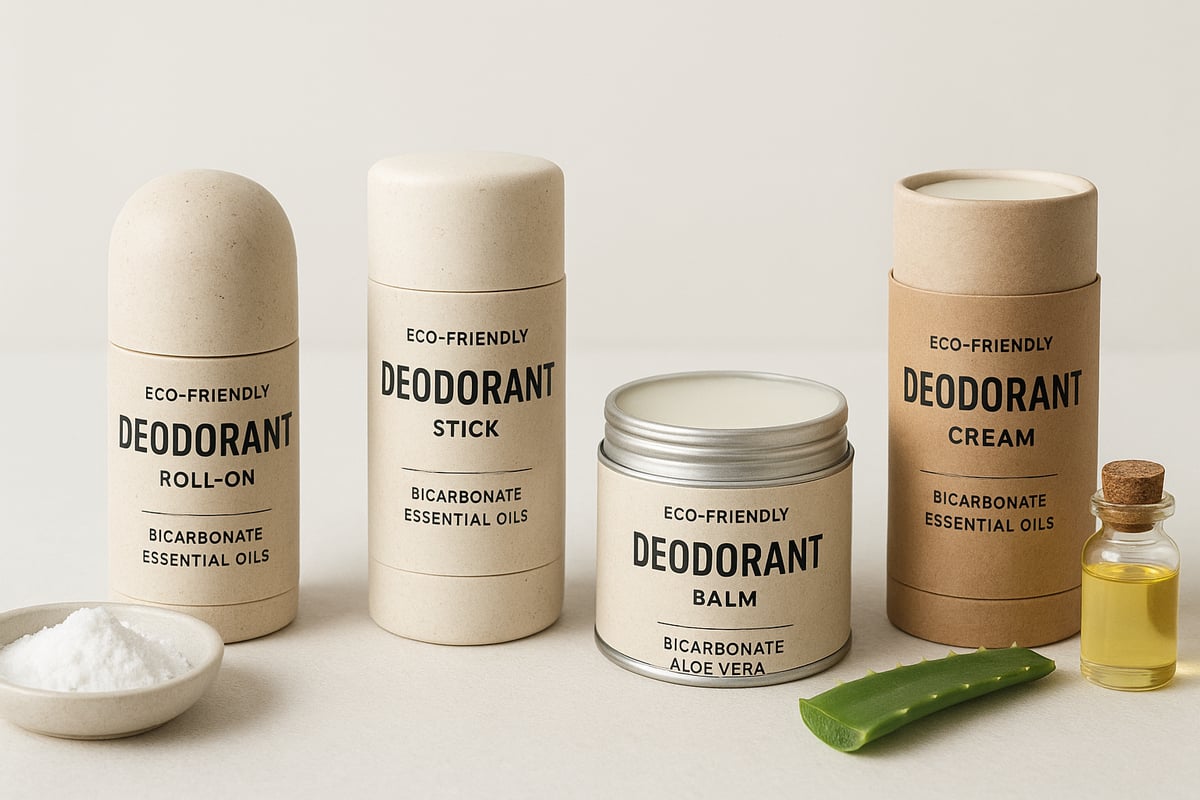
Understanding the ideal composition of an eco-friendly deodorant
The key to a good eco-friendly deodorant lies in its composition. Opt for natural ingredients, such as sodium bicarbonate, cornstarch, aloe vera, or essential oils. These active ingredients neutralize odors and absorb moisture, while respecting the skin.
Avoid controversial substances such as aluminum salts, harsh alcohols, or synthetic fragrances. For sensitive skin, opt for formulas without baking soda or essential oils. An eco-friendly deodorant should also be free of endocrine disruptors and parabens.
Analysis of the different formats available
The choice of format influences your daily experience with eco-friendly deodorant. Roll-on, stick, balm, cream, or spray—each option offers distinct advantages. For example, a solid stick is convenient to carry and long-lasting, while a cream easily adapts to all areas.
In 2026, innovations such as eco-refills, plastic-free sticks, and rechargeable systems are gaining popularity. Here is a comparison table:
| Format | Benefits | Disadvantages |
|---|---|---|
| Ball | Quick application | Less environmentally friendly |
| Stick | Zero waste possible | May stain |
| Balm | Very gentle on the skin | Manual application request |
| Cream | Moisturizer | Can stick |
| Spray | Fresh sensation | Gas, sometimes polluting |
The importance of eco-friendly packaging
An eco-friendly deodorant should minimize its impact through thoughtful packaging. Opt for recycled, compostable, or refillable packaging. Eco-refills can reduce plastic by up to 63%, as demonstrated by some pioneering brands.
Materials like cardboard, recyclable aluminum, or glass should be favored. Minimalist packaging also reduces waste production and encourages zero waste in everyday life.
Certifications and labels: how to find your way around them?
Labels are valuable guides for making an informed purchase of eco-friendly deodorant. The most reliable are COSMOS, Ecocert, Cosmébio, Vegan, and cruelty-free. They guarantee the absence of harmful substances, respect for the environment, and animal welfare.
Beware of greenwashing: some products claim to be "natural" without official certification. Check the INCI lists and verify the presence of authentic labels before buying. This ensures complete transparency regarding the composition and manufacturing process.
Adapt your choice to your skin type and needs
Every skin is unique, and your choice of eco-friendly deodorant should reflect this. If you have sensitive skin, opt for gentle formulas without baking soda or essential oils. For excessive perspiration, choose products with enhanced absorbency.
Looking for the perfect eco-friendly deodorant for your needs? Discover the full range of basic eco-friendly deodorants , offering different formulas for every need, from minimalist balms to zero-plastic sticks.
Effectiveness and duration of protection
An effective eco-friendly deodorant offers long-lasting protection without blocking natural perspiration. Recent studies show that some natural deodorants provide up to 48 hours of freshness, with high user satisfaction rates.
Don't hesitate to try different formulas to find the one that suits your lifestyle. Effectiveness also depends on application and how your skin adapts, especially when switching from a conventional deodorant.
Price and accessibility
The price of an eco-friendly deodorant varies depending on the brand, ingredients, and size. Entry-level options start at around 8 to 12 euros, while premium or refillable solutions can cost up to 20 euros.
You can find them in organic stores, supermarkets, or specialized online shops. Eco-refills allow you to save money in the long run while reducing your environmental impact.
The Best Eco-Friendly Deodorant Alternatives in 2026
Looking for the best eco-friendly deodorant that combines effectiveness, a pleasant user experience, and respect for the environment? In 2026, the selection has never been so rich, innovative, and committed. Let's explore together the brands and alternatives that make a difference, the labels to look for, real-life user feedback, and the trends to watch for to choose an eco-friendly deodorant that suits your lifestyle.
Overview of major brands and flagship products
By 2026, the eco-friendly deodorant market is dominated by pioneering brands and bold new products. Among the must-haves is So'Bio étic with its 24-hour Eco-Refill Deodorant, made with 100% natural ingredients and using 63% less plastic. Les Petits Prödiges is captivating consumers with its minimalist and colorful balms, while Schmidt's offers solid sticks in a variety of scents.
Clémence & Vivien and Respire complete this overview with practical, often refillable formats perfectly suited to active lifestyles. The main innovations lie in the introduction of ultra-compact eco-refills and ultra-short formulas, ideal for discerning eco-conscious deodorant users.
Focus on the labels and certifications of the selected products
To choose a reliable eco-friendly deodorant, it's essential to look for recognized labels such as COSMOS ORGANIC, Ecocert, Vegan, or cruelty-free. These certifications guarantee the presence of natural and organic ingredients, the absence of animal testing, and a reduced environmental impact.
For example, the So'Bio étic eco deodorant boasts 99% natural ingredients and 21% organic ingredients. Les Petits Prödiges and Schmidt's products also carry several labels, reassuring consumers concerned about transparency and quality.
basic. : The minimalist, zero-plastic Swiss alternative
The Swiss brand basic. embodies a new generation of eco-friendly deodorants, focusing on simplicity, quality, and eco-innovation. Their minimalist, vegan formulas, free of aluminum and synthetic fragrances, are suitable for everyone, even the most sensitive skin.

Thanks to its refillable systems (like KIIMA), solid balms, and multi-purpose oils, basic. drastically reduces plastic waste. Local manufacturing in Lausanne, the commitment to reducing waste and shipping within Switzerland are key advantages. Orders are prepared within 1–2 business days; usual delivery within Switzerland takes 2–4 business days, depending on Swiss Post. To learn more about their environmental commitment, see the brand's eco-responsible commitments .
Comparison of performance and user feedback
Choosing an eco-friendly deodorant also depends on performance and actual satisfaction. Here's an overview of customer feedback on several leading brands:
| Brand | Efficiency | Skin tolerance | No traces | Average rating |
|---|---|---|---|---|
| So'Bio étic | 24h | Excellent | Yes | 4.6/5 |
| The Little Prodigies | 24-48 hours | Very good | Yes | 4.7/5 |
| Schmidt's | 24h | Good | Sometimes | 4.4/5 |
| basic. | 24-48 hours | Excellent | Yes | 4.8/5 |
Many users report a reduction in irritation and a lasting feeling of freshness after switching to an eco deodorant.
Availability and accessibility
Finding a quality eco-friendly deodorant is now easier than ever. These products are available in organic stores, pharmacies, supermarkets, and on specialized online shops. Prices vary depending on the brand and size, ranging from 10 to 24 CHF for refillable options.
This increased accessibility allows everyone to easily integrate an eco deodorant into their daily routine, without compromising on budget or practicality.
Innovations and trends to watch
The year 2026 marks the arrival of new eco-friendly deodorant formats: solid, plastic-free sticks, creamy lotions, propellant-free sprays, and ultra-compact eco-refills. Collaborations between responsible brands and NGOs are multiplying, encouraging even greener initiatives.
We are also seeing the emergence of local brands and pioneering projects, which focus on rare ingredients or compostable packaging to meet the expectations of an informed public in search of ever more effective eco-friendly deodorants.
Tips for making the right choice based on your lifestyle
Choosing an eco-friendly deodorant depends on your needs and habits. For athletes or people on the go, opt for solid sticks or compact balms, which are convenient to carry. Families will appreciate refillable formats, which are economical and environmentally friendly.
Those with sensitive skin will opt for formulas without bicarbonate or essential oils. Finally, travelers will find what they're looking for thanks to mini sizes and refillable systems, perfect for reducing waste wherever you are.
Usage Tips and Everyday Eco-Friendly Approach
Switching to an eco-friendly deodorant transforms not only our routine but also our impact on the planet. This approach goes beyond simply changing products; it encourages us to rethink our daily habits for greater well-being and eco-responsibility. Here are our practical tips for integrating eco-friendly deodorant into your life, step by step, and making the most of its benefits.

Key steps to successfully transitioning to an eco-friendly deodorant
Switching from a conventional deodorant to an eco-friendly one requires an adjustment period. The skin, accustomed to antiperspirants, needs to readjust to its natural balance. Allow a transition period of 2 to 4 weeks: slight changes in odor or perspiration are normal.
To personalize your choice, it's helpful to know your skin type. You can take this quiz to discover your skin type and target an eco-friendly deodorant suited to your specific needs. This maximizes comfort and effectiveness from the very first days.
Optimal application: instructions for use
To fully enjoy your eco-friendly deodorant, apply it to clean, dry skin, ideally after showering. A small amount is enough, especially with concentrated formulas. Massage gently until completely absorbed.
Here are a few tips to prolong its effectiveness: wait a few seconds before getting dressed, choose clothes made of natural fibers, and don't apply too much product. Eco deodorant rarely leaves marks, but be sure to use the right amount to avoid over-application.
Maintenance of reusable and refillable packaging
Maintaining your eco-friendly deodorant containers will prolong their lifespan and reduce waste. Regularly clean sticks, balms, or roll-ons with warm water and mild soap. Dry them thoroughly before refilling.
Some brands offer specific care instructions to preserve the quality of the eco-friendly deodorant and ensure its hygiene. Clean packaging prevents bacterial growth and optimizes long-term use.
Tips for limiting your environmental impact
Reducing your environmental footprint with eco-friendly deodorant also involves small actions. Opt for refills rather than buying entire packs, recycle or compost packaging according to local guidelines, and support brands committed to zero waste.
Consider buying in bulk or multipacks to reduce transportation and packaging. By choosing an eco-friendly deodorant, every little helps the planet, even on a daily basis.
Adapt your eco-friendly deodorant to your lifestyle
Eco-friendly deodorant is suitable for all situations. For travel, opt for solid or balm formats, which are easy to carry and leak-proof. At the gym, keep a compact stick in your bag for a quick touch-up after your workout.
Families will appreciate the economical and refillable formats. For busy days or heatwaves, there are reinforced formulas for optimal protection, while remaining natural.
Managing transition periods and potential inconveniences
During the transition phase, you may experience irritation or unusual dampness. This usually subsides within a few weeks. To soothe the skin, alternate with calming hydrosols or natural absorbent powders.
If a reaction persists, try an eco-friendly deodorant without baking soda or essential oils, which is often better tolerated by sensitive skin. Listening to your body is essential to finding the ideal formula.
Examples of eco-friendly routines
Incorporating eco-friendly deodorant into an environmentally conscious routine is simple. Pair it with washable wipes, a solid soap, or an eco-friendly shampoo. Prepare your skin with a gentle weekly scrub and moisturize it with a plant-based oil.
By adopting these habits, you take care of yourself and the planet. Eco-friendly deodorant becomes the symbol of a healthier, greener lifestyle, accessible to all.
Understanding the Key Ingredients and Their Effectiveness
Discovering the ingredients in your eco-friendly deodorant is a step towards a healthier, more planet-friendly bathroom. But how do you distinguish truly effective active ingredients from less desirable substances? Let's explore the secrets of a successful formulation, the innovations of 2026, and the criteria for choosing the eco-friendly deodorant best suited to your needs.
Main natural active ingredients used in eco-friendly deodorants
Eco-friendly deodorants prioritize gentle, multi-functional ingredients. Sodium bicarbonate effectively neutralizes odors. Cornstarch absorbs moisture without irritating the skin. Aloe vera soothes and moisturizes, making it ideal for sensitive underarms. Essential oils, such as lavender or tea tree, provide a light, natural scent and antibacterial properties. Finally, zinc PCA regulates perspiration while respecting the skin's microbiome.
| Active | Main role | Skin type |
|---|---|---|
| Bicarbonate | Neutralizes odors | Normal to high |
| Corn starch | Absorbs moisture | All types |
| Aloe vera | Soothes and hydrates | Sensitive |
| Zinc PCA | Regulates perspiration | Reactive skin |
Choosing an eco-friendly deodorant means choosing simplicity and natural effectiveness.
Focus on controversial ingredients to avoid
Some ingredients commonly used in conventional deodorants are a real cause for concern. Aluminum salts, often singled out, are suspected of being involved in health problems. Parabens and triclosan raise questions due to their potential to disrupt the endocrine system. Alcohol can cause irritation, and synthetic fragrances are allergenic.
To ensure the safety of your eco-friendly deodorant, it's essential to carefully read the INCI list. Opt for short formulas without controversial ingredients for reassuring daily use.
Innovations 2026: New Assets and Alternatives
The year 2026 marks the arrival of new active ingredients in eco-friendly deodorant formulations. Probiotic ferments, for example, promote a healthy gut microbiome and naturally limit unpleasant odors. Innovative plant extracts, such as bamboo powder or tapioca starch, offer a superior alternative to traditional absorbents.
Mineral powders, on the other hand, offer a gentle alternative for even the most sensitive skin. These innovations make eco-friendly deodorants even more effective and universally suitable.
The benefits for skin and health
Choosing an eco-friendly deodorant means investing in daily comfort and improved skin tolerance. Natural active ingredients minimize irritation, respect the skin's microbiome, and help prevent redness. After making the switch, many users notice an improvement in their skin's quality.
The clean formulas reduce the risk of allergies and are suitable even for the most demanding skin. Taking care of yourself while protecting the planet is possible thanks to eco-friendly deodorant.
Transparency and traceability of formulas
Transparency is becoming an essential criterion when choosing an eco-friendly deodorant. Committed brands display simplified INCI lists and clearly explain the origin of each ingredient. Some, like basic., take ethics even further, guaranteeing short formulas and complete traceability, which you can discover on About basic. and its philosophy .
To go further, feel free to consult reliable resources or expert guides, such as tips for choosing an eco-friendly deodorant , in order to decipher labels and avoid greenwashing.
Adapt the formula to your specific needs
Every skin is unique. For sensitive skin, choose an eco-friendly deodorant without baking soda or essential oils. In cases of heavy perspiration, opt for deodorants with enhanced absorbent properties and dermatologically tested formulas.
Some brands even offer specific versions, free of major allergens, to suit the whole family. Taking the time to choose your eco-friendly deodorant carefully ensures optimal comfort and lasting protection.
Comparative data on actual effectiveness
Independent tests conducted on eco-friendly deodorants reveal high satisfaction rates. Most provide 24- to 48-hour protection without leaving marks on clothing. Users appreciate the feeling of freshness and the absence of irritation.
Comparing consumer results can help you refine your choice. An effective eco-friendly deodorant is one that meets your expectations while respecting your skin and the environment.
Tips and Best Practices to Go Further in Ecology
Adopting eco-friendly deodorant is already a big step for the planet. But why stop there? Together, we can transform our beauty routine into an even more responsible approach. Here are our tips to go further, to make hygiene, well-being, and ecology rhyme, and to inspire those around us.
Reduce your overall impact in the bathroom
Transforming your daily routine starts with small steps. Replacing disposable products with reusable alternatives such as washable wipes, fabric makeup remover pads, or bamboo toothbrushes significantly reduces waste.
Adopting solid soaps, package-free shampoos, and refillable deodorants creates a virtuous cycle. These changes, combined with the use of eco-friendly deodorant, help limit plastic waste and promote a healthier bathroom.
- Washable wipes and cotton pads
- Accessories in bamboo or stainless steel
- Solid soaps and refillable deodorants
Together, these simple actions transform routine into ecological commitment.
DIY: Make your own homemade eco-friendly deodorant
Making your own eco-friendly deodorant at home is easy, economical, and fun. A basic recipe: mix 2 tablespoons of baking soda, 2 tablespoons of cornstarch, 2 tablespoons of coconut oil, and a few drops of essential oil (if you are not allergic).
Be sure to follow hygiene rules: clean utensils, storage in an airtight container. DIY allows you to control the ingredients and avoid controversial substances.
However, keep in mind that homemade eco-friendly deodorants don't always offer the same effectiveness or guarantees as certified products. It's up to you to test what works best for you.
Get informed and raise awareness among those around you
Sharing your discoveries about eco-friendly deodorant is a great way to inspire your loved ones to change their habits. Why not organize a DIY workshop or exchange tips over brunch with friends?
In France and Switzerland, more and more initiatives are emerging to raise awareness about zero waste. According to this report on the growth of the organic deodorant market , demand continues to increase, proving that every action counts.
Together, let's multiply small actions for a big impact.
To commit to a comprehensive approach
Adopting eco-friendly deodorant also means rethinking your consumption. Prioritizing quality over quantity, choosing sustainable products, participating in local zero-waste groups or group purchases: every choice becomes an act of activism.
Involving the whole family makes the process smoother and more motivating. Children, being very receptive, can thus become agents of change.
Getting involved also means supporting local initiatives, such as recycling or composting, which strengthen the virtuous circle of ecology.
Innovations to watch in eco-friendly cosmetics
The eco-friendly deodorant sector is constantly evolving. By 2026, we'll see the arrival of compostable packaging, ultra-short formulas, and unprecedented collaborations between brands and NGOs. Startups are competing to offer even more compact refills or formulas enriched with probiotics.
Staying curious and open to these innovations allows you to adapt your routine and take advantage of the best solutions for yourself and the planet.
Choose committed and responsible brands
Choosing transparent, certified, and local brands means supporting a responsible economy. Labels like Cosmébio, Ecocert, or Nature & Progrès are reliable indicators for recognizing an authentic eco-friendly deodorant.
To learn more about these labels and their guarantees, consult this dossier on organic cosmetic labels in France .
Choosing local or socially committed businesses also means participating in a fairer and more sustainable economy.
Resources for further exploration and staying up-to-date
To delve deeper into the world of eco-friendly deodorants, subscribe to specialized blogs, follow engaged accounts on social media, or join community platforms. These resources will allow you to stay informed about new products, exchange ideas with other users, and work together towards an ever-greener bathroom.
Staying informed is the key to maintaining motivation and discovering new tips day after day.
After discovering all these tips for adopting a truly effective eco-friendly deodorant that's kind to both your skin and the planet, you might feel it's time to take action. Many of us have made the switch to natural, minimalist, and uncompromising formulas, and it really transforms our routines! If you also want to try a simple, vegan, aluminum-free, and plastic-free solution, I invite you to try it now . Together, we're moving towards a healthier and more responsible lifestyle – and it all starts with one simple daily action.