


Natural antiperspirant for reactive skin: your 2026 guide
Discover how to choose a natural antiperspirant for sensitive skin that suits your needs. Ingredients, practical tips, and gentle solutions.

When you have reactive skin, choosing a natural antiperspirant for reactive skin becomes a real challenge. Redness, itching, burning sensations after application: these are all signals that our skin sends us to tell us that it doesn't like what we're putting on it. Yet, we all need freshness and confidence in our daily lives. The good news is that there are now natural solutions that truly respect the most sensitive skin while offering effective protection. In this guide, we're going to discover together how to identify the right ingredients, understand why your skin reacts, and most importantly, how to find the natural antiperspirant for reactive skin that suits you perfectly.
Why your skin reacts to conventional antiperspirants
Reactive skin is particularly vulnerable to conventional formulations. The underarm area is one of the most sensitive parts of the body: thin skin, friction zone, frequent shaving. All of this creates a fertile ground for irritation.
The usual culprits in traditional formulas
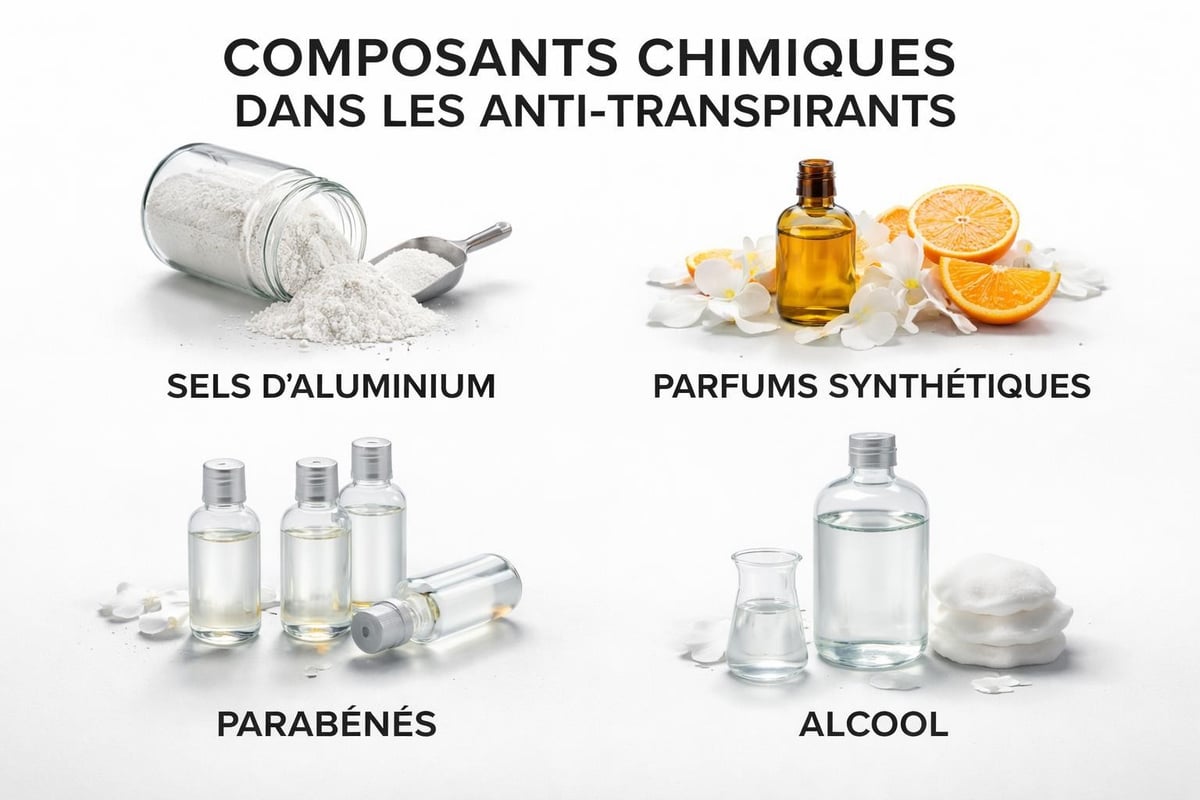
Aluminum salts are at the top of the list of irritants. Used in most conventional antiperspirants to block sweat pores, they can cause significant reactions in sensitive skin. But that's not all.
Here are the most common problematic ingredients:
- Alcohol: intensely drying and irritating
- Synthetic fragrances: recognized allergens
- Parabens: potential endocrine disruptors
- Triclosan: aggressive antibacterial
- Propylene glycol: can cause dermatitis
Conventional deodorants often contain between 15 and 30 different ingredients, which multiplies the risk of reaction for reactive skin.
Understanding skin reactivity
Reactive skin is not really a skin type, but rather a temporary or chronic condition. It can be triggered by external factors (products, climate, stress) or internal factors (hormones, diet, general health).
When you apply an unsuitable product, your skin triggers an inflammatory reaction. Signs appear quickly: redness, tingling, itching, and even small pimples. This is your skin's defense system activating.
Natural ingredients to prioritize for a natural antiperspirant for reactive skin
Going natural does not mean sacrificing effectiveness. Certain natural ingredients offer real protection while respecting sensitive skin.
Soothing and protective active ingredients
| Ingredient | Main property | Benefit for reactive skin |
|---|---|---|
| Shea butter | Deep hydration | Repairs the skin barrier |
| Coconut oil | Gentle antibacterial | Neutralizes odors without irritation |
| Aloe vera | Immediate soothing | Calms irritation |
| Corn starch | Natural absorbent | Reduces moisture without blocking pores |
| Beeswax | Protection | Creates a gentle barrier |
Natural cosmetics rely on short, targeted formulas. Fewer ingredients mean fewer risks of reaction.
Baking soda: friend or foe to reactive skin?
Baking soda is the star ingredient in many natural deodorants. It effectively neutralizes odors by altering the skin's pH, creating an environment hostile to odor-causing bacteria.
But be careful: for reactive skin, baking soda can be too aggressive, especially at high concentrations. It can cause:
- Redness and irritation
- Burning sensation
- Skin dryness
- Allergic reactions
If you have sensitive skin, choose formulas without baking soda or with a very low concentration (less than 5%). Fortunately, there are now natural deodorants without baking soda specially designed for reactive skin.
How to choose your natural antiperspirant for reactive skin
Given the growing offer of natural products, how do you find your way? Here is a step-by-step process to make the right choice.
Decoding labels
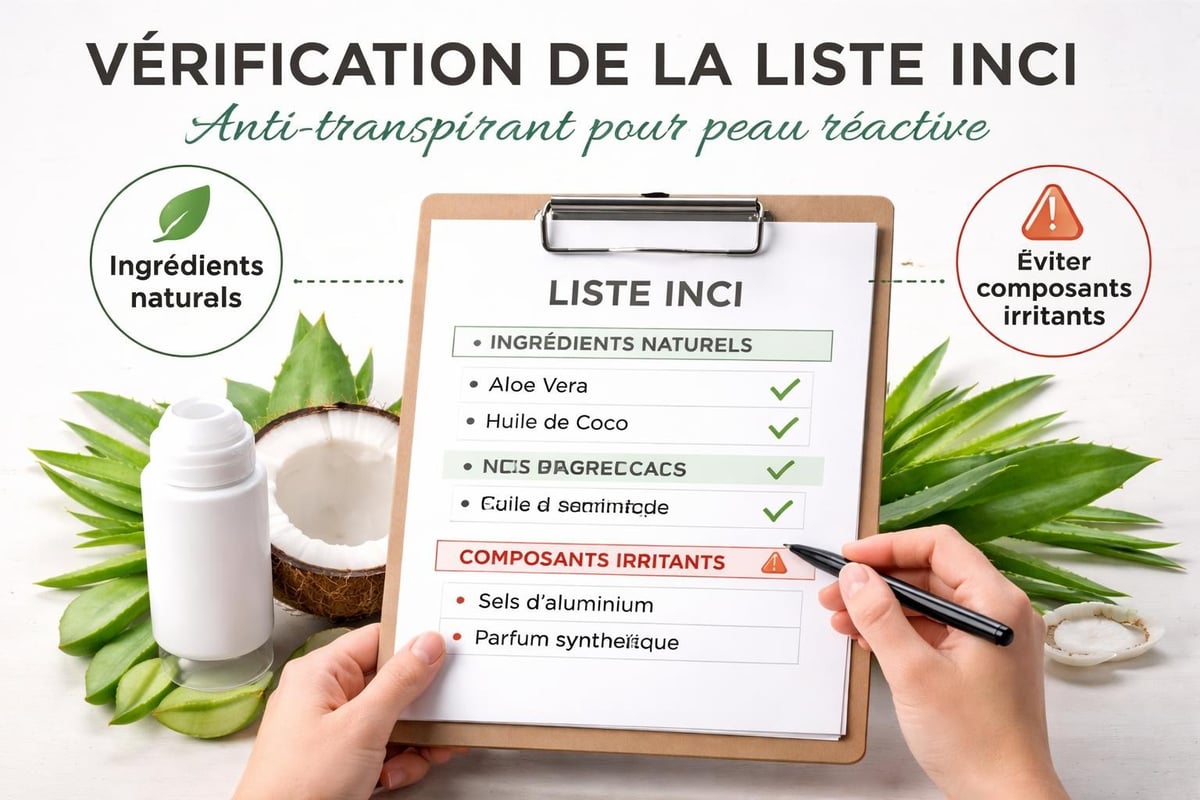
Rule number one: read the INCI (International Nomenclature of Cosmetic Ingredients) list. Ingredients are listed in descending order of concentration. The first ones are therefore the most present in the formula.
For a natural antiperspirant for reactive skin, look for:
- Few ingredients: ideally less than 10
- Recognizable names: if you don't understand anything, it's suspicious
- Absence of aluminum salts: no form of aluminum
- Organic certification: guarantee of quality and traceability
- "Dermatologically tested" mention: on sensitive skin
Labels like Cosmos Organic, Ecocert or Natrue are additional guarantees. They impose strict specifications on composition and manufacturing.
Adapting the format to your needs
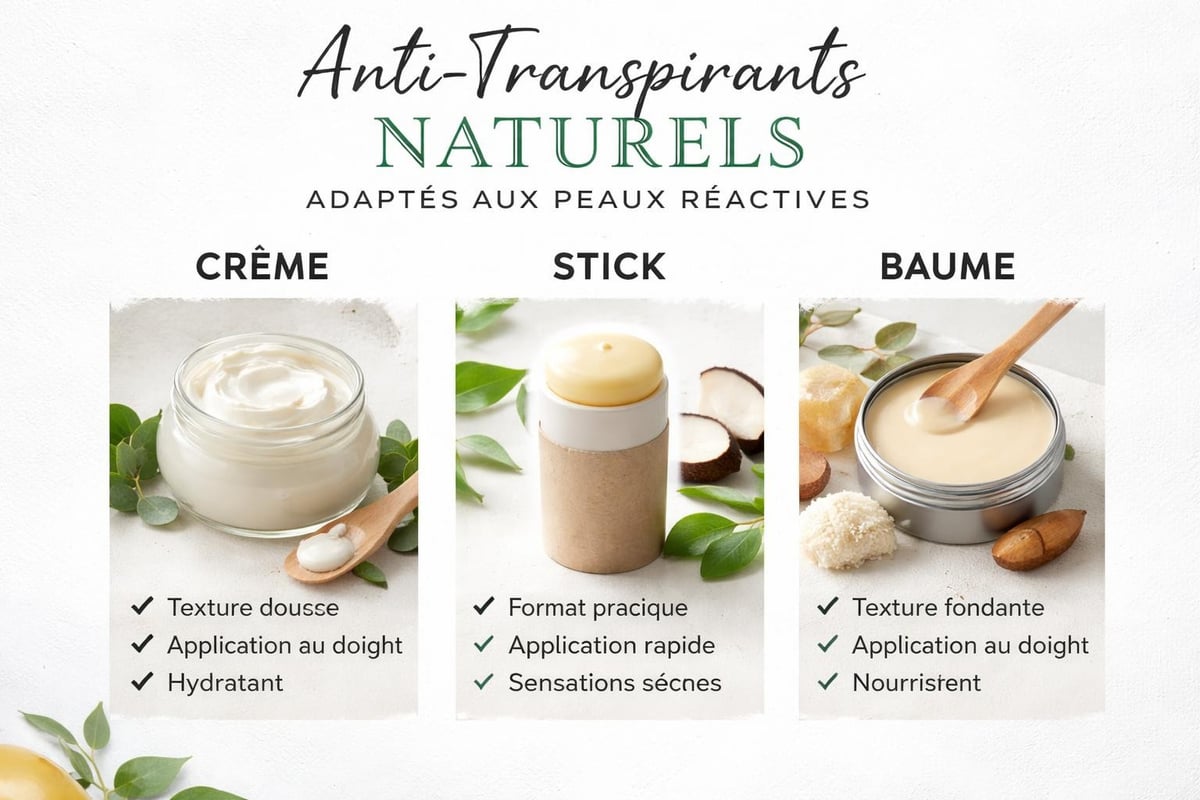
Natural antiperspirants come in several textures. Each has its advantages for reactive skin.
| Format | Advantages for reactive skin | Disadvantages |
|---|---|---|
| Cream | Controlled application, very moisturizing | Drying time |
| Stick | Easy, portable | May contain irritating waxes |
| Balm | Ultra-soft, nourishing | Rich texture |
| Powder | Pure, minimalist | Less convenient application |
| Spray | Contactless | Often with alcohol |
For reactive skin, cream and balm formats are generally the gentlest. They allow for delicate application without excessive rubbing and often contain moisturizing agents that protect the skin.
Smart testing
Even the most natural product may not suit your skin. Here's how to test a new natural antiperspirant for reactive skin without taking risks:
Day 1: Perform a patch test on the crook of your elbow. Apply a small amount and wait 24 hours. No reaction? You can proceed to the next step.
Day 2-3: Apply to one armpit only for two days. Compare with the untreated armpit. This allows you to evaluate both tolerance and effectiveness.
Week 1: Use daily while monitoring your skin. The first few weeks of transition can be delicate.
The transition period: what you need to know
Switching to a natural antiperspirant for reactive skin often requires an adjustment period. Your body needs to get used to functioning normally again after years of blocked pores by aluminum salts.
What to expect in the first few weeks
Don't be discouraged if the beginning is a little chaotic. Here's what can happen:
- Increased sweating: normal, your sweat glands are reactivating
- More pronounced odor: temporary, while the bacterial flora balances out
- Strange sensations: your skin is learning to breathe again
- Need to reapply: effectiveness improves over time
This phase usually lasts 2 to 4 weeks. Be patient and kind to your body.
Tips for an easier transition
A few simple steps can make this period more comfortable:
- Detoxify your armpits: a clay mask once a week helps eliminate residues
- Exfoliate gently: once a week to remove dead skin cells
- Hydrate: a vegetable oil in the evening soothes and nourishes
- Wear natural fibers: cotton, linen, which allow the skin to breathe
- Shave with caution: wait a few hours before applying deodorant
Some people find it helpful to start the transition during holidays or remote work, to feel more comfortable during the adjustment.
Complementary routines for reactive skin
A natural antiperspirant for reactive skin works best when it is part of a holistic routine that respects your skin.
Hygiene and skin preparation
Cleanliness is obviously essential, but be careful not to aggress your skin with overly harsh soaps. Opt for gentle, pH-neutral, fragrance-free cleansers.
The right time to apply: on clean and perfectly dry skin. Moisture reduces effectiveness and can promote irritation. After showering, wait a few minutes for your skin to dry naturally.
Hair removal and shaving: these actions weaken the skin. If possible, shave in the evening to allow the skin to calm down overnight. Never apply antiperspirant immediately after shaving. Micro-cuts create entry points for irritants.
Diet and hydration
What we eat influences our perspiration and body odor. For reactive skin, this is even more true.
Foods to moderate:
- Strong spices (curry, chili)
- Excessive garlic and onion
- Alcohol and coffee
- Ultra-processed foods
Beneficial foods:
- Green vegetables rich in chlorophyll
- Citrus fruits and red berries (antioxidants)
- Fresh herbs (parsley, mint, cilantro)
- Probiotics (kefir, kombucha, fermented vegetables)
Hydration also plays a crucial role. Drink at least 1.5 liters of water per day. Skin that is well-hydrated from the inside is more resilient and less reactive.
Natural homemade solutions to complement your routine
If you like DIY, you can create complementary care products that support the action of your natural antiperspirant for reactive skin.
Armpit detox mask recipe
This preparation helps purify the skin and facilitate the transition to natural:
Ingredients:
- 1 tablespoon of white clay (the gentlest)
- 1 teaspoon of apple cider vinegar
- 1 teaspoon of rose water
- 2 drops of true lavender essential oil (optional)
Application: Mix until you get a paste. Apply to clean armpits, leave on for 10 minutes, rinse with lukewarm water. Once a week maximum.
If you want to create your own deodorant, check out this guide to making your natural deodorant with simple and effective ingredients.
Alternatives for tough days
Even with the best natural antiperspirant for reactive skin, some situations require an extra boost: intense stress, extreme heat, sustained physical activity.
Alum stone: be careful, it naturally contains aluminum salts, even if their structure differs from synthetic salts. For very reactive skin, it's not ideal for daily use, but can help out occasionally.
Sage hydrosol: when sprayed, it naturally regulates perspiration. Perfect for refreshing throughout the day.
Arrowroot powder: sprinkle directly, it absorbs moisture. Ultra-gentle for sensitive skin.
Products and brands to know in 2026
The natural cosmetics market has exploded in recent years. To help you navigate, here are some benchmarks.
Selection criteria for the best brands
When you choose a deodorant suitable for your reactive skin, prioritize brands that:
- Are transparent about their formulations
- Offer short INCI lists (less than 10 ingredients)
- Organic certify their products
- Test on sensitive skin
- Offer samples to test before buying
- Clearly communicate the absence of certain ingredients
basic., a Swiss company specializing in natural cosmetics, perfectly embodies this minimalist philosophy: few ingredients, but in the right dose, for effective and respectful formulas even for the most delicate skin.
Moreover, this minimalist and careful approach is also found in other skin care products. For example, my refillable lip balm - starter kit illustrates how a care product can be both effective, practical and durable, with a short formula that respects sensitive areas like the lips, while reducing waste thanks to its refillable system.
Comparison of popular formats
To help you choose, here's an overview of the different formats available with their specificities for reactive skin:
| Format | Effectiveness | Gentleness | Practicality | Average price |
|---|---|---|---|---|
| Cream jar | ⭐⭐⭐⭐⭐ | ⭐⭐⭐⭐⭐ | ⭐⭐⭐ | 12-18€ |
| Solid stick | ⭐⭐⭐⭐ | ⭐⭐⭐⭐ | ⭐⭐⭐⭐⭐ | 10-15€ |
| Balm | ⭐⭐⭐⭐ | ⭐⭐⭐⭐⭐ | ⭐⭐⭐⭐ | 14-20€ |
| Liquid roll-on | ⭐⭐⭐ | ⭐⭐⭐ | ⭐⭐⭐⭐⭐ | 8-12€ |
Cream and balm formats often win the preference of reactive skin thanks to their rich and soothing texture. You can consult antiperspirant comparisons to refine your choice according to your specific needs.
Mistakes to avoid with reactive skin
Even when choosing natural products, certain mistakes can compromise your efforts and irritate your skin.
The most common blunders
Applying too much product: More is not synonymous with better. A pea-sized amount is enough for both armpits. Excess creates an occlusive layer that prevents the skin from breathing.
Neglecting skin hydration: Your skin needs to be nourished. If it is dehydrated, it will be even more reactive. Use a light vegetable oil in the evening.
Constantly changing products: Give a natural antiperspirant for reactive skin at least 3 weeks to evaluate its effectiveness. Switching from one product to another prevents your skin from adapting.
Applying to irritated skin: If your armpits are red or have micro-cuts, let them heal before any application. In the meantime, simply use a soothing vegetable oil.
When to consult a professional
Certain signs require the advice of a dermatologist:
- Persistent irritations despite stopping all products
- Patches that do not heal
- Intense and constant itching
- Excessive sweating (hyperhidrosis) that impacts your quality of life
- Sudden change in body odor
These symptoms may reveal an underlying condition that requires appropriate treatment. A professional can also guide you to specific solutions for your type of skin reactivity.
Optimizing daily effectiveness
Once you've found your ideal natural antiperspirant for reactive skin, a few tips can help maximize its benefits.
The right application gestures
Application technique matters as much as the product itself. Here's the optimal method:
- Cleanse your armpits with lukewarm water and a mild soap
- Dry completely (pat gently, do not rub)
- Wait 2-3 minutes for the skin to be perfectly dry
- Take a small amount (pea size)
- Warm the product between your fingers if it's a balm or cream
- Apply in gentle, circular massages
- Let dry before getting dressed (1-2 minutes)
This routine takes barely 5 minutes but makes all the difference for reactive skin.
Adapt according to the seasons
Your needs change with the seasons. In 2026, natural formulas are varied enough to allow for this adaptation.
Summer: Opt for light, fast-absorbing textures. Formulas with aloe vera or cucumber provide a refreshing sensation. You can also reapply mid-day if necessary.
Winter: Choose richer, balm-like textures that protect the skin from cold and thick clothing. Shea butter formulas are perfect.
Sports activity: For sports, some people prefer a double application: once in the morning, once just before exercise. Natural deodorants suitable for intense perspiration exist, even for sensitive skin.
Truths and Myths about Natural Antiperspirants
Let's separate fact from fiction to help you make informed choices.
What is true
Natural antiperspirants require an adaptation period: TRUE. Your body needs 2 to 4 weeks to readjust after years of using conventional products.
They are less effective: FALSE. Natural formulas in 2026 have evolved considerably. Many offer 24 to 48 hours of protection, comparable to synthetic versions.
Aluminum-free means safe: TRUE and FALSE. The absence of aluminum salts reduces risks, but other natural ingredients can irritate. Tolerance remains individual.
You sweat more with natural products: NUANCED. Natural antiperspirants don't block perspiration like aluminum salts, but regulate it. Sweating is a natural and healthy process for eliminating toxins.
What needs to be nuanced
The debate on comparative effectiveness continues. Studies show that natural deodorants can rival conventional versions, but the experience varies from person to person.
What really matters: finding your formula, one that respects your reactive skin while providing comfort and confidence. Natural isn't a universal solution, but a personalized approach that sometimes requires a few trials.
Adopting a natural antiperspirant for reactive skin means taking care of your body with gentleness and respect. By choosing minimalist formulas with targeted ingredients, you offer your sensitive skin the protection it deserves without compromising on effectiveness. At basic., we believe that less can be more: our natural deodorants are formulated with few ingredients but in the right dose, free of aluminum salts and perfectly adapted to reactive skin. Discover our products and join a community that has chosen simple, effective, and respectful beauty.