


Made in Switzerland: A Guarantee of Quality and Trust
Discover why the "made in Switzerland" label inspires confidence and represents excellence, durability, and craftsmanship.

When you see the mention "Made in Switzerland" on a product, a certain emotion is triggered. It's much more than a simple geographical indication. It's a promise of quality, precision, and respect. Whether it's for a natural deodorant, a watch, or chocolate, this small phrase carries with it a whole heritage of craftsmanship and high standards. In a world where transparency is becoming essential, understanding what this mention truly means allows you to make informed choices, especially in the field of natural cosmetics where origin and traceability matter enormously.
Why does the "Made in Switzerland" label inspire so much trust?
Switzerland has built its reputation on several centuries of manufacturing excellence. From watchmaking to chocolate making, pharmaceuticals, and cosmetics, the country has developed world-renowned expertise. This trust was not built overnight.
A strict and transparent legal framework
The Swiss made label adheres to very precise criteria defined by Swiss legislation. For a product to proudly display this mention, it must meet several rigorous conditions.
Here are the main criteria:
- At least 60% of the product's value must be generated in Switzerland
- Essential manufacturing steps must take place on Swiss territory
- Development and quality control must be carried out locally
- Swiss raw materials must be prioritized whenever possible
This rigor also applies to natural cosmetics. At basic., for example, all products are formulated and manufactured in Switzerland according to high standards that guarantee not only quality but also complete traceability of ingredients.
The heritage of traditional craftsmanship
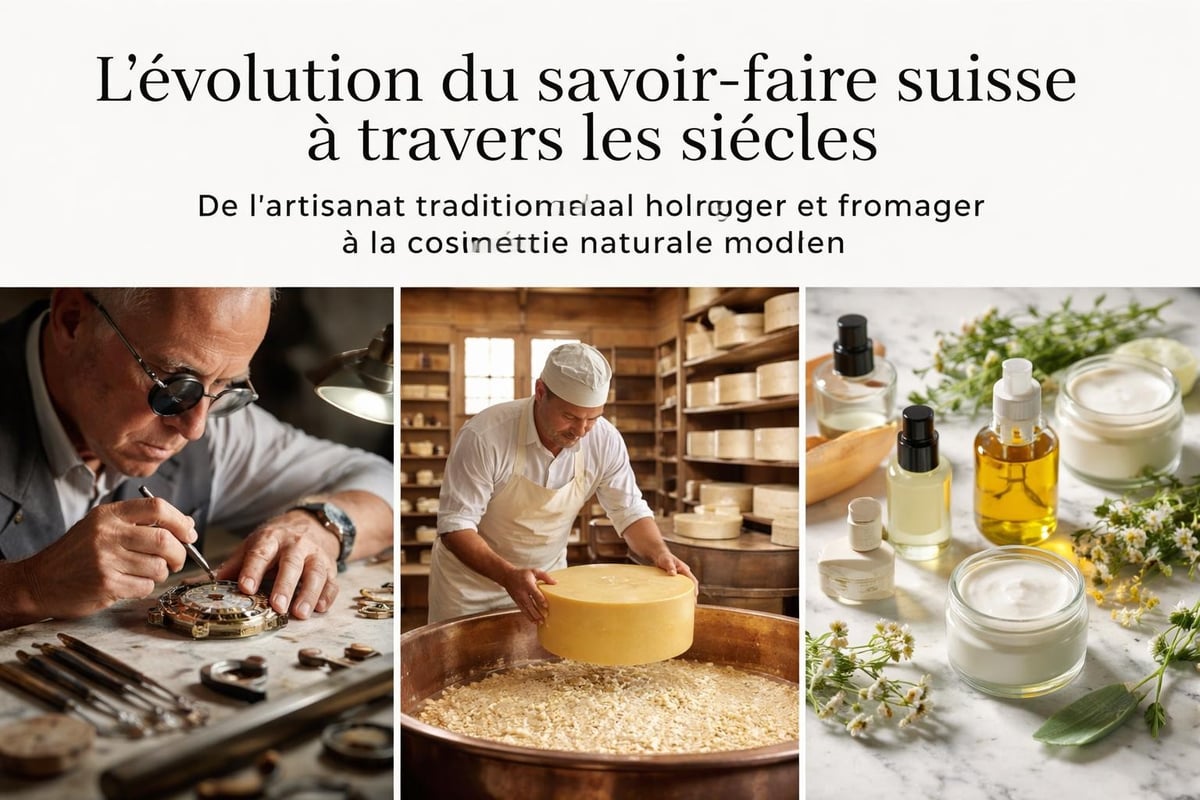
Switzerland has a long artisanal tradition that has been passed down from generation to generation. Companies like Fiedler, the oldest watch hand manufacturer in the country, or Kambly in biscuit making, perfectly illustrate this continuity.
This heritage is also found in the cosmetics industry. Formulations benefit from a rigorous scientific approach combined with an in-depth knowledge of natural ingredients. This dual expertise makes it possible to create effective products while remaining respectful of the skin and the environment.
The tangible benefits of a "Made in Switzerland" product
Choosing a product bearing the "Made in Switzerland" label means opting for much more than just a geographical origin. It means choosing tangible values that directly impact your satisfaction and well-being.
Exceptional quality and durability
Swiss products are designed to last. This philosophy is in stark contrast to the disposable culture that dominates much of the current market.
| Aspect | Standard mass production | Made in Switzerland |
|---|---|---|
| Quality control | Sampling | Systematic control |
| Lifespan | Limited | Optimal |
| Raw materials | Variable | Rigorous selection |
| Environmental impact | Often high | Minimized |
In natural cosmetics, this requirement translates into minimalist but ultra-performing formulations. Rather than adding dozens of ingredients, Swiss brands prioritize the right dose of truly effective active ingredients. This approach is perfectly reflected in basic.'s range of body products, where each formula contains only what is necessary to be effective.
Total traceability and transparency
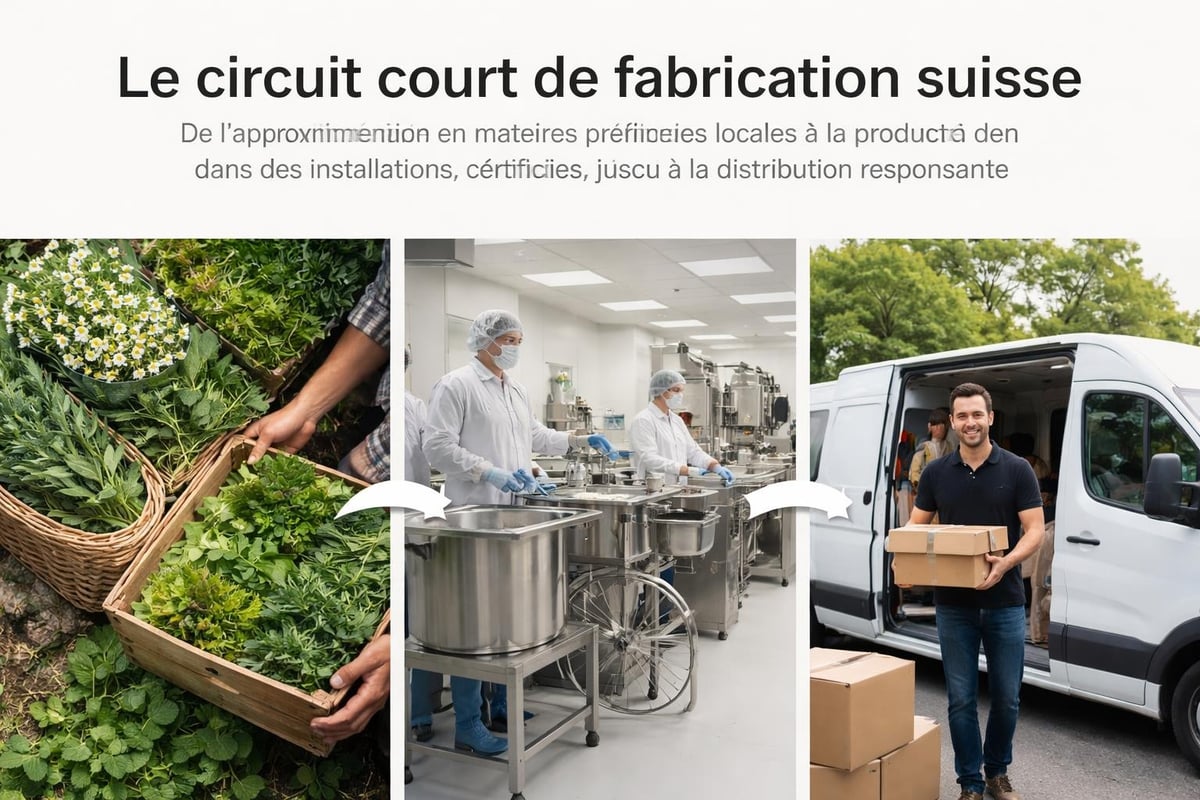
When you buy a "Made in Switzerland" product, you can easily trace the production chain. Swiss standards require precise documentation of each step, from the sourcing of raw materials to the finished product.
Traceability guarantees include:
- Certified origin of ingredients
- Complete documentation of manufacturing processes
- Quality tests at each stage
- Certification of production facilities
- Compliance with strict environmental standards
This transparency is particularly important for people who pay attention to what they put on their skin. You know exactly what your deodorant, cream, or lip balm contains.
Environmental respect and short supply chains
Switzerland has developed a strong ecological awareness that is reflected in its industrial practices. Producing locally significantly reduces the carbon footprint associated with transport.
Many Swiss companies also prioritize local raw materials when possible. The cheese L'Etivaz, for example, beautifully illustrates this artisanal and local approach in the agri-food sector. This same philosophy applies to natural cosmetics, which can source vegetable oils, waxes, and plant extracts cultivated locally or in neighboring countries.
Made in Switzerland in the cosmetics sector
The Swiss cosmetics sector has experienced remarkable growth in recent years, driven by increasing demand for natural and transparent products. Consumers are looking for simple, effective, and respectful formulas.
The excellence of natural formulations
Switzerland has recognized expertise in chemistry and pharmacology. This scientific competence, combined with a respectful approach to nature, makes it possible to create natural cosmetics of remarkable effectiveness.
Swiss laboratories favor a minimalist approach: fewer ingredients, but better dosed and more concentrated in active ingredients. This "less is more" philosophy resonates particularly well with modern consumers who want to understand what they are using.
Take the example of natural deodorants. Unlike industrial formulas that often contain more than 20 ingredients, deodorants made in Switzerland can be limited to 5 or 6 carefully selected components, all natural and effective.
Strict standards for organic cosmetics
Swiss regulations concerning organic cosmetics often go beyond European standards. Controls are rigorous and frequent, ensuring that label promises are kept.
Specific requirements include:
- Total prohibition of certain controversial substances
- Minimum percentage of certified organic ingredients
- Mandatory dermatological tests
- No animal testing
- Environmentally friendly packaging
These high standards reassure consumers who can use their products with confidence. For sensitive skin in particular, knowing that a product made in Switzerland has undergone strict controls is a real guarantee.
Innovation in the service of naturalness
Swiss natural cosmetics brands invest heavily in research and development. They constantly work to improve their formulas, discover new natural active ingredients, and optimize the effectiveness of their products.
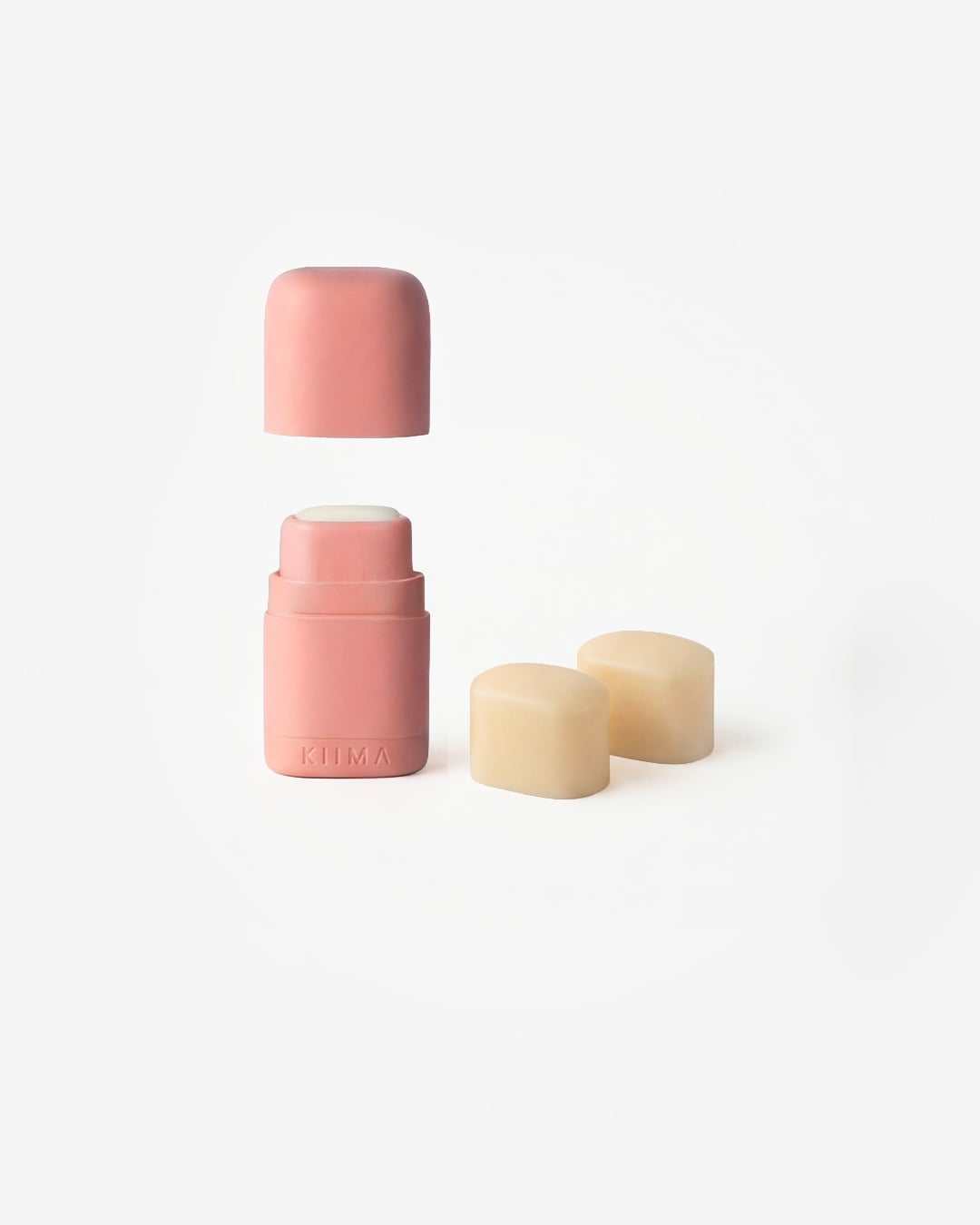
This innovation translates into products that combine tradition and modernity. For example, the my refillable lip balm - starter kit perfectly illustrates this approach: an ultra-nourishing natural formula in an innovative and sustainable format that reduces plastic waste. In a few seconds, you install your refill in your reusable applicator, and you enjoy effective care while adopting a concrete ecological gesture.
The ethical and social dimension of Made in Switzerland
Beyond product quality, choosing an item made in Switzerland also supports a particular social and ethical model. Working conditions in Switzerland are among the best in the world.
Exemplary working conditions
Employees of Swiss manufacturers benefit from fair wages, optimal safety conditions, and respect for their fundamental rights. This social dimension is an integral part of the value of a Swiss product.
| Criterion | International standard | Swiss standard |
|---|---|---|
| Minimum wage | Variable | High and regulated |
| Working hours | Often excessive | Strictly regulated |
| Workplace safety | Basic | Very high standards |
| Continuous training | Limited | Encouraged and funded |
By purchasing a product made in Switzerland, you contribute to maintaining these quality jobs and supporting an economy that respects workers. It is a meaningful choice, especially for those who care about the social impact of their consumption.
Support for the local economy
Every franc spent on a Swiss product largely stays within the local economy. This creates a virtuous cycle: businesses prosper, hire, and pay taxes that fund infrastructure and public services.
Initiatives like Les Manufactures show how local production can also have a solidarity dimension, by offering work to people with disabilities or in professional reintegration. This inclusive approach further strengthens the ethical value of Made in Switzerland.
Preservation of heritage and know-how
By choosing local products, you actively participate in the preservation of precious intangible heritage. Traditional manufacturing techniques, ancestral recipes, and artisanal know-how are thus passed on to new generations.
In the cosmetic sector, this transmission is manifested by formulations that draw inspiration from traditional recipes while benefiting from modern scientific advances. The vegetable oils used in natural care, for example, are selected according to an in-depth knowledge of their properties, knowledge that has been refined over decades.
How to recognize a true "Made in Switzerland" product?
Given the proliferation of origin mentions, it is legitimate to want to verify the authenticity of a product stamped "Made in Switzerland." Here are some keys to help you distinguish the real from the fake.
Official labels and certifications
Several certifications guarantee the Swiss origin of a product. The Swiss Made label is the best known, but other certifications exist depending on the sector.
The main indicators of trust:
- Official Swiss Made logo with the Swiss cross
- Clear mention of the place of manufacture on the packaging
- Recognized organic certifications (Bio Suisse, Natrue, Cosmos)
- Company registration number
- Full contact details of the manufacturer in Switzerland
Do not hesitate to consult the brand's website to check its commitments. A truly transparent company, like basic., will clearly display its values, production methods, and ingredient origin.
Transparency of communication
An authentic brand that genuinely manufactures in Switzerland has nothing to hide. It will communicate openly about its processes, suppliers, and production facilities. You will easily find detailed information on its website or in its communications.
Beware of vague or ambiguous formulations. Phrases like "designed in Switzerland" or "Swiss inspiration" do not guarantee that the product is actually manufactured there. The mention must be clear: Made in Switzerland or Produced in Switzerland.
Price, an indicator to consider
Let's be honest: producing in Switzerland costs more than elsewhere. Wages are higher, standards are stricter, and controls are more frequent. All of this naturally affects the final price.
A product truly made in Switzerland cannot be sold at the same price as an equivalent product made in low-cost countries. If the price seems abnormally low to you, ask yourself questions. That said, a high price does not automatically guarantee Swiss origin either. The ideal is to check the certifications and the brand's transparency.
Emblematic sectors of Made in Switzerland
Certain areas are particularly representative of Swiss excellence. Their reputation extends far beyond the country's borders and inspires confidence worldwide.
Watchmaking, historical ambassador
Swiss watchmaking remains the absolute world reference. Houses like Glycine, founded in 1914, embody this unique know-how that combines technical precision and refined aesthetics. This watchmaking tradition has forged Switzerland's image as a country of precision and quality.
Chocolate and agri-food
Swiss chocolate factories enjoy world renown. Their mastery of conching techniques and rigorous selection of cocoa beans make their products essential references. This agri-food expertise demonstrates that "Made in Switzerland" successfully applies far beyond traditional manufacturing industry.
Health and well-being products
The Swiss pharmaceutical and parapharmaceutical sector enjoys an excellent reputation. Companies like Apenta demonstrate that Swiss precision also applies to health products, with impeccable quality control.
This expertise naturally extends to natural and organic cosmetics. Consumers make the link between the rigor of pharmaceutical products and that of cosmetic care. Partners such as Green Spa, a French brand specializing in professional organic cosmetics, also share this same demand for quality and naturalness, proving that these values transcend borders.
Home appliances and home equipment
Brands like V-ZUG embody Swiss excellence in the field of high-end home appliances. Their products combine design, energy performance, and durability, values also found in other sectors such as Swiss Fermetures for windows and doors.
This sectoral diversity proves that "Made in Switzerland" is not just a marketing label, but a true culture of excellence that spans all areas of production.
The future of Made in Switzerland facing contemporary challenges
The world is changing rapidly, and "Made in Switzerland" must adapt while preserving its fundamental values. The challenges are numerous, but the opportunities are just as great.
Digitization and innovation
Switzerland invests massively in research and development. Swiss companies integrate new technologies while maintaining their demand for quality. 3D printing, artificial intelligence to optimize formulations, or blockchain to guarantee traceability: all these innovations reinforce the value proposition of Made in Switzerland.
In natural cosmetics, this innovation translates into new extraction methods that better preserve plant active ingredients, or into innovative and sustainable packaging. The best sellers of a brand often reflect this ability to innovate while remaining faithful to the principles of naturalness and effectiveness.
Sustainability as an absolute priority
Consumers in 2026 are increasingly sensitive to environmental issues. "Made in Switzerland" naturally meets this expectation thanks to short supply chains, strict ecological standards, and a culture of sustainability rooted in Swiss industrial practices.
Brands go even further by developing circular approaches: reusable packaging, recycling programs, zero-waste formulas. This evolution fits perfectly into the Swiss DNA, which has always prioritized quality and longevity over rapid consumption.
Personalization and proximity to the consumer
Swiss brands are developing more direct relationships with their customers. Thanks to digital technologies, they can explain their processes, share their values, and build a real community around their products.
This closeness strengthens trust and allows consumers to better understand what they are buying. Bestsellers are no longer chosen solely for their effectiveness, but also for the story and values they embody.
The "Made in Switzerland" label represents much more than a simple geographical mention: it's a commitment to quality, sustainability, and ethics. In the field of natural cosmetics, these values take on their full meaning when you're looking for products that respect your skin and the environment. At basic., we embody these Swiss principles daily by creating minimalist, high-performance, and completely transparent skincare products, carefully made in Switzerland to naturally care for you.