


Natural deodorant without essential oils: gentle & effective
Discover why choosing a natural deodorant without essential oils can transform your routine. Gentle, effective, and respectful of sensitive skin.

More and more people are looking to simplify their beauty routine while being kind to their skin. Natural deodorants without essential oils represent a gentle and effective alternative for those who wish to avoid potentially irritating ingredients. Contrary to popular belief, a natural deodorant does not need essential oils to be effective. On the contrary, this minimalist approach offers daily protection while being suitable for the most sensitive skin, pregnant women, and people with allergies. In 2026, natural cosmetics are evolving towards streamlined formulas that focus on the essentials rather than multiplying ingredients.
Why choose a natural deodorant without essential oils
Essential oils are often perceived as a guarantee of naturalness and effectiveness. However, they are not suitable for everyone.
The limitations of essential oils in cosmetics
Essential oils are highly concentrated aromatic molecules. Although natural, they can cause skin reactions in many people. Sensitive, reactive, or atopic-prone skin reacts poorly to these volatile substances, which can trigger redness, itching, or irritation.
Here are the main concerns related to essential oils:
- High allergy risk, even at low concentrations
- Contraindications for pregnant and breastfeeding women
- Photosensitization with certain oils (especially citrus)
- Incompatibility with medical treatments
- Not recommended for children under 6 years old
A natural deodorant without essential oils eliminates all these drawbacks. It offers a solution accessible to everyone, without restrictions or particular precautions.
Effectiveness based on the right active ingredients
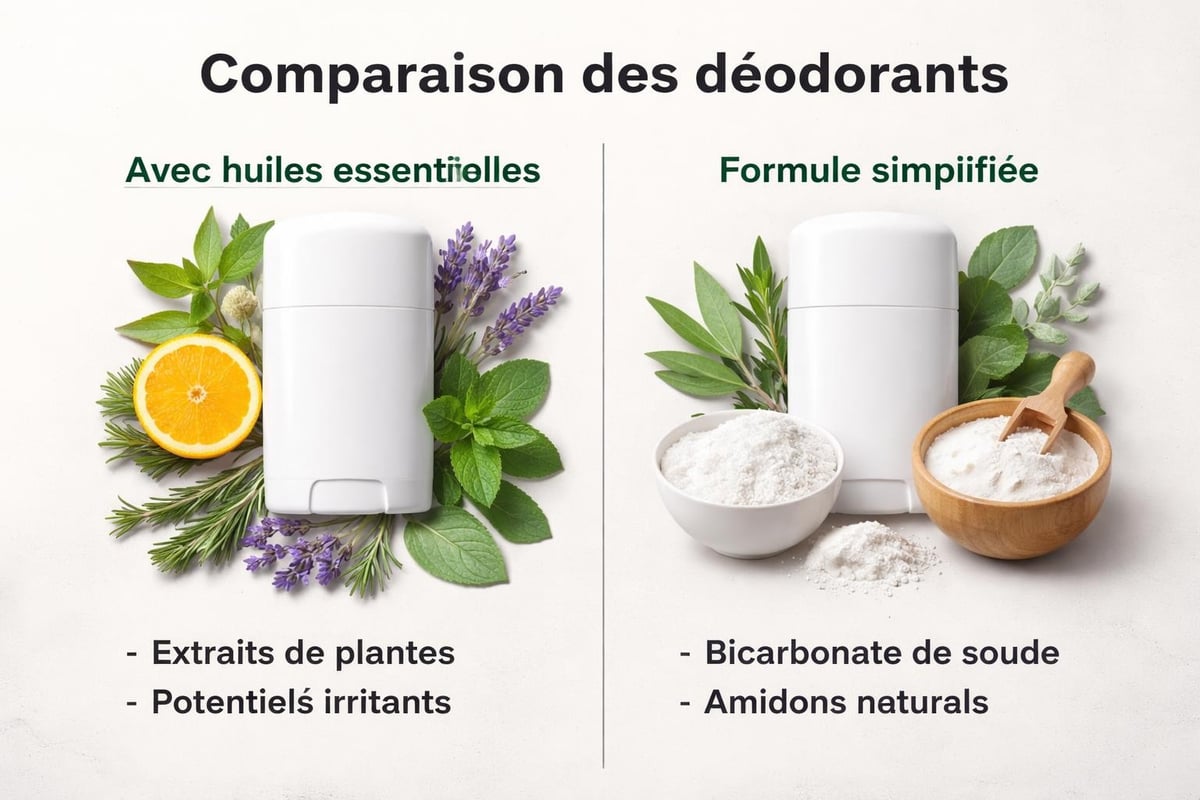
The absence of essential oils does not mean a lack of effectiveness. On the contrary, a natural deodorant without essential oils focuses its action on targeted ingredients that neutralize odors at the source.
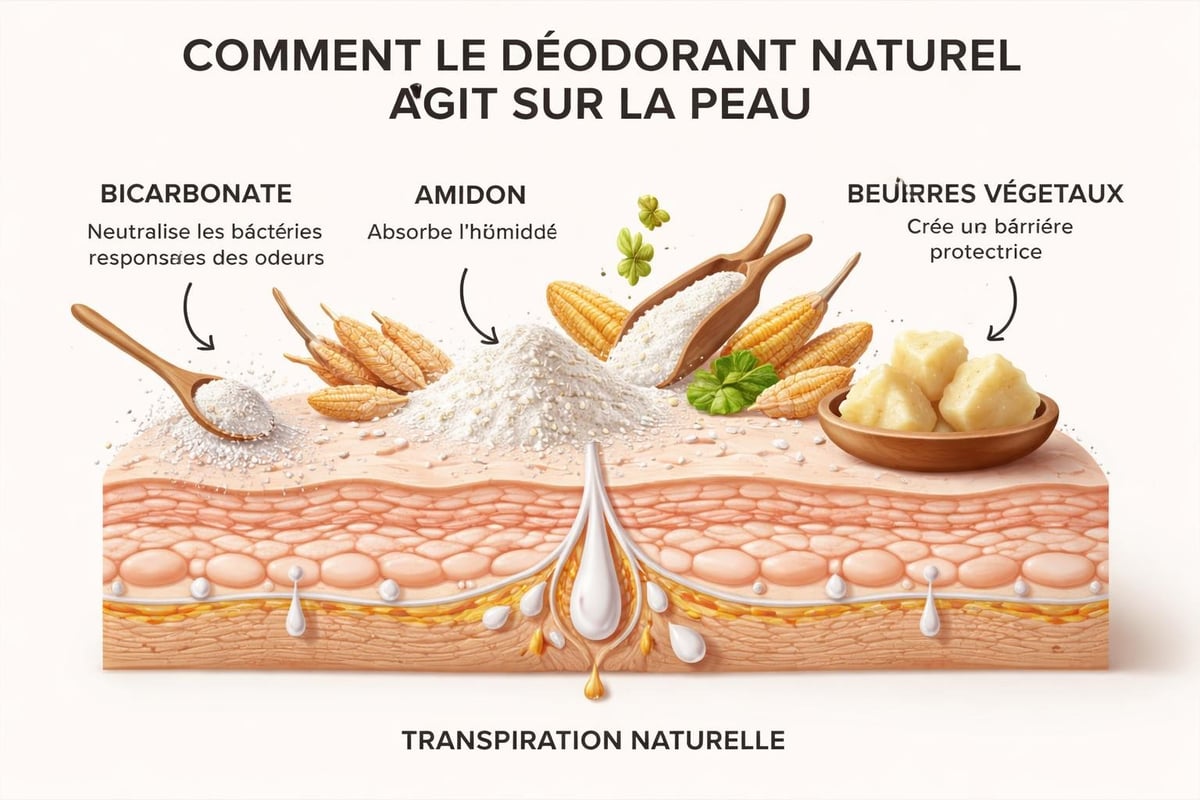
Sodium bicarbonate, for example, regulates the skin's pH and creates an unfavorable environment for odor-causing bacteria. Cornstarch or tapioca starch absorb moisture and provide a lasting feeling of freshness. Vegetable butters like shea butter nourish the skin while ensuring comfortable application.
These simple ingredients work in synergy to provide effective protection throughout the day. There's no need to add dozens of components to achieve satisfactory results.
The advantages of a minimalist formulation
Minimalist cosmetics are gaining ground in 2026, and for good reason. Fewer ingredients mean more transparency, more safety, and often more effectiveness.
Transparency and traceability
When a deodorant contains only a few carefully selected ingredients, it becomes easy to understand what you're applying to your skin. This transparent approach provides reassurance and allows for informed choices.
| Advantage | Conventional deodorant | Natural deodorant without essential oils |
|---|---|---|
| Number of ingredients | 15 to 30+ | 5 to 10 |
| Transparency | Complex formulation | Short and clear list |
| Allergy risk | High | Reduced |
| Suitable for sensitive skin | Variable | Yes |
| Environmental respect | Limited | Optimal |
Reduced risk of allergies and irritation
The more ingredients a formula contains, the higher the risk of skin reaction. By choosing a natural deodorant without essential oils, you drastically limit this risk. Streamlined formulations also make it easy to identify a problematic ingredient if a reaction occurs.
This simplicity is particularly suitable for people who have experienced disappointment with natural deodorants that are too rich in perfuming active ingredients. The gentleness of an essential oil-free formula allows for daily use without fear.
How an effective natural deodorant works
Understanding a deodorant's mechanism of action helps make the right choice. Unlike antiperspirants that block perspiration, natural deodorants work differently.
The role of each key ingredient
The star ingredients of a natural deodorant without essential oils work as follows:
- Sodium bicarbonate: neutralizes odor-causing acids
- Starch (corn, tapioca): absorbs moisture for dry skin
- Vegetable butters: nourish and facilitate application
- Natural waxes: create a pleasant and stable texture
- Vegetable oils: provide comfort and skin protection
This intelligent combination results in a deodorant that respects the natural perspiration process while effectively controlling odors. Perspiration is an essential thermoregulation mechanism that should not be completely blocked.
The importance of pH and skin balance
Underarm skin has a slightly acidic pH, typically between 4.5 and 5.5. The bacteria that cause bad odors thrive in this environment. A well-formulated natural deodorant without essential oils adjusts this pH to limit bacterial proliferation without disturbing the skin's natural balance.
This is why the dosage of active ingredients is crucial. Too high a concentration of bicarbonate can irritate, while too low a dose will not be effective enough. The formulation must find the right balance, hence the importance of choosing expertly formulated skincare products.
Choosing the right natural deodorant without essential oils
Given the growing offer of natural deodorants, a few criteria will help you identify the ideal product for your needs.
Essential selection criteria
Check these elements before purchasing:
- Short ingredient list: prefer formulas with fewer than 10 ingredients
- Absence of aluminum salts: harmful to health in the long term
- Organic certification: guarantees the natural origin of raw materials
- Vegan formula: animal-friendly and often gentler
- Local production: reduces carbon footprint and supports the local economy
- Sustainable packaging: paper, cardboard, or refillable containers
In Switzerland, many brands now offer natural deodorants that meet these demanding criteria. Swiss origin often signifies quality and adherence to strict environmental standards.
Adaptation to your skin type
Even among natural deodorants without essential oils, some formulations are better suited for certain skin types. If you have very sensitive skin, opt for versions without bicarbonate or with a reduced concentration. For normal skin, a classic bicarbonate formula will offer optimal effectiveness.
| Skin type | Recommended formulation | Point of attention |
|---|---|---|
| Sensitive | Bicarbonate-free or low dose | Test on a small area |
| Normal | Standard dose bicarbonate | No precautions |
| Reactive | Enriched with soothing butters | Avoid after hair removal |
| Dry | Rich in vegetable oils | Generous application |
The transition to natural deodorant
Switching from a conventional antiperspirant to a natural deodorant sometimes requires an adjustment period. Don't be discouraged if the first few days seem difficult.
The skin detoxification phase
Your skin needs time to eliminate accumulated aluminum residues and other synthetic substances. This transition period usually lasts between two and four weeks. During this time, you may notice more abundant perspiration or more pronounced odors.
Here's how to facilitate this transition:
- Clean your armpits thoroughly morning and evening
- Gently exfoliate once a week to remove dead skin cells
- Apply your natural deodorant without essential oils in a thin layer
- Reapply midday if necessary
- Wear clothes made of natural fibers that allow the skin to breathe
This phase is temporary. Your body gradually regains its natural balance, and the natural deodorant without essential oils becomes more and more effective over the weeks.
Optimizing daily effectiveness
To get the most out of your natural deodorant, a few simple steps make all the difference. Apply it to clean, perfectly dry skin for optimal adherence. Wait a few minutes after showering before applying to allow the skin to return to its normal temperature.
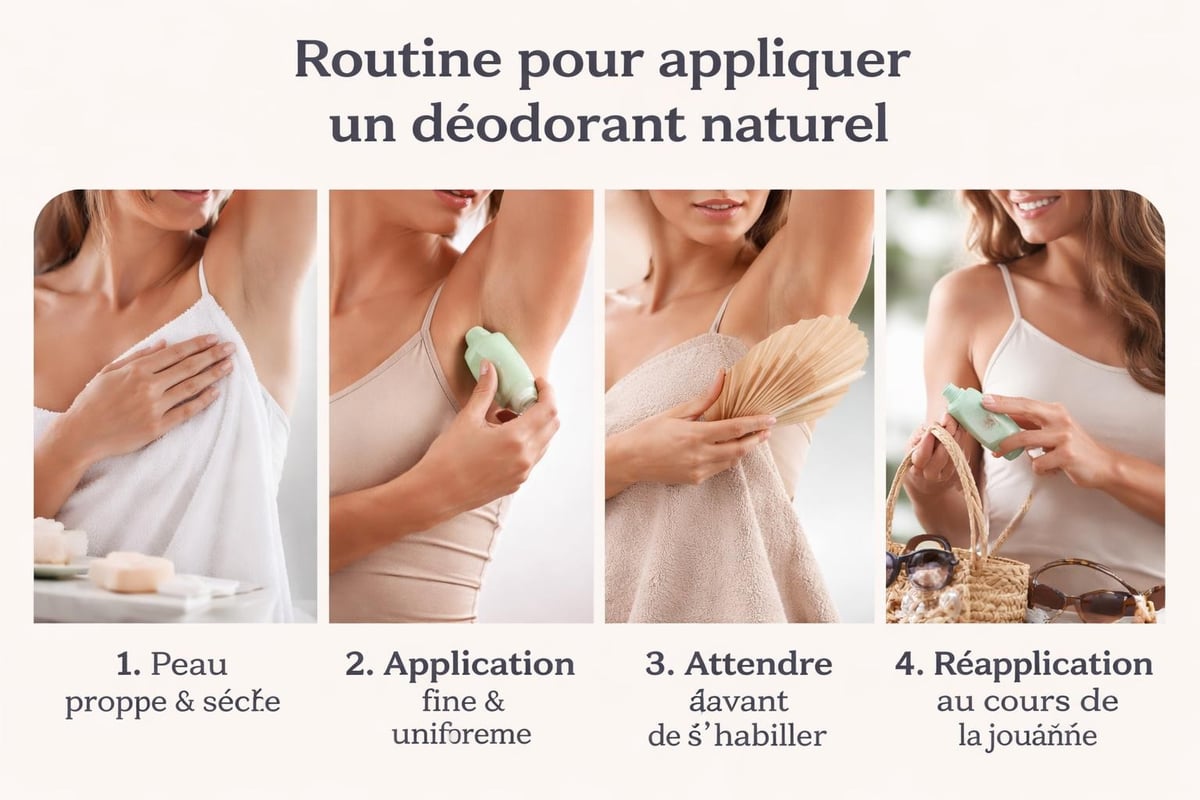
If you engage in intense sports activity, don't hesitate to bring your stick for a touch-up after your workout. The advantage of a natural formula is that it can be applied several times a day without risk to your health.
Environmental and ethical impact
Choosing a natural deodorant without essential oils goes beyond simple personal care. It is also a gesture for the planet and for a more responsible way of consuming.
Reduced ecological footprint
Conventional spray deodorants contain propellant gases harmful to the environment. Liquid formulas often require complex plastic packaging that is difficult to recycle. By opting for a natural stick packaged in paper or cardboard, you significantly reduce your waste production.
The production of essential oils also requires significant quantities of plants. For example, it takes about 100 kilograms of lavender to obtain one liter of essential oil. A natural deodorant without essential oils requires fewer plant resources and therefore limits the impact on crops.
Support for ethical practices
Many natural cosmetic brands are committed to fair trade practices. They favor short supply chains, fairly compensate their suppliers, and ensure dignified working conditions. By choosing these products, you support a more ethical economy.
Vegan certification also guarantees the absence of animal testing and animal-derived ingredients. This is an important value for many consumers in 2026 who wish to align their purchases with their convictions.
Misconceptions about natural deodorants
Several myths persist around natural deodorants. It's time to set the record straight to help you make an informed choice.
"Natural deodorants are not effective"
This is probably the most persistent misconception. While not all natural deodorants are created equal, a well-designed formulation offers effectiveness comparable to conventional products. The difference? Natural deodorant without essential oils does not block perspiration but neutralizes odors, which is different but just as effective for daily comfort.
Feedback from thousands of users in 2026 confirms that with the right formula and after the adaptation period, effectiveness is there. The key lies in choosing active ingredients at the right concentration.
"All natural deodorants contain essential oils"
This confusion is understandable because many brands use essential oils to fragrance their products. However, more and more manufacturers are offering alternatives without these ingredients, thus meeting the needs of sensitive skin and people with allergies.
Furthermore, just as with lip balms that can be formulated without irritating ingredients, deodorants also benefit from streamlined and gentle formulations. Innovation in natural cosmetics today makes it possible to create effective products with a minimum of ingredients.
Comparative table of main misconceptions:
| Misconception | Reality |
|---|---|
| "Ineffective against odors" | Proven effectiveness with good active ingredients |
| "Leaves white marks" | Depends on the formulation, not systematic |
| "Expensive and elitist" | Price justified by quality, accessible |
| "All scented with essential oils" | Many essential oil-free options available |
| "Unpleasant texture" | Modern formulas are very pleasant |
"Bicarbonate always irritates"
Sodium bicarbonate has a bad reputation among some users who have experienced irritation. The truth? It's a matter of dosage and quality. Too concentrated a bicarbonate or one of food rather than cosmetic grade can indeed irritate. But a professional formulation uses the optimal concentration for effectiveness without the drawbacks.
If you've had a bad experience with a bicarbonate deodorant, don't give up on all natural deodorants. Try a bicarbonate-free formula or test a reduced-concentration version. Every skin is unique and deserves to find its ideal product.
Integrating natural deodorant into a holistic routine
The choice of a natural deodorant without essential oils often fits into a broader approach of conscious consumption and overall well-being.
Consistency in your cosmetic choices
If you opt for a natural deodorant, it makes sense to extend this philosophy to your entire beauty routine. Facial care and body products formulated with the same minimalist approach offer beneficial consistency for your skin.
This consistency avoids conflicts between ingredients of different products and simplifies your routine. Fewer products, better chosen, applied regularly: this is the key to healthy skin and lasting beauty.
The importance of a holistic approach to well-being
Beyond the products you use, your lifestyle directly influences the effectiveness of your deodorant. A balanced diet, sufficient hydration, and stress management contribute to naturally regulating your perspiration and body odors.
The clothes you wear also play a role. Synthetic fibers promote maceration and odors, while cotton, linen, or bamboo allow the skin to breathe. Also, choose gentle laundry detergents without artificial fragrances that can conflict with your natural deodorant.
Elements of a holistic routine:
- Diet rich in green vegetables and low in processed foods
- Daily hydration of 1.5 to 2 liters of water
- Regular physical activity to eliminate toxins
- Quality sleep for cell regeneration
- Breathable natural fiber clothing
- Stress management through meditation or relaxing activities
This holistic approach maximizes the effectiveness of your natural deodorant without essential oils and improves your overall well-being.
2026 innovations in natural deodorants
The natural cosmetics industry is constantly evolving. In 2026, several innovations are making natural deodorants even more effective and pleasant to use.
New active ingredients and improved textures
Manufacturers have developed new naturally derived active ingredients that boost effectiveness without resorting to essential oils. Topical probiotics, for example, rebalance the skin microbiome to naturally limit odor-causing bacteria. Purified clays absorb moisture while remineralizing the skin.
Textures have also evolved. Gone are hard, difficult-to-apply sticks. Current formulas glide easily onto the skin, absorb quickly, and leave no sticky feeling. Some deodorants even adopt innovative formats like powders to apply directly or creams in jars for total control over the quantity used.
Sustainable and refillable packaging
Innovation also affects containers. Many brands now offer refillable systems that drastically reduce waste. You buy a reusable applicator once, then only order refills. This approach reduces waste production tenfold over a year.
Materials are also evolving: FSC-certified cardboard, compostable bioplastics, infinitely recyclable aluminum. Some brands even go as far as zero waste with solid deodorants sold in bulk that you buy in the exact weight you need.
Choosing a natural, essential oil-free deodorant means opting for gentleness, effectiveness, and respect for both your skin and the planet. This minimalist approach proves that you don't need a multitude of ingredients to achieve optimal results. At basic., we believe in this philosophy: refined formulas, active ingredients in the right dose, and effectiveness that makes a daily difference. Discover our range of Swiss natural cosmetics and join a community that has chosen high-performance simplicity.