


Hydrating Vegan Lip Balm: The Complete Guide 2026
Discover everything about vegan moisturizing lip balm: natural ingredients, benefits, selection criteria, and practical tips for soft lips.

The lips are a particularly delicate area of our face, exposed to external aggressions and requiring special attention. A hydrating vegan lip balm represents a natural and ethical solution to protect and nourish this sensitive part while respecting your values. In a context where natural cosmetics are gaining popularity, understanding what constitutes a quality plant-based lip care product becomes essential for making the best choices. This guide will take you through the fundamental aspects of these innovative balms, their components, their concrete benefits, and the criteria to consider to find the product perfectly suited to your needs.
What makes a truly effective vegan lip balm?
A hydrating vegan lip balm stands out for its dual commitment: offering effective hydration while completely excluding ingredients of animal origin. Unlike traditional formulas that often contain beeswax, honey, or carmine, vegan versions favor botanical alternatives that are just as nourishing.
The fundamentals of a vegan formula
Vegan cosmetics go far beyond the simple absence of animal ingredients. They embody a global philosophy that respects living beings.
Essential criteria for an authentic vegan balm:
- Total absence of beeswax, replaced by plant waxes like candelilla or carnauba wax
- No trace of lanolin, substituted by nourishing vegetable butters
- Formulations without honey, where vegetable oils provide softness and protection
- Cruelty-free certification, guaranteeing complete ethics
- Natural and organic ingredients prioritized for a holistic approach
Modern lip balms prove that effectiveness and ethics can perfectly coexist. Plant science now offers remarkable alternatives that rival, or even surpass, conventional formulas.
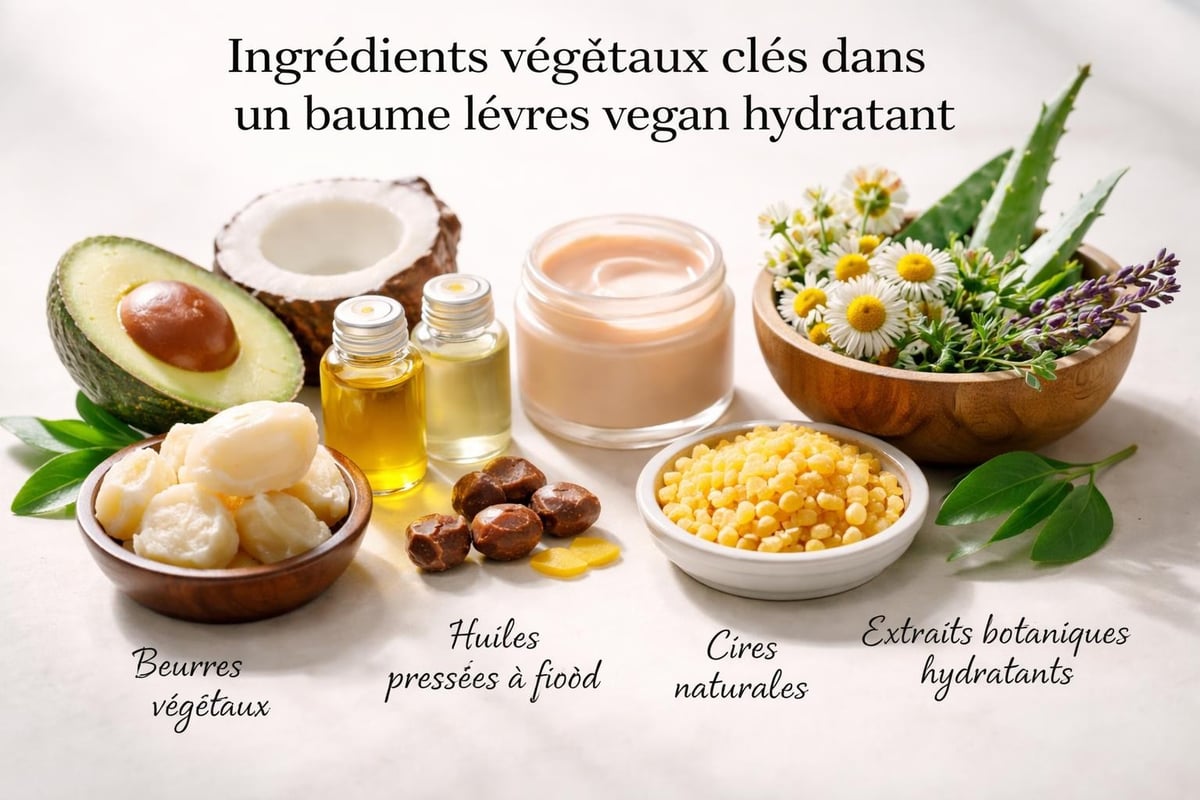
Plant-based hydration: how it works
Lip hydration relies on two complementary mechanisms: providing water and creating a protective barrier to retain it. Plant-based formulas excel in both areas thanks to their natural richness in active compounds.
Vegetable oils such as jojoba, sweet almond, or coconut oil contain essential fatty acids that penetrate deeply. These lipids restore the natural lipid barrier of the lips, often weakened by climatic conditions or stress.
| Plant Ingredient | Main Property | Benefit for Lips |
|---|---|---|
| Shea butter | Intense nourishment | Repairs damaged lips |
| Coconut oil | Protection | Forms a protective film |
| Candelilla wax | Texture | Hold and consistency |
| Vitamin E | Antioxidant | Prevents aging |
| Aloe vera | Soothing | Calms irritation |
The star ingredients of hydrating vegan lip balm
Choosing an effective hydrating vegan lip balm involves understanding the value of its components. Brands committed to natural cosmetics meticulously select each ingredient for its specific virtues.
Vegetable butters: deep nourishment
Vegetable butters form the nourishing base of any good natural lip care product. Their rich texture and fatty acid composition make them particularly suitable for dry lips.
Shea butter tops the list thanks to its exceptional concentration of vitamins A, E, and F. It penetrates quickly without leaving a greasy film and has remarkable repairing properties. For chapped lips or those exposed to cold, it offers immediate relief.
Cocoa butter, on the other hand, provides lasting protection. Its firmer texture creates an effective protective barrier against wind and sun. Its naturally gourmet scent also appeals to users looking for a pleasant sensory experience.
Mango butter, less known but just as effective, combines lightness and nourishment. It is particularly suitable for people who prefer a melting texture that does not stick.
Vegetable oils: active hydration
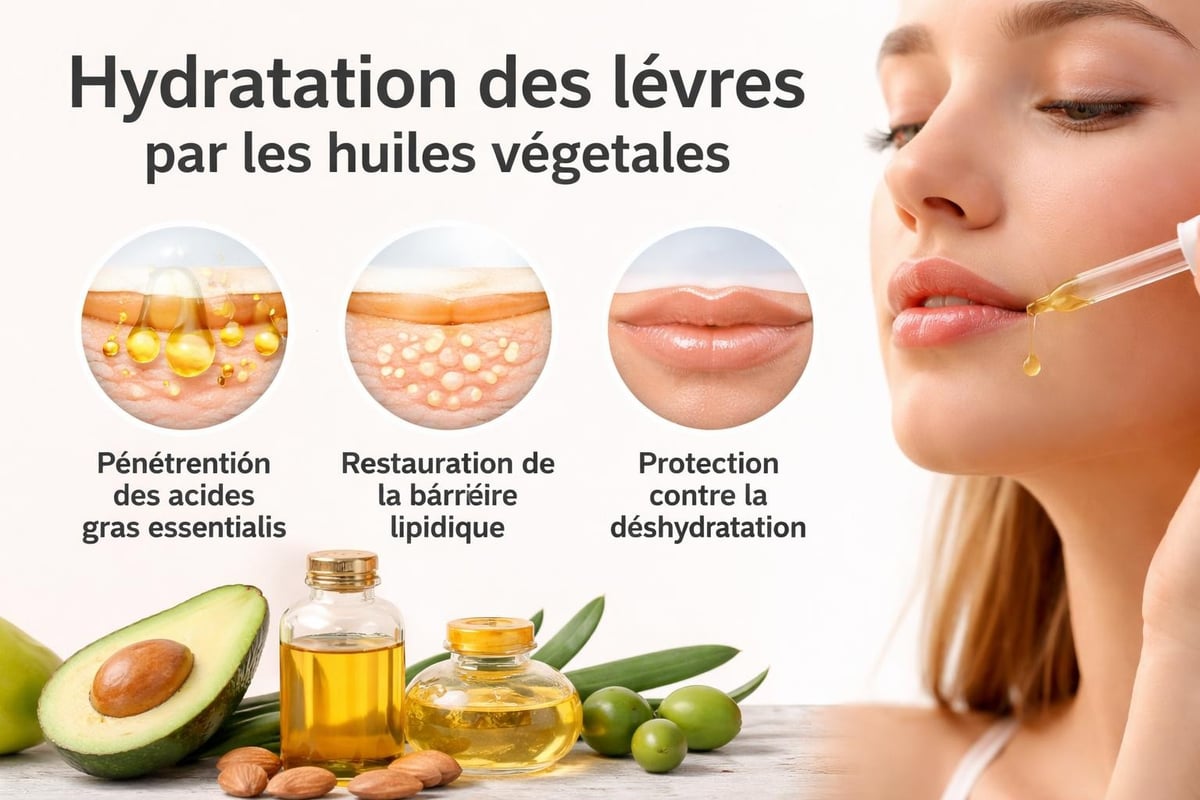
Cold-pressed vegetable oils preserve all their essential nutrients. In a hydrating vegan lip balm, they play a central role in providing hydration and suppleness to the lips.
Jojoba oil has a composition similar to human sebum, facilitating its absorption. It naturally regulates hydration without clogging pores, ideal for daily use.
- Sweet almond oil: soothes and softens sensitive lips
- Coconut oil: antibacterial and protective
- Avocado oil: rich in omega-3 for deep repair
- Castor oil: gives natural shine and volume to the lips
Minimalist formulas prioritize a few well-dosed oils rather than a long list of ingredients. This approach, adopted notably by Swiss brands like basic., guarantees effectiveness and optimal tolerance.
Vegetable waxes: structure and protection
Vegetable waxes structure the balm while forming a protective film on the surface of the lips. They advantageously replace beeswax in vegan formulations.
Candelilla wax, extracted from a Mexican shrub, offers excellent hold. Its smooth texture glides easily over the lips while creating a barrier against external elements. It also has emollient properties that maintain suppleness.
Carnauba wax, derived from the leaves of a Brazilian palm tree, has a high melting point. This characteristic ensures a stable balm even in summer, so it won't melt in your pocket or bag. Its natural shine also enhances the lips.
Why choose vegan lip care in 2026
The reasons for turning to a hydrating vegan lip balm extend far beyond ethical considerations. They encompass health, environment, and performance.
Benefits for your lip health
The skin of the lips, devoid of sebaceous glands, requires special attention. Synthetic ingredients present in some conventional balms can paradoxically aggravate dryness.
A well-formulated plant-based balm respects the natural physiology of the lips. Its biomimetic components work in harmony with your skin rather than creating artificial dependence. You will notice a gradual improvement in the condition of your lips, even without constant application.
Concrete health benefits:
- Reduced risk of allergies thanks to natural ingredients
- Absence of endocrine disruptors often present in synthetic cosmetics
- Real nourishment rather than a temporary effect
- Compatibility with the most sensitive skin
- Often organic ingredients, without pesticides
Positive environmental impact
Choosing natural cosmetics represents a concrete gesture for the planet. Intensive beekeeping raises important ecological questions, as does the extraction of certain animal-derived ingredients.
Vegan formulations prioritize renewable raw materials from sustainable cultivation. Shea, for example, comes from trees growing naturally in Africa, supporting local ecosystems and fair economies.
| Aspect | Conventional Balm | Hydrating Vegan Balm |
|---|---|---|
| Ingredient origin | Animal + synthetic | Natural plant-based |
| Animal testing | Frequent | Never |
| Biodegradability | Variable | Excellent |
| Carbon footprint | High | Reduced |
| Packaging | Classic plastic | Often recyclable |
Committed brands go further by offering refillable formats. This innovation significantly reduces plastic waste generated by disposable beauty products.
Optimal performance and texture
The misconception that vegan cosmetics are less effective is a thing of the past. Advances in plant formulation have revolutionized the sector, offering remarkable textures and results.
A quality hydrating vegan lip balm melts on contact with the lips, instantly releasing its nourishing active ingredients. The sensation is both comfortable and non-greasy, allowing application before makeup without affecting its wear.
Natural fragrances, derived from essential oils or plant aromas, offer an authentic sensory experience. Unlike synthetic fragrances, they do not contain phthalates or other controversial compounds.
How to choose the ideal vegan lip balm
Faced with the growing offer of plant-based lip care, identifying the perfect product for your specific needs requires some knowledge. Several criteria guide an informed choice.
Deciphering the INCI list
The INCI list (International Nomenclature of Cosmetic Ingredients) reveals the true composition of a product. Ingredients appear in descending order of concentration.
Points to watch out for when reading:
- The first three ingredients generally make up 70 to 80% of the formula
- Favor Latin botanical names followed by "oil" or "butter" for pure oils and butters
- Beware of endless lists: often synonymous with complex and less natural formulations
- Look for organic certifications mentioned after the ingredient name
- Avoid parabens, silicones, and petrochemical derivatives
A truly minimalist balm contains a maximum of 5 to 10 ingredients. This simplicity guarantees traceability, tolerance, and effectiveness. Products like those offered on inuwet.com illustrate this streamlined approach.
Adapting the choice to your needs
Not all hydrating vegan lip balms are equally effective for specific problems. Identifying your primary needs guides you towards the appropriate formula.
For very dry or chapped lips, opt for formulas rich in shea butter and avocado oil. These ingredients provide intensive nourishment and visible repair in a few days. A generous nocturnal application accelerates healing.
In winter or in the mountains, look for balms containing candelilla wax to create an effective protective barrier against cold and wind. The addition of vitamin E strengthens this antioxidant protection.
Sensitive skin will appreciate short formulas without essential oils, which can be irritating. Calendula and chamomile naturally soothe without allergic risk.
For daily use, choose a light texture that penetrates quickly. Jojoba oil combined with a light veil of wax offers protection and comfort throughout the day.
Certifications and trusted labels
Certifications provide objective guarantees of a product's quality and ethics. They considerably simplify the choice among the multitude of available options.
| Label | Guarantee | Strengths |
|---|---|---|
| Vegan Society | 100% plant-based | International vegan reference |
| Cosmébio | Organic + natural | Certified organic ingredients |
| Natrue | Natural cosmetic | Clearly defined levels of naturalness |
| Cruelty Free | No animal testing | Ensured animal protection |
| Ecocert | Organic farming | Traceability of raw materials |
However, beware: the absence of certification does not necessarily mean that a product lacks quality. Small artisanal brands, especially Swiss ones, often offer excellent formulations without having the financial means to obtain all certifications.
Optimal use and care rituals
Owning an excellent hydrating vegan lip balm is not enough: its correct use maximizes its benefits. A few simple gestures transform your routine into a true care ritual.
Frequency and key application times
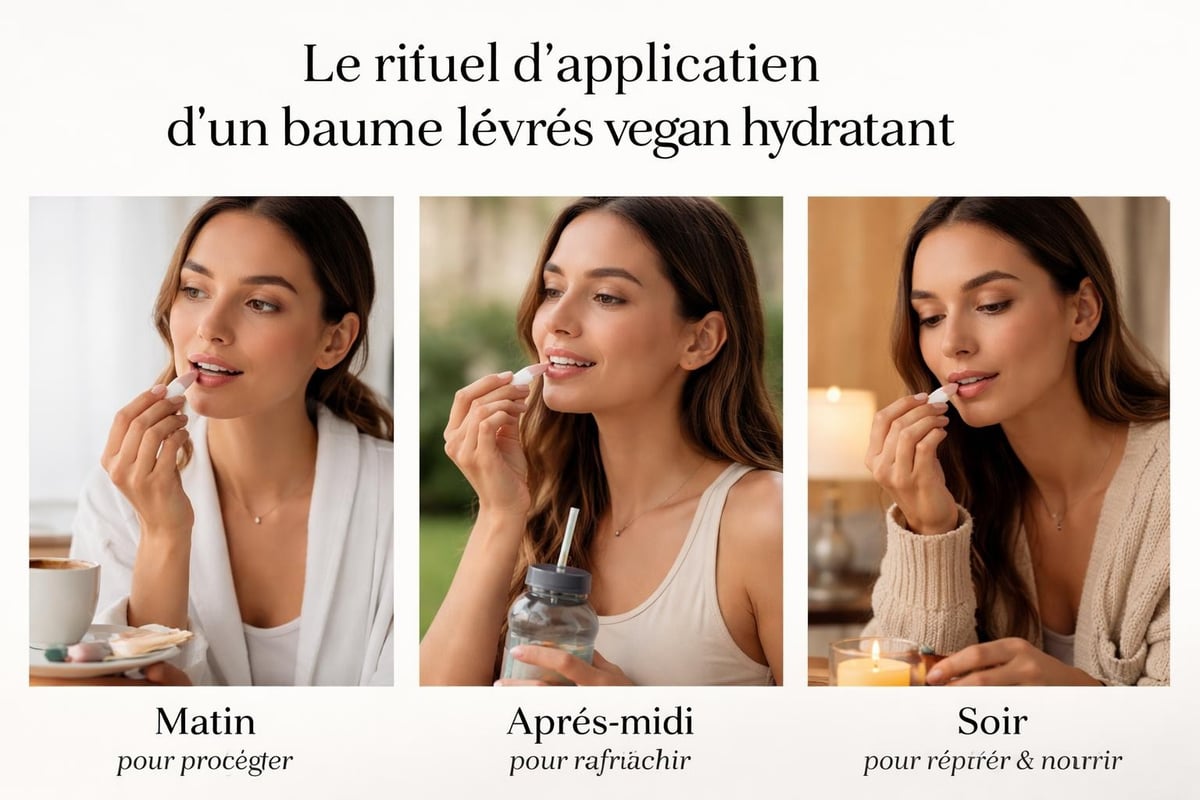
Regular application prevails over abundant application. It is better to nourish your lips three to four times a day with a thin layer than once with an excessive amount.
Strategic times to apply your balm:
- In the morning after brushing teeth: prepares the lips for the day
- Before going out: creates a protective barrier against the elements
- After meals: compensates for dehydration caused by food
- In the evening before going to bed: allows for optimal nighttime regeneration
During periods of lip stress (intense cold, sun exposure, intense heating), increase the frequency without hesitation. Your lips will absorb what they need.
Effective application techniques
The way you apply your balm directly influences its effectiveness. A few simple techniques optimize the penetration of active ingredients.
Start by gently exfoliating your lips once or twice a week. This step removes dead skin that prevents proper absorption of the care product. A simple mixture of fine sugar and coconut oil works wonders.
Then apply the balm with small circular touches, from the center outwards. This movement stimulates microcirculation and promotes penetration. Go slightly beyond the lip contour, an often-neglected area that is also prone to dehydration.
For particularly damaged lips, adopt the night mask: apply a generous layer before going to bed and leave it on all night. In the morning, your lips will be visibly plumped and softened.
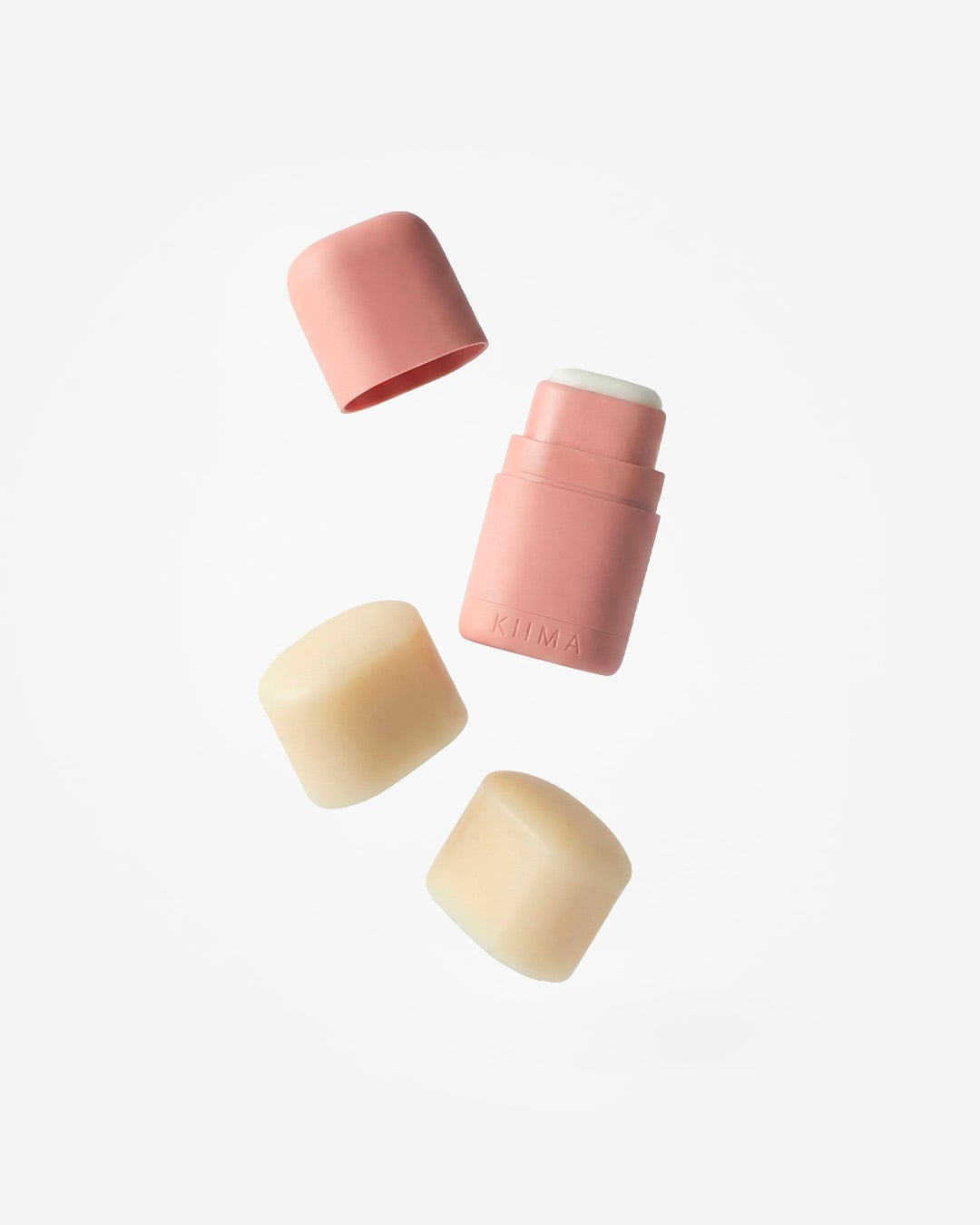
At basic., the minimalist approach extends to the usage ritual. The rechargeable lip balm starter kit simplifies this daily gesture while reducing environmental impact. A reusable applicator combined with practical refills transforms your beauty routine into an eco-responsible gesture.
Storage and durability
A well-preserved hydrating vegan lip balm retains all its properties. Natural formulations, without powerful synthetic preservatives, require some precautions.
Avoid direct exposure to sunlight or heat sources that can alter the texture and active ingredients. The ideal storage temperature is between 15 and 25°C. In summer, keep your balm in a drawer rather than in your car.
Always close the cap carefully after use to prevent the oxidation of vegetable oils. This simple habit significantly extends the product's lifespan.
The average shelf life of a natural balm varies between 12 and 18 months after opening. Formulations enriched with vitamin E, a natural antioxidant, generally last longer. Refer to the PAO (period after opening) symbol on the packaging.
Homemade formulations versus ready-to-use products
The DIY (Do It Yourself) trend in cosmetics appeals to many natural enthusiasts. Making your own hydrating vegan lip balm has advantages but also limitations to be aware of.
Advantages of homemade creations
Creating your balm allows for total control over the ingredients. You precisely select their origin, quality, and concentration. This transparency is reassuring and allows you to perfectly adapt the formula to your needs.
The cost is also an attractive argument. Raw materials purchased in bulk are generally cheaper than finished products, especially if you make several balms.
The creative and customizable aspect should not be underestimated. Choosing your favorite natural fragrance, adjusting the texture according to your preferences, experimenting with different vegetable butters transforms care into pleasure.
Limitations and precautions of DIY
Despite these advantages, homemade production has challenges. Microbiological stability is often a problem. Without suitable preservatives, a homemade balm can develop bacteria and mold, especially if it contains aqueous phases.
Optimal formulation requires technical knowledge. Correctly balancing the proportions of waxes, oils, and butters to obtain the ideal texture requires experience. Initial attempts often result in balms that are too hard or too soft.
The safety standards governing commercial cosmetics guarantee the absence of contamination and product stability. Your homemade creations do not have these guarantees, even with the best intentions.
Practical comparison:
- Homemade: total control, reduced cost, personalization, but microbiological risks and complex formulation
- Ready-to-use: guaranteed safety, optimized formulation, time-saving, but higher cost and less customization
To get the best of both worlds, opt for transparent brands like those specializing in Swiss natural cosmetics that share the DIY philosophy while guaranteeing safety and effectiveness.
Trends and innovations in 2026
The vegan moisturizing lip balm market is evolving rapidly, driven by growing demand for ethical and high-performance products. Several trends are marking 2026.
Refillable and zero-waste formats
The ecological revolution is profoundly impacting the cosmetics industry. Refillable formats are experiencing booming success, drastically reducing plastic waste.
These ingenious systems separate the reusable container from the compostable or recyclable refill. You invest once in a beautiful, durable applicator, then only buy refills. The financial savings add to the environmental benefit.
Packaging made from cardboard, recycled aluminum, or biodegradable materials is gradually replacing traditional plastic. Some brands even offer bamboo or cork packaging, which are renewable and aesthetically pleasing materials.
Innovative ingredients and superfoods
Research in plant-based cosmetics constantly identifies new exceptional ingredients. Superfoods are making their way into lip balm formulas to boost their properties.
Sea buckthorn berry oil, concentrated in rare omega-7s, accelerates cell regeneration. Cupuaçu butter, a cousin of cocoa originating from the Amazon, offers superior hydration thanks to its ability to retain water.
Adaptogenic mushroom extracts provide protection against oxidative stress. Reishi and chaga, rich in polysaccharides, strengthen the skin barrier while soothing.
Personalization and diagnostics
The trend towards personalization is gaining ground in the lip care sector. Some brands offer detailed questionnaires to recommend the formula perfectly suited to your profile.
Mobile applications analyze the condition of your lips via photo and suggest the optimal balm. This emerging technology promises to revolutionize our approach to personalized care.
Modular formulas allow for the addition of boosters according to seasonal needs: SPF in summer, ultra-nourishing actives in winter, or soothing agents in case of irritation.
Myths and realities of vegan lip care
Several misconceptions circulate regarding vegan moisturizing lip balms. Let's separate fact from fiction to help you make informed choices.
Myth 1: Vegan balms are addictive
Reality: Balm addiction usually stems from drying ingredients like menthol, camphor, or certain petrochemical derivatives found in conventional formulas. These components create a temporary cooling sensation but dry out the lips, requiring constant reapplication.
A true moisturizing vegan lip balm formulated with nourishing ingredients gradually improves the condition of your lips. You will notice a reduction in the need for application over time, a sign that your lips are regaining their natural balance.
Myth 2: Natural ingredients are less effective
Reality: Efficacy does not depend on synthetic or natural origin, but on the relevance and quality of the formulation. Vegetable oils naturally contain vitamins, antioxidants, and fatty acids in optimal proportions that chemistry sometimes struggles to reproduce.
Comparative studies show that vegetable butters like shea offer prolonged hydration comparable, or even superior, to synthetic agents. Their additional advantage lies in their excellent skin tolerance.
Myth 3: All vegan balms are alike
Reality: The diversity of vegan formulations equals that of conventional formulas. Between a balm based on candelilla wax and jojoba oil, and another combining mango butter and argan oil, the textures, sensations, and results vary considerably.
The quality of raw materials also massively influences the result. Raw cold-pressed shea butter will not have the same properties as an industrially refined version, even in otherwise identical formulations.
Myth 4: High price guarantees quality
Reality: While quality often comes at a cost, a high price can also reflect marketing expenses, luxurious packaging, or brand reputation rather than the intrinsic quality of the formula.
Learn to read labels and identify noble ingredients. A moderately priced product from a small artisan brand can outperform a prestigious reference if its formulation is better conceived. Brands like those specializing in minimalist products prove that simplicity, effectiveness, and reasonable price can coexist.
The importance of the container and packaging
Beyond the formula itself, the packaging of a vegan moisturizing lip balm deserves attention. It influences conservation, practicality, and environmental impact.
Tubes versus pots: comparative advantages
The tube format offers hygienic application without direct finger contact with the product. This feature extends the balm's shelf life and prevents bacterial contamination. Direct application also makes it easier to use on the go.
Pots allow for precise dosing and are better suited for very rich textures. However, they require the use of a clean finger or spatula to avoid contamination. Their format often allows for use down to the last trace of product.
Rotary sticks combine practicality and hygiene. Their compact format slips anywhere and allows for easy one-handed application. Refillable versions of this format are currently very successful.
Sustainable materials and recyclability
Recycled aluminum is an excellent alternative to plastic. Infinitely recyclable without loss of quality, it effectively protects the content from light and oxygen. Its slightly higher weight remains negligible.
Glass, though heavier and more fragile, offers complete neutrality. It is particularly suitable for premium formulas and is also perfectly recyclable. Some brands offer deposit systems to directly reuse containers.
Bioplastics from renewable resources (corn, sugar cane) represent an intermediate option. Be careful, however: not all are biodegradable or compostable. Check specific certifications.
Criteria for choosing eco-responsible packaging:
- Prioritize recycled and recyclable materials
- Check for clear recycling instructions
- Prefer refillable formats when available
- Avoid unnecessary over-packaging
- Choose brands that are transparent about their environmental approach
Initiatives like those of 50-ml.fr show that innovation and environmental responsibility are progressing hand in hand in the vegan cosmetics industry.
Adopting a vegan moisturizing lip balm represents much more than a simple cosmetic choice: it's a consistent gesture that combines self-care, animal respect, and environmental protection. By favoring natural and effective formulations, you give your lips exactly what they need to stay soft and protected every day. If you're looking for authentic, minimalist, and high-performance products, discover how basic. reinvents natural cosmetics with care products designed for your well-being and that of the planet.