


Effective Non-Irritating Deodorant: The 2026 Guide
Discover how to choose an effective non-irritating deodorant for your sensitive skin. Natural ingredients, practical tips, and gentle solutions.

Finding an effective non-irritating deodorant can sometimes feel like an uphill battle. Between formulas that are too aggressive, causing redness, and those that promise gentleness but fail to deliver on freshness, our underarms deserve better. In 2026, we finally have access to natural alternatives that combine skin respect with real performance. This guide will help you in your quest for the ideal deodorant that will care for your skin while keeping you fresh all day long.
Why do so many deodorants irritate the skin?
Underarm skin is particularly delicate and sensitive. This thin area, often affected by shaving or epilation, becomes vulnerable to chemical aggressors present in many conventional deodorants.
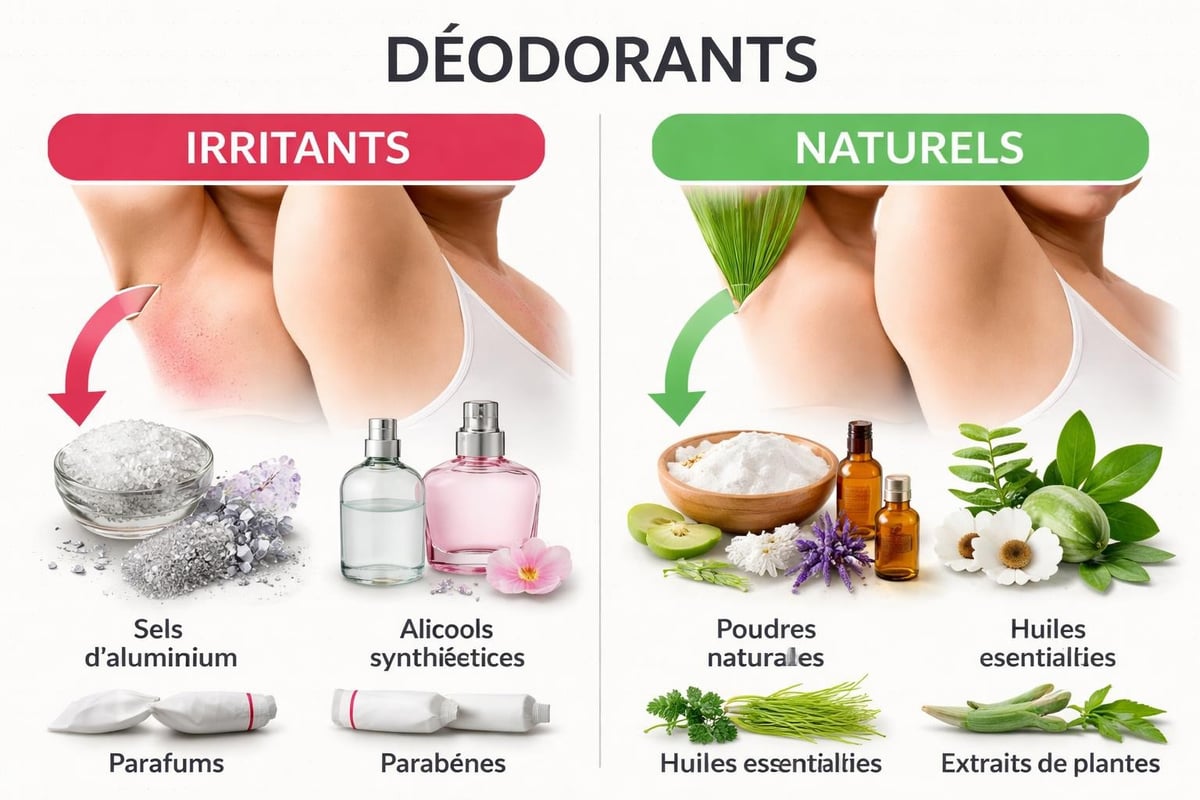
Common culprits behind irritation
Aluminum salts are one of the main irritants. Used to block perspiration, they can cause itching, redness, and even allergic reactions in sensitive skin. Alcohol, often added for its antibacterial properties, significantly dries out the skin and accentuates burning sensations, especially after shaving.
Synthetic fragrances are another major source of irritation. Composed of dozens of chemical molecules, they can trigger skin reactions even in people who have never had sensitivity problems before.
Artificial preservatives like parabens disrupt the skin's natural balance. Added to this are certain aggressive antibacterial agents like triclosan, now recognized as potentially harmful.
Criteria for an effective non-irritating deodorant
Choosing the right product requires understanding what truly differentiates a gentle, high-performance formula from a product that will only aggravate problems.
Ingredients to prioritize absolutely
An effective non-irritating deodorant relies on carefully selected natural ingredients. Baking soda, when used at the right concentration, neutralizes odors without being aggressive. Some brands refine it to make it even gentler.
Mineral powders like white clay or natural alum stone (different from synthetic aluminum salts) gently absorb moisture. Vegetable oils like coconut oil nourish the skin while possessing natural antibacterial properties.
| Natural Ingredient | Function | Skin Benefit |
|---|---|---|
| Refined Baking Soda | Neutralizes odors | Gentle, non-abrasive |
| Corn Starch | Absorbs moisture | Soothes and protects |
| Coconut Oil | Natural antibacterial | Nourishes and moisturizes |
| Beeswax | Texture and protection | Forms a gentle barrier |
| Essential Oils | Fragrance and freshness | Therapeutic properties |
What to absolutely avoid
To ensure optimal tolerance, steer clear of formulas containing aluminum chlorhydrate or any aluminum derivative. Understanding natural alternatives to aluminum salts will help you make informed choices.
Denatured alcohol, often listed as "alcohol denat," dries and irritates. Synthetic fragrances, simply mentioned as "parfum" or "fragrance" in the INCI list, often hide dozens of potentially allergenic substances. Artificial colorants add nothing to effectiveness and increase the risk of reaction.
How to safely test a new deodorant
Switching to a new product, even a natural one, requires some precautions to avoid unpleasant surprises and give your skin time to adapt.
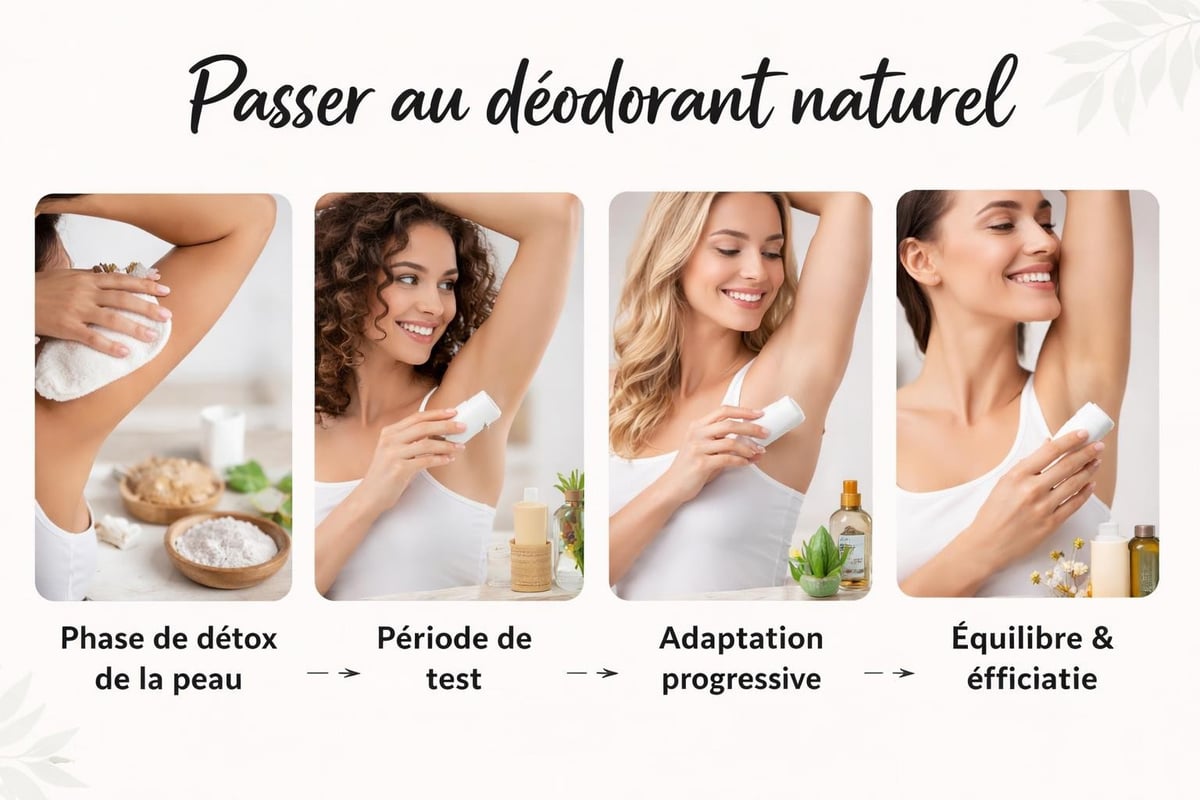
The transition period explained
Your body needs about two to four weeks to get used to an effective non-irritating deodorant, especially if you're coming from a conventional antiperspirant. During this phase, your sweat glands return to their natural functioning.
Here's how to manage this transition smoothly:
- Start on a weekend to observe reactions
- Apply a small amount during the first few days
- Gradually increase as tolerated
- Keep your old product as a backup if needed
- Note your observations in a journal
Don't be discouraged if the first few days seem disappointing. Your skin is recalibrating, and this process is perfectly normal. Sweating may even seem more significant at first, but it will regulate naturally.
Skin tolerance test
Before generously applying your new deodorant, perform a simple test. Apply a small amount to the inside of your forearm and wait 24 hours. This area has similar sensitivity to the underarms but is easier to monitor.
Observe for any redness, itching, or burning sensation. If no reaction appears, you can proceed with application under the arms, first on a small area, then gradually over the entire area.
The best formulations for sensitive skin
Not all sensitive skin is alike. Some react to baking soda, others to essential oils. Identifying your sensitivity type will guide you to the ideal formula.
Baking soda-free deodorants
For very sensitive individuals, alcohol-free deodorants are a first option to explore. Formulas based on clay and corn starch offer a gentle alternative to traditional baking soda.
Arrowroot powder remarkably absorbs moisture without irritating. Zinc oxide, used even in baby creams, protects and soothes while neutralizing odor-causing bacteria. Magnesium is also becoming a key ingredient in next-generation deodorants.
Formulas enriched with soothing active ingredients
An effective non-irritating deodorant often incorporates calming ingredients. Aloe vera instantly soothes skin irritated by shaving. Shea butter deeply nourishes and strengthens the skin barrier.
- Chamomile: recognized anti-inflammatory properties
- Calendula: heals and protects fragile skin
- Vitamin E: powerful antioxidant that regenerates
- Bisabolol: ultra-soothing chamomile extract
These active ingredients transform your beauty routine into a true daily care. Discover our body care collection that shares this philosophy of gentleness and effectiveness.
The importance of format and texture
The choice between stick, cream, roll-on, or spray is not just a matter of personal preference. Each format offers specific advantages for sensitive skin.
Comparison of different formats
| Format | Advantages | Ideal for |
|---|---|---|
| Solid Stick | Zero waste, practical, long-lasting | Quick application, travel |
| Cream in a jar | Precise dosage, very gentle | Very sensitive skin |
| Liquid Roll-on | Immediate freshness, quick drying | Heat, sports |
| Rich Balm | Nourishing, long-lasting protection | Dry skin, winter |
The solid stick is gaining popularity due to its practicality and minimal ecological impact. Its texture glides easily without requiring aggressive rubbing. The cream requires a more delicate application but allows for total control over the amount used.
Optimal application based on texture
For a stick, warm the product slightly against the skin before applying it in gentle movements. Two to three swipes are usually sufficient. With a cream, take a pea-sized amount and massage gently until fully absorbed.
Mistakes to absolutely avoid:
- Applying immediately after shaving or epilation
- Rubbing vigorously to make it penetrate
- Using an excessive amount
- Applying to damp skin
Wait at least 15 minutes after showering or shaving. Your slightly dry skin will better accept the product, and you'll avoid irritation.
Adapting your choice to your lifestyle
The effectiveness of a deodorant is also measured by its ability to stand up to your real daily life. Between an air-conditioned office and an intensive sports session, needs vary considerably.
For athletes and highly active skin
People who engage in regular physical activity need enhanced protection. Look for formulas containing magnesium or caprylic acid, particularly effective against bacteria even with abundant perspiration.
The best tested natural deodorants show that some natural formulations compete with the most powerful conventional products. The combination of baking soda, magnesium, and coconut oil creates a winning trio.
Choose water-resistant textures and reapply if necessary after post-workout showers. An effective non-irritating deodorant for sports should protect without clogging pores or preventing natural thermoregulation.
For everyday life and the office
If your day is mainly spent indoors, a lighter formula may suffice. Gentle balms based on vegetable oils and clay offer discreet and comfortable protection for 8 to 12 hours.
The advantage of minimalist formulas lies in their versatility. They adapt to variations in temperature and activity without overloading the skin. To learn more about suitable deodorant choices, explore the natural options available today.

Certifications and labels to know
In the jungle of natural cosmetics, certifications help you quickly identify reliable products that truly respect your skin.
Recognized organic and natural labels
Cosmos Organic guarantees at least 95% natural ingredients and 20% organic ingredients. This European label also requires ecological manufacturing processes. Ecocert certifies the natural origin of ingredients and the absence of controversial substances.
The Natrue label distinguishes three levels: natural cosmetic, natural with organic portion, and organic. BDIH focuses on naturally sourced ingredients and gentle manufacturing processes. In Switzerland, the Bio Bud represents a strict quality reference.
These certifications systematically prohibit aluminum salts, parabens, silicones, and PEGs. They also require rigorous skin tolerance tests.
Vegan and cruelty-free
A deodorant can be natural without being vegan. The Vegan Society label certifies the total absence of animal-derived ingredients, including beeswax, honey, or milk. Cruelty-Free International (bunny logo) guarantees that no animal testing has been conducted.
These ethical commitments often go hand in hand with particular attention to the gentleness of the formulas. To discover effective deodorants that respect these values, consult recent comparative analyses.
Star ingredients in gentle formulas
Certain natural active ingredients have proven themselves as pillars of skin-friendly deodorants. Understanding their action helps you decipher compositions.
Natural absorbent powders
Organic corn starch absorbs up to 25% of its weight in moisture while allowing the skin to breathe. White clay (kaolin) gently purifies and regulates perspiration without blocking sweat glands. Tapioca starch offers a silky texture and remarkable absorption.
These powders create a protective barrier that keeps the skin dry without dehydrating it. Unlike chemical antiperspirants, they respect the body's natural thermoregulation process.
Protective vegetable oils
Virgin coconut oil has natural antibacterial properties thanks to lauric acid. It nourishes without leaving a greasy film. Jojoba oil, very similar to human sebum, regulates perspiration production in the long term.
Shea butter offers these multiple benefits:
- Soothes existing irritations
- Protects against friction
- Nourishes dehydrated skin
- Promotes the healing of micro-cuts
Calendula oil, obtained by maceration, instantly calms redness and strengthens the skin barrier. These ingredients transform each application into a true moment of care.
Frequently asked questions and practical solutions
Even with the best effective non-irritating deodorant, some situations require adjustments or complementary solutions.
What to do in case of sudden redness
If redness appears despite a gentle formula, discontinue use immediately. Rinse thoroughly with lukewarm water without rubbing. Apply a compress of chamomile or lavender hydrosol to soothe.
Let your skin breathe for 24 to 48 hours before testing another product. During this period, wear natural fiber clothing that promotes air circulation. If irritation persists for more than three days, consult a dermatologist.
Managing the armpit detox period
When you discontinue a conventional antiperspirant, your armpits may go through a detoxification phase. This period, although unpleasant, marks the return to healthy functioning.
- Week 1-2: More abundant sweating, possible accentuated odors
- Week 3-4: Gradual regulation, noticeable improvement
- Month 2: Balance restored, healthier skin
To speed up this process, gently exfoliate your armpits once a week with a natural scrub. Moisturize regularly with a light vegetable oil. Consult effective ingredients for a natural deodorant to optimize your transition.
The impact of shaving and epilation
The method of underarm hair removal directly influences deodorant tolerance. Adapting your routine can transform your experience.
Best practices before application
Never shave immediately before applying deodorant, even a natural one. Invisible micro-cuts create entry points for irritants. Ideally, wait 12 hours, at least 4 hours.
If you wax, wait 24 hours before any application. Epilation temporarily weakens the skin barrier. Prefer quality multi-blade razors and change them regularly to avoid irritation from a dull blade.
Optimal routine to minimize irritation:
- Shave in the evening after showering
- Use a gentle soap or shaving oil
- Rinse with cool water to tighten pores
- Apply a soothing vegetable oil
- Wait until the next morning for deodorant
Gentle alternatives to shaving
Laser or pulsed light hair removal gradually reduces hair density. Fewer shaves mean less irritation. Special sensitive skin depilatory cream offers a blade-free option, but always test beforehand.
Some people simply choose to trim hair rather than remove it completely. This approach minimizes irritation while maintaining perfect hygiene with the right deodorant.
Seasons and changing needs
Your skin and needs change with the seasons. An effective non-irritating deodorant in winter may require adjustment in summer.
Adapting your protection in summer
High temperatures and humidity test the effectiveness of any deodorant. Opt for formulas reinforced with magnesium and natural antibacterial active ingredients like palmarosa or tea tree essential oil.
| Season | Recommended Texture | Key Ingredients | Application Frequency |
|---|---|---|---|
| Summer | Light, quick-drying | Magnesium, clay, mint | 2 times/day if needed |
| Winter | Nourishing, protective | Shea, coconut, calendula | 1 time/day |
| Spring/Autumn | Balanced | Gentle baking soda, jojoba | 1 time/day |
In summer, remember to carry a travel size for touch-ups during the day. Mini sticks easily fit in a bag and allow for quick application without access to a bathroom.
Adapted winter protection
Cold and heating dry out the skin. Opt for formulas richer in nourishing oils. Rich balms protect better against friction from thick clothing.
Winter is also the ideal time to test a new formula. Reduced perspiration facilitates the transition and allows for evaluation of skin tolerance under optimal conditions.
Minimalism for efficiency
The current trend favors short, targeted ingredient lists. Fewer components mean fewer allergy risks and a better understanding of what you're applying.
The "less is more" philosophy
A truly effective deodorant doesn't need 30 ingredients. Minimalist formulas prove that with 5 to 8 well-chosen and correctly dosed active ingredients, excellent results are achieved. This approach also makes it easier to identify the source in case of a reaction.
At basic., we rigorously apply this philosophy. Our deodorants contain only what is necessary, at the optimal dose to ensure efficiency and gentleness. Every ingredient has a precise function; none is superfluous. This transparency allows you to understand exactly what you use daily.
Concentration and quality of active ingredients
Performance does not depend on the number of ingredients but on their quality and concentration. An ultra-pure, finely ground bicarbonate irritates much less than a standard version. Organic and chemotyped essential oils offer superior effectiveness in smaller quantities.
Discover how to choose your deodorant by focusing on quality rather than the length of the INCI list. This informed approach protects you from marketing formulas that multiply ingredients without real benefit.
Recognizing a truly effective deodorant
Beyond marketing promises, certain objective criteria can identify a product that will keep its promises of gentleness and effectiveness.
Tests and consumer reviews
Real-life feedback is worth more than advertisements. Analyses by 60 Millions de Consommateurs identify the least harmful products through rigorous testing.
Look for reviews specifically mentioning duration of protection, tolerance on sensitive skin, and performance after physical activity. Testimonials detailing the transition period provide valuable information.
Beware of perfect ratings without any nuanced comments. An honest product acknowledges that an adaptation period may be necessary. Transparency about limitations (e.g., reapplication recommended after intense sport) demonstrates the brand's integrity.
Realistic protection duration
An effective non-irritating natural deodorant typically offers 8 to 12 hours of protection under normal conditions. This is largely sufficient for most daily situations. Reinforced formulas can last up to 24 hours for less active individuals.
Be realistic: no natural deodorant completely blocks perspiration, and that's a good thing for your health. Perspiration is an essential natural process. The goal is to neutralize odors while allowing your body to regulate itself normally.
Building a complete routine
Deodorant is part of an overall hygiene routine that influences its effectiveness and your comfort.
Hygiene and skin preparation
Clean skin accepts deodorant better and maximizes its effectiveness. Shower with a gentle natural soap that respects your skin's pH. Avoid conventional shower gels that are too harsh and weaken the skin barrier.
Thoroughly dry your armpits by patting with a clean towel. Residual moisture dilutes the deodorant and promotes bacterial growth. If you sweat easily, use a hairdryer on cool air to ensure perfectly dry skin.
Complete routine for healthy armpits:
- Gentle daily cleansing
- Complete drying
- Light weekly exfoliation
- Application of natural deodorant
- Wearing breathable clothing
Clothing choices and materials
Synthetic clothing traps moisture and creates an environment conducive to bacteria. Opt for cotton, linen, bamboo, or merino wool, which allow the skin to breathe. These natural fibers absorb moisture and regulate temperature.
Avoid overly tight clothing that prevents air circulation and increases friction. This mechanical irritation makes the skin more vulnerable to deodorant components, even natural ones. Wash your clothes regularly, as accumulated sweat residues promote odors.
Choosing an effective non-irritating deodorant transforms your daily routine into a gesture of well-being for your skin. By favoring natural, minimalist, and transparent formulas, you protect your health while respecting the environment. At basic., we create deodorants that embody this philosophy: few ingredients, all natural, in the right dose for maximum effectiveness and unparalleled gentleness. Discover how our Swiss formulations can revolutionize your natural deodorant experience.