
Reinvent your beauty routine while preserving the planet: this is the inspiring challenge that zero-waste cosmetics will take on in 2026. Faced with growing awareness, more and more of us want to adopt simple, effective and responsible practices.
Do you dream of a greener bathroom, without compromising on quality or pleasure? This ultimate guide accompanies you step by step to understand zero-waste cosmetics, its challenges, its advantages and above all, its concrete solutions to adopt right now.
Throughout this article, we'll explore key definitions, 2026 trends, how to choose your products, adapt your routine, discover practical tips, identify the best brands, and avoid common mistakes. Ready to take action for more responsible beauty? Let's move forward together towards a cleaner, more peaceful future.
Understanding Zero Waste Cosmetics in 2026
Zero-waste cosmetics are revolutionizing our relationship with beauty. This concept aims to drastically reduce waste production, especially packaging, while preserving the effectiveness and enjoyment of using products. By 2026, adopting a zero-waste cosmetics routine means committing to the planet while taking care of yourself in a healthier and more minimalist way.
The sector is experiencing explosive growth, driven by increasing public awareness and constant innovation. Between 2024 and 2026, sales of zero-waste products surged, illustrating consumers' enthusiasm for these responsible alternatives. According to this report on the growth of the zero-waste cosmetics market , the global market continues to expand rapidly, confirming that zero-waste cosmetics is much more than a passing trend.
So, what's the difference between organic, natural, vegan, and zero-waste cosmetics? Organic cosmetics prioritize ingredients from organic farming. Natural cosmetics focus on components of plant or mineral origin. Vegan cosmetics exclude all substances of animal origin. Zero-waste cosmetics go further by rethinking packaging, product lifespan, and overall environmental impact.
| Type of cosmetic | Ingredients | Packaging | Waste impact |
|---|---|---|---|
| Organic | Organic | Variable | AVERAGE |
| Natural | Natural | Variable | AVERAGE |
| Vegan | Non-animals | Variable | AVERAGE |
| Zero waste | Various | Reduced | Weak |
The cosmetics industry is one of the world's largest producers of plastic waste. Each year, this sector produces nearly 120 billion packages, the majority of which end up incinerated or in landfills. Microplastics found in some products further exacerbate ocean pollution.
Given this situation, expectations are changing. In 2026, we are looking for transparent, traceable, and minimalist products. We prioritize simplicity, multi-functionality, and a return to essentials in every zero-waste cosmetic product we use.
To guarantee quality and ethical practices, several labels help guide consumers: EcoCert , COSMOS , and Slow Cosmétique are among the most reliable. They certify the origin of ingredients, healthy composition, and waste reduction.
Let's take an example: a classic shampoo, often in a plastic bottle, can be replaced by a solid version, without unnecessary packaging, or in a reusable container. The same approach applies to deodorants, toothpaste, or makeup remover pads, which are now washable and sustainable.
Misconceptions persist: zero-waste cosmetics are sometimes thought to be less effective, more expensive, or inconvenient. However, their simplicity, sustainability, and respect for our skin and the environment make them a promising solution for the future, accessible to everyone.
Major Trends in Zero Waste Cosmetics in 2026
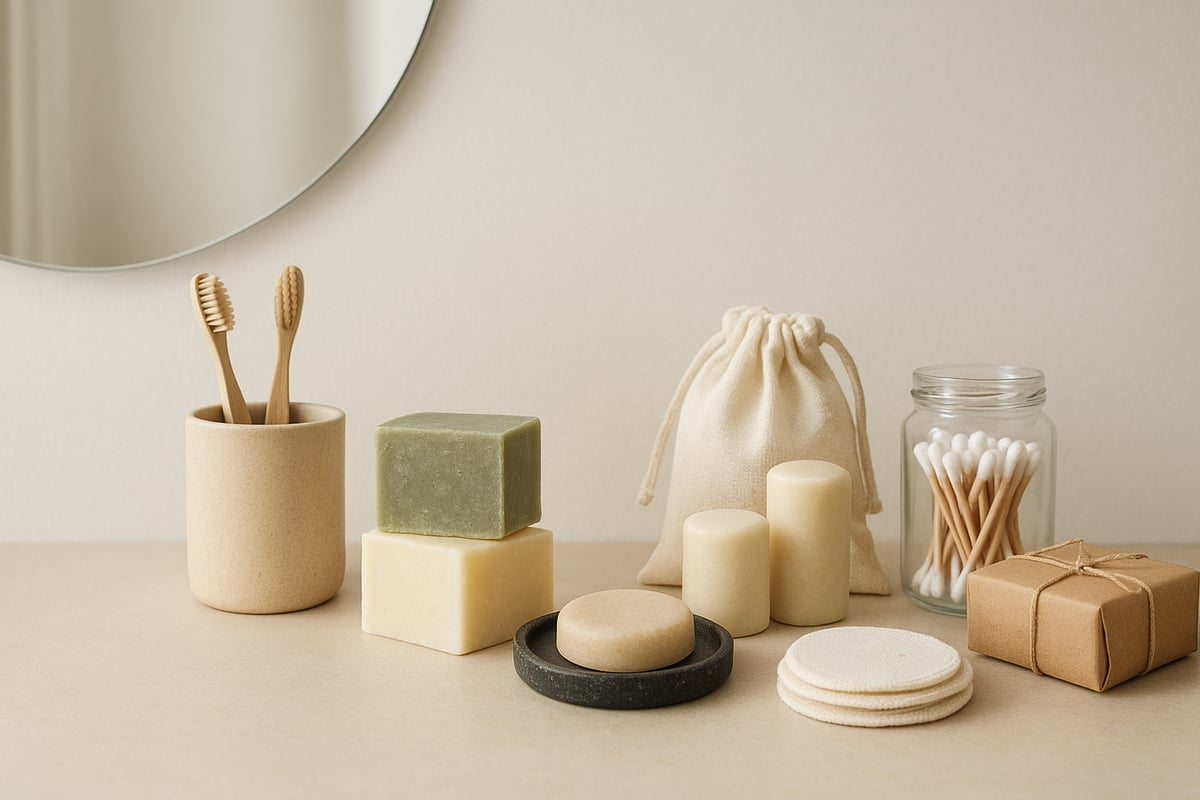
By 2026, zero-waste cosmetics will be the go-to choice for those who want to combine beauty, effectiveness, and environmental responsibility. The sector is experiencing major innovations, simplified routines, and a genuine desire to rethink the product lifecycle. Let's explore the key trends shaping responsible beauty this year.
Product innovations
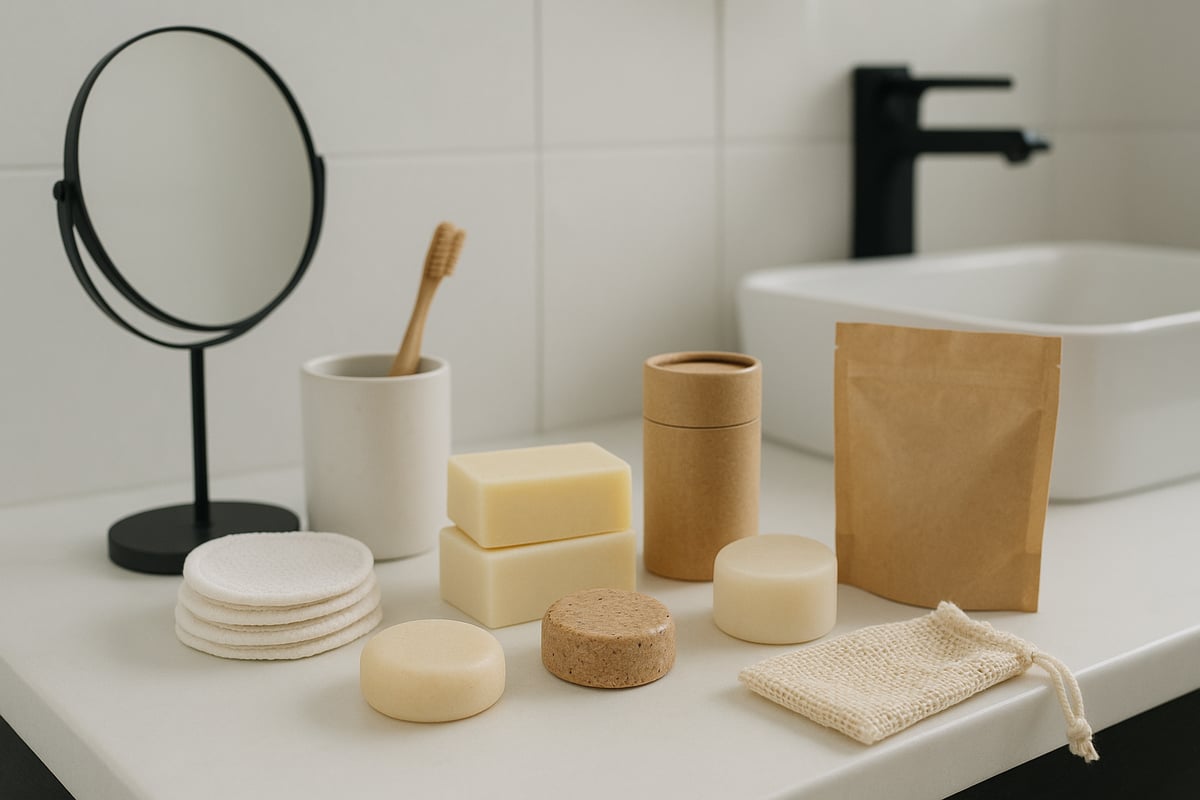
The year 2026 marks a turning point for zero-waste cosmetics, with an explosion of innovative formats. Solid cosmetics (shampoos, soaps, deodorants, toothpastes) are appealing due to their practicality and effectiveness, showing a 35% increase in sales since 2024. Powder products to be diluted and concentrates are revolutionizing beauty routines, while reducing the volume of products transported.
Packaging follows the same trend: compostable, refillable, and biodegradable, it limits environmental impact at every stage. We now find bamboo toothbrushes, refillable sticks and tablets, and returnable glass jars. Innovations also extend to accessories, such as soap cases made from natural fibers and reusable bottles.
Here is an overview of the key formats for zero-waste cosmetics in 2026:
| Format | Example product | Main advantage |
|---|---|---|
| Solid | Shampoo, soap | Zero plastic, long-lasting |
| Powder to be diluted | Toothpaste, mask | Easy transport, dosage |
| Rechargeable | Deodorant, bottle | Less waste, savings |
| Compostable | Soap packaging | Back to the land, natural |
To learn more about sustainable packaging solutions and the latest advancements, see Sustainable Cosmetic Packaging Trends in 2026. These innovations enable zero-waste cosmetics to meet growing consumer demands.
Minimalist and personalized routines
Zero-waste cosmetics encourage simplifying your beauty routine. Fewer products, but better chosen, with essential and multifunctional ingredients. Consumers are looking for effectiveness and adaptability: every skin type and every hair type has its own specific needs.
Minimalist routines encourage the use of a maximum of three to five products, tailored to each skin type (sensitive, combination, oily). This approach lightens the mental load and significantly reduces daily waste. Zero-waste cosmetics thus become synonymous with simplicity and personalization.
The circular economy and reuse
The circular economy is emerging as a new standard in zero-waste cosmetics. Deposit systems for glass and metal containers are multiplying, making the infinite reuse of packaging possible.
More and more brands are offering take-back programs for empty packaging, promoting the reuse and upcycling of beauty accessories. Local initiatives are emerging to transform waste into useful objects, such as soap dishes or pouches made from recycled fabrics. This trend strengthens the coherence of zero-waste cosmetics and encourages the community to take collective action.
Pioneering brands and new players
The zero-waste cosmetics market in 2026 is driven by visionary brands. Lamazuna, Umaï, Pachamamaï, Comme Avant, and Lily Lolo are among the leaders, offering diverse and transparent product lines. Their strength lies in the quality of their formulations, traceability, and commitment to local sourcing.
In Europe, over 200 new artisanal brands emerged in 2025, reflecting a genuine demand for local and handmade products. Transparency, French or Swiss origin, and close relationships with consumers have become essential criteria for choosing a product.
These pioneers inspire confidence and show that zero-waste cosmetics are accessible to everyone. They are paving the way for more responsible beauty, where every little bit helps.
How to Switch to Zero Waste Cosmetics: A Step-by-Step Guide
Adopting zero-waste cosmetics is much more than simply changing products. It's a holistic, positive, and gradual approach that encourages you to rethink your habits for a more planet-friendly lifestyle. Follow this step-by-step guide to gently and enthusiastically transform your beauty routine.
Step 1: Take stock of your bathroom
Start by opening your cupboards and seeing what's inside. To switch to zero-waste cosmetics, it's essential to identify all the products and accessories you use daily. List them, then analyze their impact: the amount of plastic packaging, controversial ingredients, single-use products, or products that are difficult to recycle.
Often found in the bathroom are: disposable cotton balls, shower gel and shampoo bottles, makeup remover wipes, and disposable razors. These are the items that generate the most waste and pollute our environment.
Here is a list of the most common cosmetic waste:
- Cotton balls and disposable wipes
- Plastic bottles (shower gel, shampoo, skincare products)
- Classic toothpaste tubes
- Disposable razors
Taking stock of your current situation allows you to visualize the extent of the waste generated and to target initial changes. This lays the foundation for a successful transition to zero-waste cosmetics.
Step 2: Choosing your first zero-waste products
Once you've taken stock of your situation, select the essentials you want to replace. To start without frustration, prioritize products that are easy to incorporate: solid soap, solid shampoo, solid deodorant, solid toothpaste, and reusable wipes. These alternatives are effective, often economical in the long run, and significantly reduce packaging.
To make the right choice, consider the following:
- The effectiveness and compatibility with your skin or hair
- The composition: natural ingredients, without controversial substances
- The labels (EcoCert, COSMOS, Slow Cosmétique)
- Packaging: opt for cardboard, glass, metal or bulk
Don't hesitate to consult detailed resources like "10 Tips for an Eco-Friendly Beauty Routine" for practical advice tailored to each individual. This step makes zero-waste cosmetics accessible to everyone, even beginners.
Step 3: Adapt your beauty routine
Switching to zero-waste cosmetics encourages you to simplify your routine and prioritize quality over quantity. Reduce the number of products you own: a solid soap can be used for both body and face, an oil can remove makeup and moisturize, and a solid shampoo can be suitable for all family members.
Here are some tips for an effective zero-waste routine:
- Use multi-purpose products to limit accumulation
- Keep solids away from moisture to prolong their lifespan.
- Try out different routines (face, body, hair) with just 3 to 5 products
The goal: to save time and space, and to do your skin good while reducing your environmental footprint. With zero-waste cosmetics, every action counts, and every change, however small, makes a real impact.
Step 4: Choose the right reusable accessories
Accessories are invaluable allies in a zero-waste cosmetics approach. Replace disposable cotton pads with washable ones, adopt a konjac sponge for facial cleansing, or even a safety razor for a sustainable and economical shave.
Essential items to include:
- Reusable cotton pads or washable wipes
- Konjac sponge for all skin types
- Durable and stylish metal safety razor
- Rechargeable or bamboo toothbrush
Maintain these accessories by washing them regularly and storing them in a dry place. Their durability and effectiveness are often superior to disposable versions. This step facilitates your transition to zero-waste cosmetics while providing comfort and simplicity.
Step 5: Manage the transition and stay motivated
Changing your habits can sometimes seem complicated. To successfully transition to zero-waste cosmetics, proceed at your own pace and celebrate every small step forward. Be willing to experiment, try different products or brands, and adjust as needed.
Here are some tips to stay motivated:
- Share your experiences with loved ones or online
- Regularly review your initial motivations.
- Note the visible benefits: less waste, savings, healthier skin
Consumer testimonials show that satisfaction is immediate, even after the first few changes. Your bathroom becomes less cluttered, your impact on the planet decreases, and you might even inspire those around you to make the switch to zero-waste cosmetics.
Minimalist and refillable cosmetics: the example of basic.
The Swiss brand basic. perfectly embodies the values of zero-waste cosmetics. Specializing in natural, minimalist, and vegan skincare, it offers products suitable for sensitive skin, without unnecessary ingredients or plastic.
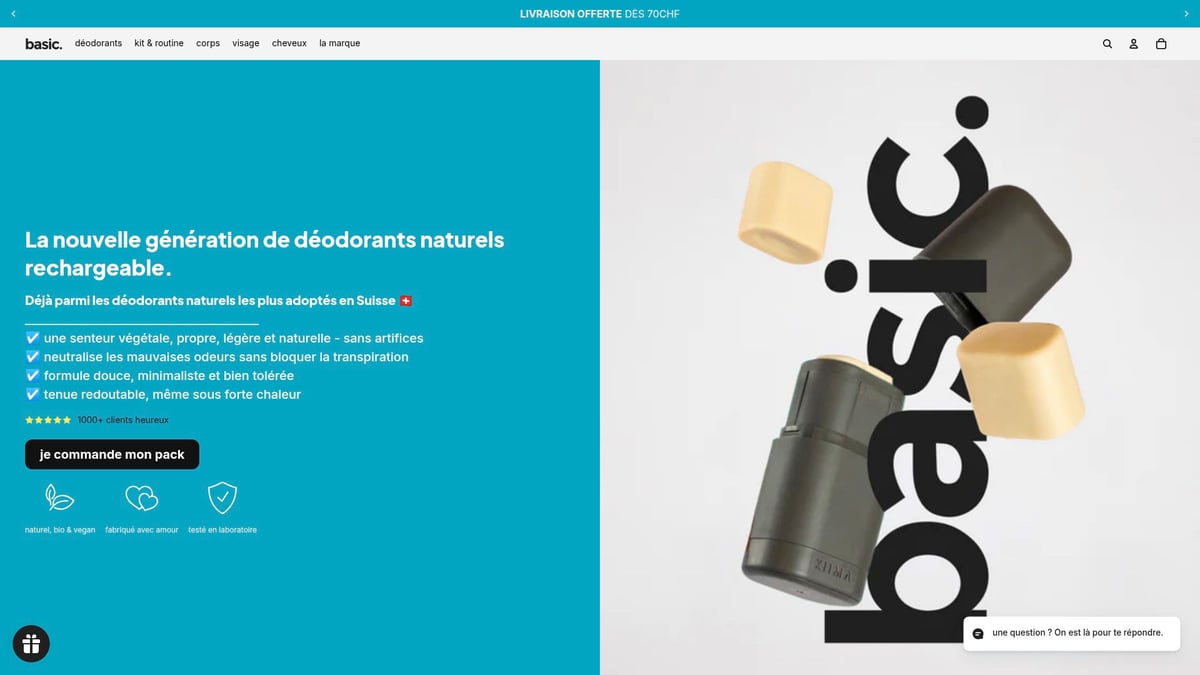
Their natural, aluminum-free deodorant balm comes in a returnable glass jar or with a refillable KIIMA applicator. All ingredients are organic, and the routines are intentionally simplified to focus on the essentials.
Choosing basic. means supporting a local, committed, and effective approach. It also means accessing concrete solutions for confidently adopting zero-waste cosmetics in your daily life.
The Best Zero Waste Products and Alternatives (Face, Body, Hair, Hygiene)
Looking to transform your beauty routine with eco-friendly products? Here's our selection of the best alternatives for a 100% zero-waste cosmetic routine. Whether for your face, body, hair, or personal hygiene, there are now innovative, effective, and accessible solutions available to everyone.
Face
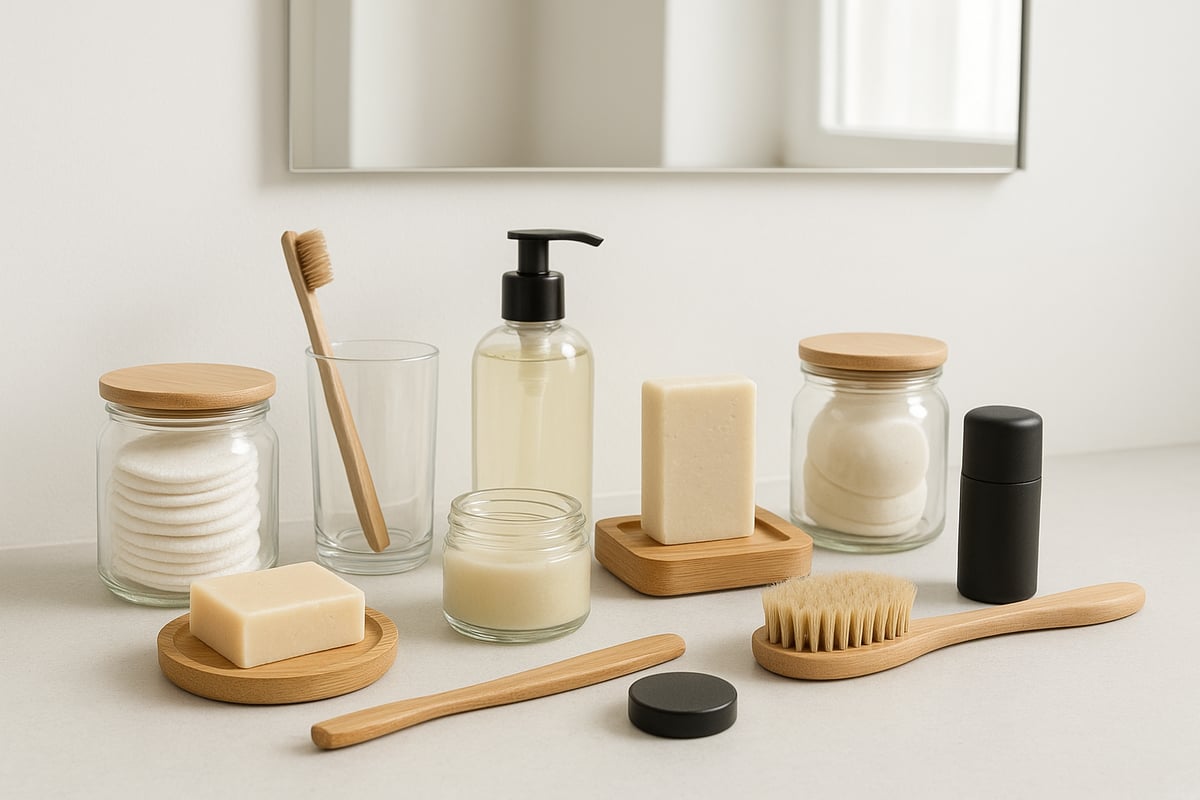
Adopting a zero-waste skincare routine means favoring solid or powder-based products, often packaged without plastic. Solid cleansers (WAAM, Pachamamaï) replace traditional gels while reducing environmental impact. Solid makeup removers or washable wipes offer a sustainable alternative to disposable cotton pads. Solid creams or multi-purpose oils, in returnable jars, provide effective hydration.
For a successful transition to zero-waste cosmetics, it's essential to choose natural products suited to your skin. Discover why and how to take this step in Why and How to Switch to Natural Cosmetics . With these simple steps, taking care of your face becomes a committed and responsible act.
Body
Zero-waste body care relies on cold-process soaps (Clémence & Vivien, Savon Stories), which are gentle on both skin and the planet. Solid deodorants (Lamazuna, basic., Comme Avant) are available in reusable or refillable jars. Solid balms and dry oils provide intense hydration while minimizing packaging.
Choosing these products drastically reduces the plastic waste generated by conventional shower gels and sprays. Minimalism in the bathroom becomes synonymous with comfort and efficiency, while also aligning with a zero-waste approach to cosmetics.
Hair
The zero-waste cosmetics revolution continues with hair care. Solid shampoos (Umaï, Unii) are suitable for every hair type and come in convenient formats, without unnecessary packaging. Solid conditioners or powder masks complete the routine to detangle and nourish.
Accessories like wooden combs or natural brushes also contribute to this approach. Every little helps reduce our environmental footprint, and zero-waste cosmetics are emerging as the ideal solution for healthy hair and a preserved planet.
Oral hygiene and shaving
In the zero-waste cosmetics world, oral hygiene is undergoing a real transformation. Solid or dissolving toothpastes (Pachamamaï) are replacing plastic tubes, while bamboo toothbrushes or toothbrushes with replaceable heads reduce waste.
For shaving, metal safety razors and solid shaving soaps are preferred. These sustainable and economical alternatives place zero-waste cosmetics at the heart of your daily hygiene routine, while offering optimal comfort.
Makeup
Zero-waste cosmetic makeup is gaining popularity with mineral foundations (Lily Lolo), loose powders, and solid blushes. Innovative brands are offering refillable makeup (Zao, Couleur Caramel), helping to reduce single-use packaging.
These products, often organic and vegan, guarantee a pleasant application and a natural finish. By adopting zero-waste cosmetic makeup, you combine pleasure, effectiveness, and respect for the environment, while affirming your commitment to responsible beauty.
Accessories and tools
Accessories play a key role in a zero-waste beauty routine. Reusable cotton pads, konjac sponges, and magic makeup remover gloves easily replace disposable products. Soap cases, eco-friendly travel boxes, and brushes made from natural materials complete the set.
These easy-to-maintain tools promote a sustainable and economical approach. Choosing the right accessories makes zero-waste cosmetics even more accessible and enjoyable on a daily basis, while simplifying your beauty routine.
Tips and Best Practices for Reducing Your Daily Waste
Reducing waste in the bathroom is possible and even rewarding. Adopting zero-waste cosmetics in your daily life doesn't require perfection, but rather taking small steps. Ready to transform your beauty routines into eco-friendly habits? Let's discover together some simple and effective tips to lessen your impact while protecting the planet.
1. Favor bulk and refillable formats
Buying in bulk or refillable formats significantly reduces single-use packaging. Many shops now offer soaps, shampoos, and oils in bulk. Refills for toothpaste and deodorant are also increasingly common. This simple action easily integrates into a zero-waste cosmetics routine and helps limit the accumulation of plastic bottles.
2. Buy local and support short supply chains
Supporting local artisans and French or Swiss brands also reduces the carbon footprint associated with transportation. Markets, organic grocery stores, and specialty shops are brimming with zero-waste gems. By choosing local products, we encourage more responsible and often more transparent production.
3. Make your own skincare: DIY accessible to all
Why not try making your own cosmetics? With just a few natural ingredients, you can create homemade masks, balms, or scrubs. This minimalist approach promotes zero-waste cosmetics and offers the pleasure of formulating skincare products tailored to your skin. To learn more, discover the secret to perfect skin with simplified, natural routines.
4. Reuse and repurpose containers
Don't throw away your empty glass jars or bottles! They can be used to store your homemade preparations, hold reusable cotton pads, or even become impromptu jewelry boxes. This tip reduces waste and gives each container a second life, in keeping with the zero-waste cosmetics movement.
5. Organize your shopping to avoid waste
Planning your needs allows you to buy only what you need and avoid unused products. Making a list before going to the store helps you focus on the essentials. This organization limits waste and encourages more mindful consumption, which is essential in a zero-waste cosmetics approach.
6. Surround yourself with support to stay motivated: workshops and communities
Participating in DIY workshops or joining zero-waste groups means sharing tips, finding support, and moving forward together. Mutual support makes the transition more pleasant and reminds us that every little helps. Zero-waste cosmetics is also a collective adventure, enriched by the exchanges and inspiration of others.
7. Travel light and responsibly
When traveling, opt for solid products and travel kits. A multi-purpose soap, a rechargeable toothbrush, and a few reusable cotton pads are often all you need. Traveling with a zero-waste cosmetics kit means greater simplicity and practicality, while also reducing your environmental impact.
8. A measurable and encouraging impact
According to an AyaNature study, 60% of zero-waste enthusiasts have halved their cosmetic waste by 2025. This figure proves that with simple actions, zero-waste cosmetics truly transform our daily lives. Let's be bold, experiment, and remember that every little step counts towards a cleaner world.
Mistakes to Avoid and Obstacles to Overcome in 2026
Adopting zero-waste cosmetics in 2026 is an exciting adventure, but sometimes fraught with challenges. Many people fall into certain traps at the beginning of their transition. Here's how to recognize them and, above all, overcome them brilliantly.
1. Wanting to change everything at once
It's tempting to transform your entire bathroom into a zero-waste cosmetics haven overnight. However, a gradual transition is essential to get started, minimize waste, and find the products that truly work for you. Begin by replacing products that are nearing their end to avoid frustration.
2. Being fooled by greenwashing
With the rise of zero-waste cosmetics, greenwashing is gaining ground. Some packaging or slogans may appear eco-friendly when they aren't actually so. To avoid this trap, learn to identify genuine labels like EcoCert, COSMOS, or Slow Cosmétique. Recent regulatory changes, such as the European regulation on cosmetic packaging , also help to clarify brands' commitments.
3. Neglecting skin compatibility
Every skin is unique. Switching to zero-waste cosmetics also means listening to your skin's needs and gradually testing products to avoid reactions. Don't hesitate to ask for advice, read reviews, or opt for travel sizes before investing.
4. Underestimating the maintenance of reusable accessories
Reusable cotton pads or bamboo brushes require regular cleaning to remain effective and hygienic. Forgetting to clean them can quickly ruin your zero-waste cosmetics experience. Incorporate cleaning them into your weekly routine for added convenience.
5. Thinking that zero waste is more expensive
At first glance, some zero-waste products seem more expensive. However, in the long run, they are often more economical thanks to their durability and the reduction of unnecessary purchases. Committed brands, such as those that clearly state their eco-responsible commitments , offer sustainable and transparent solutions.
6. Lack of information or adaptation
According to MonCornerB, 72% of consumers regret at least one zero-waste cosmetic purchase due to a lack of information or a poor fit for their needs. Taking the time to research, share experiences, and ask for advice is key to avoiding these disappointments.
Together, let's move step by step towards a healthier and more responsible beauty routine. Every little progress counts. Remember, zero-waste cosmetics is a path we build together, at your own pace.
You see, every little action counts when it comes to taking care of yourself while respecting the planet. We've gone through the key steps together to transition to a zero-waste beauty routine, and you now know that simplicity and effectiveness go hand in hand. If you want to get started, why not try a natural, minimalist, and skin-friendly product like the Basic deodorant balm? It's a real favorite for making the switch without any fuss. We're all moving towards more conscious beauty together: try it now!