


Antiperspirant Deodorant vs. Natural: Which to Choose in 2026?
Antiperspirant or natural deodorant in 2026? Discover our helpful guide to choosing the right product for your health and planet. Make the right choice with us.

By 2026, choosing an antiperspirant deodorant or opting for a natural alternative has become a real headache. Awareness of the impact of cosmetics, both on health and the environment, has never been greater.
Should you prioritize the technical performance of an antiperspirant deodorant or opt for the clean and respectful composition of natural deodorants? This guide offers a detailed comparison to help you make the best choice according to your needs, your sensitivity, and upcoming trends.
Together, let's discover the differences, innovations and practical advice for appropriate and responsible protection.
Understanding the difference: Antiperspirant deodorant vs. natural deodorant
Understanding the differences between an antiperspirant deodorant and a natural deodorant is essential for making the right choice for your needs. In 2026, given the diversity of formulas and growing consumer expectations, it becomes important to clearly distinguish between each category.
Definitions and operating principles
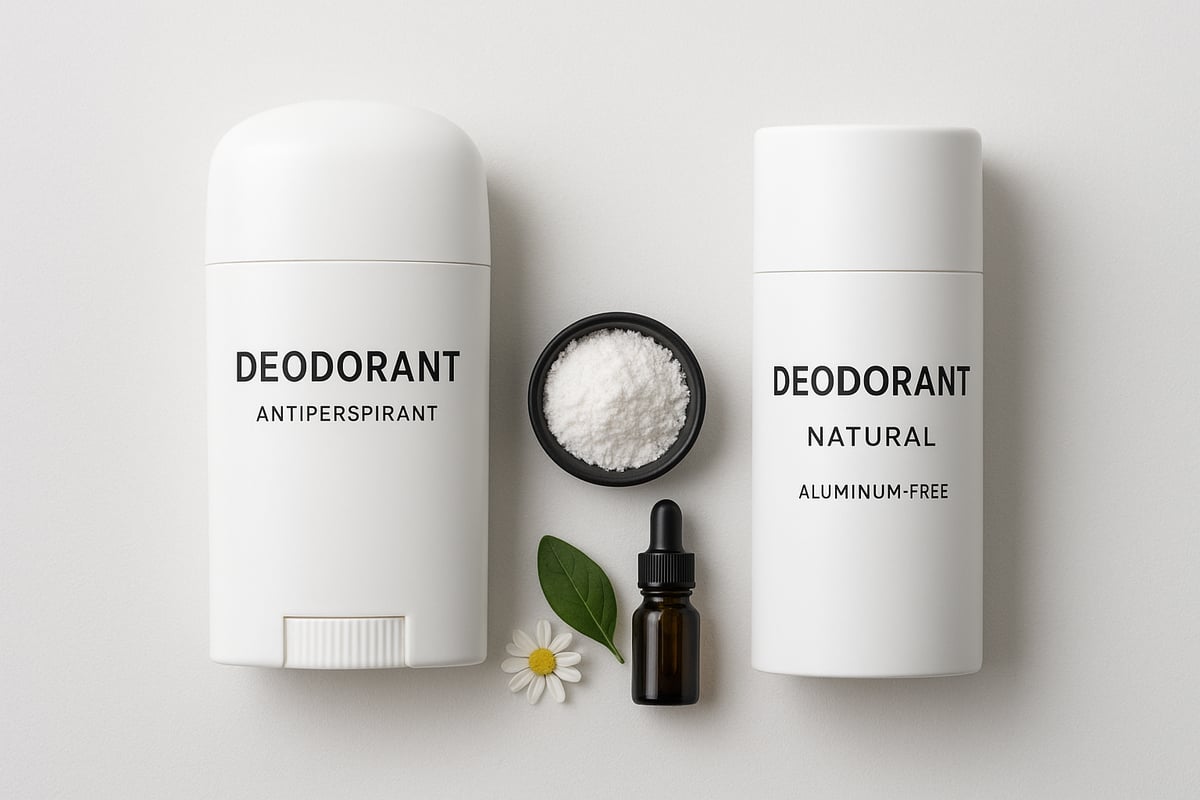
Antiperspirant deodorant works primarily by temporarily blocking sweat glands using aluminum salts. This mechanism limits sweat production and provides a prolonged feeling of freshness. Conversely, a natural deodorant does not block perspiration but neutralizes odors using active ingredients such as baking soda, clay, or essential oils.
It's important to distinguish between antiperspirant, regular deodorant, and antiperspirant. For example, Vichy Stress Resist 72h (antiperspirant), La Rosée Freshness Deodorant (natural), and antiperspirants available in pharmacies. According to Que Choisir, 48% of consumers still confuse these categories, hence the importance of clarifying the principles.
Consumer expectations in 2026
By 2026, demand for transparent and ethical deodorants is exploding. Consumers want to know what they're putting on their skin, which explains the rise of labels like Ecocert and Slow Cosmétique. Social media plays a key role in influencing choices and sharing opinions on effectiveness and ingredients.
Personalized formulas are becoming increasingly popular, as is a growing focus on ingredient sensitivity. Many people are looking for an antiperspirant deodorant tailored to their skin or prefer a natural option to avoid certain controversial components. This trend is driving brands to innovate in order to meet increasingly specific consumer expectations.
Advantages and limitations of each type
Antiperspirant deodorant offers remarkable effectiveness against wetness, with long-lasting protection and great convenience for active days. It is often preferred by those who experience heavy perspiration or during periods of stress.
Conversely, natural deodorant respects the skin's microbiome, contains no controversial substances, and is better tolerated by sensitive skin. However, some users find it less effective in intense heat or during physical activity. The long-term risks associated with aluminum in antiperspirants also raise concerns.
Comparative table:
| Product type | Benefits | Boundaries |
|---|---|---|
| Antiperspirant deodorant | Humidity control, long-lasting | Aluminum salts, tolerance |
| Natural deodorant | Respect for the microbiome, without controversial ingredients | Variable efficiency |
Examples of usage situations
Everyday situations can influence the choice between an antiperspirant and a natural deodorant. For sports, excessive sweating, or periods of stress, antiperspirants are often preferred for their targeted action. Conversely, for children, teenagers, or pregnant women, experts like Que Choisir recommend opting for natural, gentle formulas without aluminum salts.
For those who wish to explore gentler, more respectful alternatives, there is a wide selection of natural and effective deodorants suited to all profiles and needs. Adapting your choice to your lifestyle and skin sensitivity remains key to a comfortable and healthy experience.
Efficiency: Performance comparison in 2026
Choosing between an antiperspirant deodorant and a natural deodorant often depends on the desired effectiveness. In 2026, expectations are high and solutions are becoming increasingly innovative. Let's analyze the essential criteria for comparing these two main product categories.

Criteria for evaluating effectiveness
When evaluating an antiperspirant deodorant, several criteria come into play. Odor control is paramount, as it involves neutralizing the bacteria responsible for unpleasant smells. This type of deodorant often works by blocking perspiration with aluminum salts, while natural deodorants rely on absorption and neutralization through ingredients like baking soda or probiotics.
It's also important to compare moisture management. Antiperspirants block sweat, while natural ones absorb moisture without hindering the body's natural processes. The duration of protection varies depending on the formula: some promise 24 hours, 48 hours, or even 96 hours of effectiveness.
Finally, consumer reviews and test results are valuable for getting a realistic idea of the performance of each type of antiperspirant deodorant.
Data from comparative tests
Independent tests, such as those conducted by Que Choisir, show that antiperspirant deodorant remains the most effective at controlling moisture, particularly in situations of heavy perspiration. However, some natural deodorants offer comparable odor-neutralizing properties, especially those enriched with probiotics.
| Product | Odor control | Humidity control | Duration of protection |
|---|---|---|---|
| Vichy Clinical Control 96h | ★★★★★ | ★★★★★ | 96h |
| La Rosée Probiotic Deodorant | ★★★★☆ | ★★★☆☆ | 48 hours |
| Natural Organic Store Brand | ★★★★☆ | ★★★☆☆ | 24h |
User testimonials confirm this trend: antiperspirant deodorant is popular in sporting or stressful contexts, while those who prefer natural products appreciate the gentleness and safety of these formulas.
Innovations and new formulas in 2026
The market is evolving rapidly, and by 2026, innovation will be at the heart of new deodorants. We're seeing the emergence of formulas with probiotics, ultra-absorbent minerals, and novel plant-based active ingredients. Refillable deodorants are gaining popularity due to their eco-friendly nature and convenience.
Among the new products, the "Le Classik" deodorant balm embodies this new generation of natural, aluminum-free, effective, and skin-friendly products. Available in various formats—spray, roll-on, solid stick, or balm—each caters to specific needs. Personalization is also gaining ground, offering a customized experience, even with an antiperspirant deodorant.
Suitable for different skin types (sensitive skin, athletes, hyperhidrosis)
The effectiveness of an antiperspirant or natural deodorant varies depending on the user. For sensitive skin, there are alcohol- and fragrance-free formulas, minimizing the risk of irritation. Athletes or people suffering from hyperhidrosis will find what they're looking for with enhanced antiperspirants or deodorants, offering maximum control.
For those who prefer natural products, options enriched with soothing ingredients are suitable for sensitive skin. Recent innovations also offer solutions for every season and activity, allowing everyone to find the antiperspirant or natural deodorant that suits their lifestyle.
Safety and impact on health
The question of antiperspirant deodorant safety is more crucial than ever in 2026. We all want to protect our health, but how do we make the right choice given the diversity of formulas? Let's examine together the substances to watch out for, the guarantees offered by natural deodorants, recent scientific data, and recommendations based on user profile.
Controversial substances and potential risks
Antiperspirant deodorants have been raising concerns for several years, primarily due to the aluminum salts used to block perspiration. These substances are regularly monitored by health authorities, especially for vulnerable populations such as pregnant women and children. Other ingredients, like parabens, certain allergens, and endocrine disruptors, also require close scrutiny.
To help you see things more clearly, the National Consumer Institute recommends carefully reading labels and avoiding certain ingredients in deodorants and antiperspirants . This makes making an informed choice easier, especially for those who want to minimize risks on a daily basis.
Natural deodorants: safety and tolerance
Conventional antiperspirant deodorant is sometimes perceived as less well-tolerated by sensitive skin. This is why more and more consumers are turning to natural deodorants. These avoid aluminum salts, parabens, and silicones. Instead, they rely on active ingredients such as baking soda, clay, or essential oils.
However, it's important to remember that essential oils and baking soda can cause irritation in some people. To ensure safety, choose certified formulas (Ecocert, COSMOS) and always test the product on a small area before daily use. These certifications are there to reassure us and guide us toward suitable choices.
Recent scientific data and opinions
Recent studies from 2023 to 2026 show that antiperspirant deodorant has no proven impact on the risk of breast cancer, but research continues on the skin penetration of aluminum salts. The skin microbiome, essential for skin health, can be disrupted by certain ingredients present in conventional formulas.
Health authorities recommend caution and advise adapting usage to individual needs. Consumer associations emphasize that manufacturer transparency and ingredient traceability are now essential. Together, we can better understand and choose with confidence.
Adaptation according to user profile
The choice between an antiperspirant deodorant and a natural deodorant also depends on individual needs. For children, teenagers, and pregnant women, it's advisable to avoid formulas containing aluminum or alcohol. Those with atopic or allergic skin should opt for products without perfume or essential oils.
Here is a summary table of the recommendations:
| User profile | Main recommendation |
|---|---|
| Children, teenagers | Natural deodorant, without alcohol or perfume |
| Pregnant women | Free from aluminum salts, free from essential oils |
| Atopic/allergic skin | Neutral formula, prior skin test |
Listening to your body and paying attention to skin reactions remains the best approach for a healthy and serene routine.
Environmental and ethical impact: what choice for the planet?
Choosing between an antiperspirant deodorant and a natural deodorant is no longer just about effectiveness or tolerance: the impact on the planet is becoming increasingly important in our daily choices. But how can we concretely assess the ecological footprint of each option, and what can we do at our level to combine freshness and respect for the environment?

Product life cycle analysis
The life cycle of an antiperspirant or natural deodorant begins with its manufacture and ends long after its use. Packaging plays a crucial role: plastic, aluminum, or glass—each material has a different impact on the planet. Sprays, the most common type of antiperspirant, often release harmful propellants and are rarely recycled.
Conversely, natural deodorants favor reusable or recyclable containers, such as glass jars or cardboard sticks. Manufacturing, transportation, and the product's format (solid, cream, spray) also influence its overall carbon footprint. To delve deeper, this National Geographic article analyzes the environmental impact of deodorants , highlighting the issues related to plastic pollution and volatile organic compounds.
Composition and biodegradability
The difference between an antiperspirant deodorant and a natural deodorant lies in their composition. The former often contain synthetic ingredients, sometimes non-biodegradable, which can pollute water and biodiversity. Some sprays contain microplastics or solvents that persist in the environment.
Natural deodorants rely on plant-based active ingredients that are easily biodegradable. Their formulas limit the presence of controversial substances, thus reducing their impact on the ecosystem. However, caution is advised regarding certain components such as essential oils, which can also affect aquatic life if improperly dosed.
Labels, certifications and CSR commitments
To guide consumers, numerous labels guarantee brands' ethical practices. A conventional antiperspirant deodorant doesn't always display certifications, while natural deodorants may bear the Ecocert, COSMOS, Slow Cosmétique, or PETA Vegan labels. These labels ensure the absence of polluting ingredients, responsible manufacturing, and a commitment to zero waste.
Some brands are going further by developing CSR initiatives: local production, short supply chains, transparency regarding composition, and refillable packaging. These initiatives contribute to more conscious and environmentally friendly consumption.
basic. : The minimalist and committed Swiss alternative
The Swiss brand basic. perfectly embodies the market's shift towards products that are both effective and ethical. Their "Le Classik" deodorant balm is formulated without aluminum salts, is vegan, certified organic, and suitable for sensitive skin. The KIIMA refillable system drastically reduces waste while offering a pleasant sensory experience.
basic. prioritizes complete transparency, both regarding ingredients and origin. This approach, combined with fast local delivery, makes basic. a go-to choice for those seeking an alternative, effective, and eco-friendly antiperspirant deodorant. In 2026, choosing basic. means opting for committed, innovative, and sustainable cosmetics.
Trends and innovations in the deodorant market in 2026
The antiperspirant deodorant market is undergoing a true revolution in 2026. Habits are changing, and more and more of us are looking for solutions that are not only effective but also responsible. Between technological innovation, new consumer demands, and stricter regulations, the sector is constantly evolving.
New consumer needs and expectations
By 2026, consumers will have very high expectations. We want our antiperspirant deodorant to be effective, safe, and transparent. Personalization has become the norm: everyone wants a product tailored to their lifestyle, skin type, and values.
- Traceability of ingredients is reassuring.
- Multi-purpose and minimalist products are becoming increasingly popular.
- Online reviews, rating apps, and social media strongly influence our choices.
Moreover, the market for natural and organic deodorants is booming. According to the report on the organic deodorant market , double-digit growth is expected until 2032, proof that demand remains strong.
Technological and galenic innovations
Technological advances are revolutionizing the antiperspirant deodorant sector. Formulas now incorporate probiotics to protect the microbiome, upcycled active ingredients, and ultra-absorbent minerals.
- Refillable formats, solid sticks and plastic-free balms are becoming commonplace.
- The formulas are designed to be allergen-free, endocrine disruptor-free, and dermatologically tested.
Innovation doesn't stop there: the KIIMA rechargeable deodorant applicator perfectly illustrates this new era, combining practicality, durability and personalization.
Regulations and legislative developments
By 2026, legislation will more strictly regulate the antiperspirant deodorant sector. European standards are progressively banning certain controversial ingredients. Claims such as "natural," "organic," or "zero waste" are now subject to rigorous verification.
This is pushing brands to revise their communication strategies and offer products that truly meet expectations. In supermarkets and pharmacies alike, product ranges are evolving to meet these new standards, while simultaneously reassuring consumers.
Brands and products to watch in 2026
Several brands stand out thanks to their commitment, innovation, and transparency. Among them:
| Brand | Product type | Key strengths |
|---|---|---|
| Vichy | Antiperspirant deodorant | Efficacy, clinical ranges |
| The Dew | Natural deodorant | Probiotics, gentleness |
| basic. | Natural, rechargeable | Zero waste, minimalism, local |
| Marque Repère Bio | Natural, low price | Accessibility, organic labels |
Labels and certifications, constant innovation, and responsiveness to new expectations are shaping market trends. Antiperspirant deodorant is evolving, and we are the first to benefit.
How to choose your deodorant in 2026: a practical guide
Choosing the right antiperspirant deodorant in 2026 is above all about finding the balance between effectiveness, safety, and respecting your values. We'll guide you step by step to make the choice that suits you best, according to your priorities, lifestyle, and sensitivity to ingredients.
Identify your needs and priorities
Before choosing an antiperspirant deodorant, consider your daily needs. Do you sweat a lot, especially during sports or stressful situations? Or are you primarily looking for a gentle formula for your sensitive skin? Also analyze your lifestyle: frequent travel, climate, activity level.
- For excessive sweating, a powerful antiperspirant deodorant is recommended.
- If you prefer a natural composition, opt for an alternative without aluminum salts.
- Ethical and environmental issues may also influence your choice.
Don't forget to consider your budget and how often you'll use it. This will help you choose the most suitable format, from a stick to a solid balm.
Read and understand the labels
Reading labels is essential to avoid unwanted ingredients in your antiperspirant deodorant. Learn to decipher the INCI list, identify allergens, and recognize safe labels. Opt for products with reliable certifications like Ecocert or COSMOS.
- Check for the presence or absence of aluminium salts, parabens or silicones.
- Look for terms like vegan, organic, or zero waste.
- To learn more, discover the Commitments and Values of basic. , a brand that focuses on transparency and ethics.
Learning about the origin and practices of brands helps to support more responsible consumption.
Usage and application instructions
To maximize the effectiveness of your antiperspirant deodorant, apply it to clean, completely dry skin, preferably after showering. Avoid applying it immediately after shaving to minimize the risk of irritation. Follow the recommended dosage for each format: spray, stick, or balm.
- Tip: Let it dry for a few seconds before getting dressed to avoid stains on your clothes.
- Adjust the application frequency according to your activity: sport, stress, typical day.
- Consider alternating or testing different formulas if your skin reacts.
To better understand how your choice of antiperspirant deodorant influences your skin, see the article on the Impact of deodorants on the skin microbiota .
Adapt your choice to the evolution of your needs
Your needs change. Sometimes it's necessary to switch from a conventional antiperspirant deodorant to a natural formula. Allow for a transition period while your body adapts, which may involve a temporary increase in perspiration.
- Try several formulas to find the one that suits you best depending on the season.
- Listen to your skin and adjust if you experience irritation or a change in odor.
- Don't hesitate to seek advice from a healthcare professional if you have any doubts.
By paying attention to your feelings and the evolution of your priorities, you will find the ideal antiperspirant deodorant to accompany you on a daily basis.
After exploring the differences between antiperspirants and natural deodorants together, you'll see that in 2026, making a choice that respects your skin, your health, and the planet is possible. We all deserve an effective, clean, and carefully crafted product. If you want to switch to a gentler, more minimalist routine without compromising on performance, why not try a Swiss natural deodorant designed for sensitive skin, free of aluminum salts, and truly environmentally friendly? Many of us are looking for this healthy alternative, so if it appeals to you, try it now .